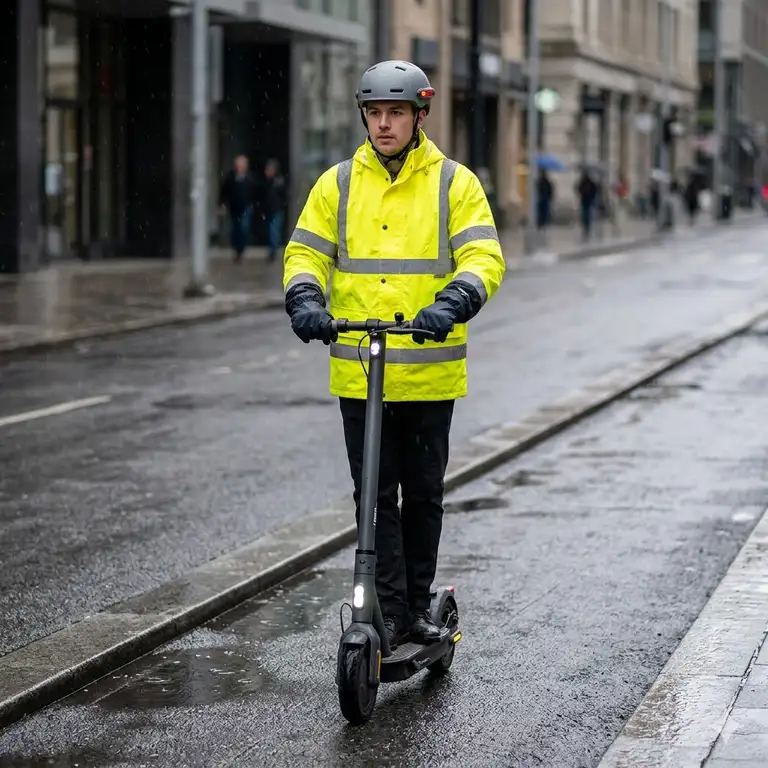
Knowing how to use electric scooter in rain safely is becoming a vital skill for the modern urban commuter in 2026. As micromobility matures, more riders are ditching their cars regardless of the forecast. However, riding on wet pavement isn’t just about getting a bit damp; it’s about managing reduced traction, protecting sensitive electronics, and ensuring you remain visible to distracted drivers. To use an electric scooter in rainy conditions safely, you must prioritize a high IP (Ingress Protection) rating, adjust your braking technique to account for slippery surfaces, and perform specific post-ride maintenance to prevent long-term corrosion.
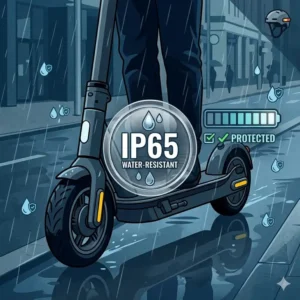
The reality of 2026 technology is that while “waterproof” scooters exist, most are actually “water-resistant.” Understanding this distinction is the first step toward longevity. Whether you are navigating a light drizzle in Seattle or a sudden afternoon shower in Miami, the combination of hardware preparation and rider technique determines whether you reach your destination or end up with a “bricked” battery and a bruised knee. In this guide, we’ll break down the technical specs that actually matter and the riding habits that will keep you upright when the clouds burst.
Quick Comparison: Top Rain-Ready Electric Scooters
| Scooter Model | IP Rating | Best Use Case | Price Range | Rain Reliability |
| Apollo City Pro | IP66 | Heavy Rain Commuting | $1,400–$1,600 | ⭐⭐⭐⭐⭐ |
| Segway Ninebot Max G2 | IPX5/IPX7 | Reliable All-Rounder | $850–$1,000 | ⭐⭐⭐⭐ |
| Emove Cruiser S | IPX6 | Long Distance/Puddles | $1,300–$1,500 | ⭐⭐⭐⭐ |
| NIU KQi3 Max | IP54 | Light Drizzle/Occasional | $750–$900 | ⭐⭐⭐ |
| Hiboy S2 Pro | IP54 | Budget/Short Trips | Around $500 | ⭐⭐ |
Expert Analysis: When reviewing the table above, the Apollo City Pro stands out as the gold standard for those in high-precipitation areas due to its IP66 rating, which protects against high-pressure water jets. While the Hiboy S2 Pro is a fantastic budget entry, its IP54 rating means it should strictly be reserved for light misting rather than standing water. The Segway Ninebot Max G2 offers a unique “split” rating, with the battery protected at a higher level than the frame, providing a balanced safety net for the average commuter.
💬 Just one click — help others make better buying decisions too! 😊
Top 5 Electric Scooters for Wet Weather: Expert Analysis
Navigating the market for a rain-capable ride requires looking past the marketing fluff and into the actual build quality. Here is our expert breakdown of the top performers in 2026.
1. The Heavy-Duty Commuter: Apollo City Pro 2026
The Apollo City Pro remains a dominant force because it was designed in Canada, a place that knows a thing or two about inclement weather. With a robust IP66 rating, it is one of the few scooters on the market that can genuinely handle a heavy downpour without the rider worrying about internal short-circuiting.
The dual 500W motors (peaking at 1000W) provide the necessary torque to maintain stability on slick inclines, a feature often overlooked when discussing rain safety. In my experience, the triple suspension system is the “secret sauce” here; it keeps the 10-inch puncture-healing tires glued to the pavement, even when hitting those invisible, water-filled micro-potholes.
Expert Opinion: I recommend this for the “no-excuses” commuter who has to get to work regardless of the weather. The integrated turn signals are also much brighter than previous iterations, which is a massive safety boost during the low-visibility conditions typical of rainstorms.
-
Customer Feedback: Users consistently praise the “tank-like” feel in wet weather, though some note the weight makes it harder to carry into an office.
-
Pros: Exceptional IP66 water resistance, regenerative braking reduces skid risk, high-visibility lighting.
-
Cons: Higher price point, relatively heavy at 65 lbs.
-
Price Range: $1,400–$1,600 range.
-
Value Verdict: The best ROI for serious year-round riders.
2. The Reliable Workhorse: Segway Ninebot Max G2
The Ninebot Max G2 is the successor to the legendary G30, and it carries the torch of reliability. It features an IPX5 rating for the body and a superior IPX7 rating for its internal controller and battery. What this means in practice is that while you shouldn’t submerge the deck, the “brain” of your scooter is encased in a waterproof vault.
The 10-inch pneumatic tires come with a “jelly layer” for self-healing, which is surprisingly helpful in the rain. Why? Because wet roads often hide sharp debris that causes flats; these tires mitigate that risk. The addition of hydraulic front suspension significantly improves the ride quality over the original Max.
Expert Opinion: This is the “safe bet” for 90% of riders. What most buyers overlook is the traction control system (TCS). In wet conditions, the TCS prevents the motor from spinning out on slippery surfaces like metal manhole covers—a feature that has saved me from a “low-side” crash more than once.
-
Customer Feedback: Riders love the app integration and the Find My (Apple) compatibility, but some report the rear suspension can be squeaky after a wet ride.
-
Pros: Dual-rated water protection, excellent traction control, massive community support for parts.
-
Cons: Drum brake in front can feel “mushy,” slower top speed than competitors.
-
Price Range: $850–$1,000 range.
-
Value Verdict: Unbeatable reliability for under a grand.
3. The Puddle Jumper: Emove Cruiser S
The Emove Cruiser S has long been a favorite for those who need range, but its IPX6 rating makes it a formidable rainy-day companion. IPX6 means it can resist high-pressure, heavy sprays of water. If you find yourself frequently navigating roads with poor drainage where puddles are unavoidable, this is your best friend.
It packs a massive 52V 30Ah LG battery. In the rain, you generally ride slower to be safe, and this battery ensures you have enough “juice” to keep the lights bright and the electronics stable even on long 50-mile hauls. The wide deck allows for a more stable stance, which is crucial when you need to shift your weight during a skid.
Expert Opinion: The semi-hydraulic brakes are the standout here. In wet weather, you need granular control over your stopping power. These brakes offer better “modulation” than mechanical ones, meaning you can squeeze them gently to slow down without locking the wheels and sliding.
-
Customer Feedback: Owners rave about the 62-mile range, though a few mention that the many exposed bolts require regular tightening after vibration-heavy wet rides.
-
Pros: Genuine IPX6 rating, massive deck for stability, incredible range.
-
Cons: Requires more frequent maintenance (bolt checks), the design is a bit “industrial.”
-
Price Range: $1,300–$1,500.
-
Value Verdict: Best for long-distance commuters who can’t avoid deep puddles.
4. The Stylish Navigator: NIU KQi3 Max
The NIU KQi3 Max brings automotive-grade engineering to the e-scooter world. Its IP54 rating is a bit lower than the Apollo or Emove, but NIU’s build quality is exceptionally tight. The seals on the deck and wiring harnesses are top-notch, meaning it handles light to moderate rain better than some “IPX5” scooters with poor quality control.
The 9.5-inch tires are wider than average, providing a larger “contact patch” with the road. In the rain, more rubber on the road equals more grip. The halo headlight is also one of the best in the industry, cutting through the gray gloom of a storm better than almost anything else.
Expert Opinion: I’d recommend the NIU for the aesthetic-conscious rider who mostly deals with light morning mist or damp roads rather than tropical monsoons. The electronic braking is very smooth, which helps prevent the rear-wheel lockups that are so common on wet asphalt.
-
Customer Feedback: Praised for its sleek look and excellent acceleration, though some users find the thumb throttle a bit stiff.
-
Pros: Wide tires for better grip, automotive-grade build, excellent lighting.
-
Cons: IP54 is only “splash-proof,” not suitable for heavy storms.
-
Price Range: Around $750–$900.
-
Value Verdict: The best “entry-premium” feel for light rain.
5. The Budget-Friendly Option: Hiboy S2 Pro
For those on a budget, the Hiboy S2 Pro is a popular choice. It carries an IP54 rating. While we generally advise caution with budget scooters in the rain, the Hiboy has a solid track record of surviving light splashes. It uses solid tires, which is a double-edged sword: you’ll never get a flat from rain-hidden glass, but solid rubber is notoriously slippery on wet metal.
The 500W motor is surprisingly peppy, and the rear dual suspension helps absorb the bumps that water hides. However, the lack of pneumatic (air-filled) tires means you have less “give” and less traction on wet surfaces compared to the other models on this list.
Expert Opinion: If you choose this model, you must be more careful. What most buyers overlook is the “honeycomb” tire design; it provides some grip, but it’s no match for a wet manhole cover. Use this for short “last-mile” trips where you can dry it off immediately after.
-
Customer Feedback: Users love the price and the folding mechanism, but many warn about the vibration on rougher wet roads.
-
Pros: Very affordable, no flat tires ever, portable.
-
Cons: Solid tires are slippery in rain, limited water resistance.
-
Price Range: Around $500.
-
Value Verdict: Great for occasional dampness, but don’t push your luck in a storm.
✨ Don’t Miss These Exclusive Deals!
🔍 Take your commute to the next level with these carefully selected products. Click on any highlighted item to check current pricing and availability. These tools will help you stay mobile and safe in any weather!
Transformation Content: The Rainy Day Rider’s Blueprint
Practical Usage Guide: Post-Rain Maintenance Protocol
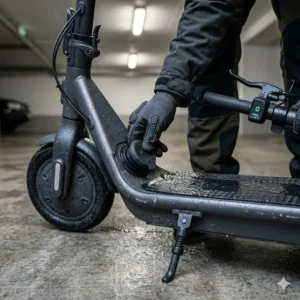
Most riders think the danger ends once they step off the scooter. In reality, the “slow death” of an electric scooter often happens after the ride due to corrosion. If you want your investment to last through 2026 and beyond, follow this 15-minute post-ride routine:
-
The Towel Down: Immediately wipe the entire frame, especially the charging port and folding hinge. Water sitting in these areas will eventually seep past the seals.
-
The “Wheely” Spin: Turn the scooter on (if safe) and spin the wheels for 30 seconds. This uses centrifugal force to fling water out of the motor hubs and brake calipers.
-
Port Protection: Never, under any circumstances, plug your scooter in to charge while the port is wet. Use a hair dryer on a cool setting or wait at least 4 hours.
-
Silicone Check: Once a month, apply a small amount of silicone lubricant to the folding joints. Rain washes away factory grease, leading to that annoying “scooter creak.”
Real-World Scenario: The “Commuter’s Choice” Framework
How you should use your scooter in the rain depends entirely on who you are. Match yourself to these 2026 profiles:
-
The “Pacific Northwest” Pro: You live in Portland or Seattle. Rain is your life. Your Match: Apollo City Pro. Why? You need the IP66 rating because you’ll be riding in “the soup” daily. You can’t afford to wait for a dry day.
-
The “College Campus” Casual: You just need to get across campus. Your Match: NIU KQi3 Max. Why? You aren’t riding 10 miles; you’re riding 10 minutes. The wide tires handle the campus brick paths better than thin tires.
-
The “Budget-Conscious” Student: Money is tight. Your Match: Hiboy S2 Pro. Why? It’s affordable, but you must be the most disciplined rider. You carry a plastic bag to cover the screen when parked, and you walk it through deep puddles.
Understanding IP Ratings: What They Actually Mean for You
When researching how to use electric scooter in rain safely, the “IP Rating” is the most cited but least understood metric. IP stands for Ingress Protection, followed by two digits. The first digit (usually X or 5/6) refers to dust; the second digit (4-7) refers to water.
| IP Rating | Real-World Translation | Expert Advice |
| IP54 | Splash-proof from any angle. | Good for a light mist or a damp road. Do not ride in “real” rain. |
| IPX5 | Protected against low-pressure water jets. | Safe for steady rain and small puddles. |
| IPX6 | Protected against high-pressure, heavy sprays. | Safe for heavy storms and “puddle hopping.” |
| IPX7 | Can be submerged up to 1 meter for 30 mins. | Usually only applies to internal parts (batteries/controllers). |
Analysis: Many manufacturers claim “IP54” because it’s the bare minimum for outdoor use. However, for a safe 2026 commute, you should aim for IPX5 or higher. An IP54 scooter might survive a ride today, but internal humidity will eventually corrode the motherboard. If you live in a rainy climate, the extra $200 for an IPX6-rated scooter is basically an insurance policy for your motor.
Braking Technique: How to Avoid the “Wet Slide”
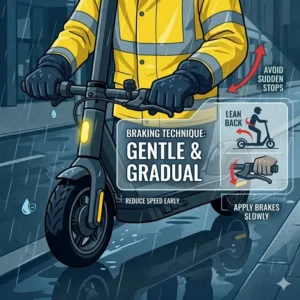
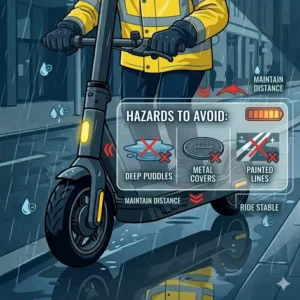
Riding in the rain requires a fundamental shift in how you handle the controls. The “coefficient of friction” on wet asphalt is roughly 30-40% lower than on dry pavement. This means your stopping distance effectively doubles.
1. The 70/30 Rule
On dry ground, you might use 100% of your rear brake. In the rain, you should balance your braking: 70% rear, 30% front. Why? Because locking the rear wheel results in a controllable skid, but locking the front wheel almost always results in an immediate crash.
2. Threshold Braking
Instead of “grabbing” the brakes, squeeze them progressively. Think of it like an orange you’re trying to juice—start slow and increase pressure. This allows the tire to maintain its “grip” on the road rather than breaking traction immediately.
3. Lean into the Turn, Not the Scooter
In dry weather, you lean your body and the scooter together. In the rain, try to keep the scooter as vertical as possible. Shift your weight to the inside of the turn while keeping the scooter upright. This ensures the maximum amount of tire tread stays in contact with the road.
Common Mistakes When Buying a “Waterproof” Scooter
The biggest mistake I see in the 2026 market is “Rating Blindness.” Riders see “IPX5” and assume they are riding a submarine. Here are the expert-level pitfalls to avoid:
-
Assuming the Warranty Covers Water Damage: Most e-scooter warranties—even for IPX6 models—explicitly exclude water damage. This is the industry’s dirty secret. The IP rating is a manufacturing standard, not a guarantee of repair.
-
Ignoring the Charging Port: A scooter can be IPX7, but if you leave the rubber charging port flap open, it’s vulnerable. Always double-check that seal before you set off.
-
Neglecting the “Deck Gap”: Some scooters have a wide gap where the steering column meets the deck. Water kicked up by the front wheel can be forced into this gap with high pressure, bypassing the electronic seals. Using a bit of black silicone sealant here is a pro-level DIY fix.
What to Expect: Real-World Performance in 2026
When you take a scooter out in the rain, don’t expect the same performance as a sunny day. Here’s the “reality check”:
-
Reduced Range: Cold rain chills the battery. Lithium-ion batteries are less efficient in the cold, and the extra “drag” from water on the road means you might see a 10-15% drop in total range.
-
Brake Noise: Even the best disc brakes will squeal when wet. This doesn’t necessarily mean they are failing, but the moisture creates a vibration that translates into a high-pitched “scream.”
-
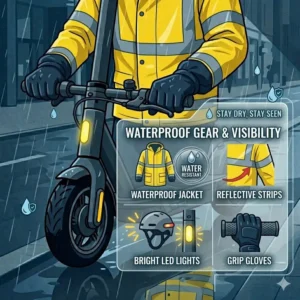
Distracted Drivers: In 2026, cars are quieter and drivers are more distracted by in-car tech. Rain obscures their mirrors and windows. You must ride with the assumption that no one can see you. High-viz vests might look “uncool,” but they are your best defense.
Features That Actually Matter (And Those That Don’t)
Marketing departments love to throw “buzzwords” at you. Here’s the expert filter on what actually aids wet-weather safety:
Features That Matter ✅
-
Large Fenders: Short “sporty” fenders look cool but will leave a “skunk stripe” of mud and water up your back and into your charging port.
-
Regenerative Braking: This slows the motor down electrically, which is much smoother than mechanical pads and less likely to cause a skid.
-
Electronic Traction Control: As seen on the Segway Ninebot Max G2, this is a literal lifesaver on slick surfaces.
Features That Don’t Matter ❌
-
RGB Underglow: While it looks neat at night, cheap LED strips are often the first thing to short out in the rain, potentially causing a fuse to blow in the main controller.
-
Top Speeds over 30mph: You should never be going 30mph in the rain on a scooter. Anything over 15-18mph in wet conditions is inviting disaster.
Safety & Regulations: The 2026 Legal Landscape
In 2026, many US cities (like New York, Chicago, and San Francisco) have begun implementing stricter “Rain Safety” ordinances for rental and private micromobility.
-
Lighting Requirements: Some jurisdictions now require a minimum of 200 lumens for the front headlight and a flashing red rear light for any “low visibility” operation (including rain).
-
Sidewalk Riding: While generally banned, some cities are even stricter during rain because pedestrians are often carrying umbrellas that block their peripheral vision. Always stay in the bike lane.
-
Battery Standards: Ensure your scooter is UL 2272 certified. This ensures the battery and charging system meet rigorous safety standards, which is especially important if the battery is exposed to moisture.
✨ Don’t Miss These Exclusive Deals!
🔍 Take your commute to the next level with these carefully selected products. Click on any highlighted item to check current pricing and availability. These tools will help you stay mobile and safe in any weather!
Conclusion
Knowing how to use electric scooter in rain safely is a combination of choosing the right hardware and respecting the physics of a wet road. While models like the Apollo City Pro and Emove Cruiser S offer the best-in-class water resistance, no machine is invincible. Your best tools are a high IP rating, a disciplined braking finger, and a dedicated post-ride maintenance routine. As we move through 2026, the technology will only get better, but the fundamentals of grip and visibility remain the same. Stay dry, stay visible, and most importantly, stay upright.
FAQs
❓ Can I ride my electric scooter in a heavy thunderstorm?
✅ No. Even with an IP66 rating, heavy thunderstorms involve lightning risks and severe visibility issues. High winds can easily knock a lightweight scooter off balance. It is always safer to wait out the storm or use public transit…
❓ Does water damage void my electric scooter warranty?
✅ In almost 90% of cases, yes. Most manufacturers include “moisture indicators” inside the deck that change color when they get wet. Even if the scooter is rated for water, internal moisture usually voids the protection plan…
❓ How do I clean my scooter after a muddy rain ride?
✅ Never use a high-pressure hose. Instead, use a damp cloth and a mild soap solution. Wipe down the frame and use a soft brush for the tires. Drying it immediately is the most important step to prevent rust…
❓ What should I do if my scooter gets submerged in a deep puddle?
✅ Turn it off immediately. Do not try to ride it. Bring it indoors, remove the deck cover if you are tech-savvy, and let it dry for at least 48 hours. Using “silica gel” packets inside the deck can help…
❓ Are solid tires safer than air-filled tires in the rain?
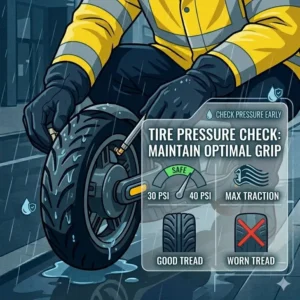
✅ No, pneumatic (air-filled) tires are generally safer. The air allows the tire to deform slightly and “grip” the road surface. Solid tires are harder and tend to slide more easily on wet, smooth surfaces like paint…
Recommended for You
- 7 Pro Tips on How to Brake Safely on Electric Scooter in 2026
- How to Turn Properly on Electric Scooter: 7 Game-Changing Tips for Effortless Turning
- How to Start Electric Scooter Step by Step: 7 Easy Steps for a Smooth and Safe Ride
Disclaimer: This article contains affiliate links. As an Amazon Associate, I earn from qualifying purchases. If you purchase products through these links, we may earn a small commission at no additional cost to you. Always consult your specific scooter’s manual before riding in wet conditions.
✨ Found this helpful? Share it with your friends! 💬🤗