So, you’ve finally joined the micro-mobility revolution and got yourself a shiny new set of wheels. I remember the first time I stood on one of these things; I was half-excited and half-terrified I’d face-plant into the pavement. Learning how to start electric scooter step by step isn’t just about pushing a button and zooming off into the sunset. It’s about understanding the machine, mastering your balance, and knowing exactly how to handle that thumb throttle without jerking forward like a caffeinated kangaroo. In this guide, I’m going to walk you through every single detail so you can ride with confidence.
✨Was this helpful? Spread the word! 🚀
Before we dive into the nitty-gritty of the startup sequence, let’s look at how electric scooters stack up against other popular ways to get around the city. While e bikes are great, the portability of a scooter is hard to beat for that last-mile commute in 2026.
Quick Comparison: Electric Scooters vs. Alternatives
| Feature | Electric Scooter | Electric Bike (e bike) | Electric Skateboard |
| Portability | High (Foldable) | Low to Medium | Very High |
| Learning Curve | Easy/Intuitive | Very Easy | Hard |
| Typical Range | 15-40 miles | 30-60 miles | 10-20 miles |
| Storage Space | Fits under a desk | Needs a rack/garage | Fits in a locker |
| Primary Use | Short Commutes | Long Commutes | Recreational |
Top 7 Electric Scooters of 2026: Expert Analysis
If you haven’t bought your ride yet, or you’re looking to upgrade, I’ve spent hours analyzing the latest tech. Here are the top 7 real-world models available right now that make the how to start electric scooter step by step process a total breeze.
1. Segway Ninebot KickScooter MAX G2 🛴
The Segway Ninebot KickScooter MAX G2 is the gold standard for commuters. It features a powerful 450W rear-wheel drive motor that can peak at 1000W, making hills feel like flat ground. What I love about the Segway Ninebot KickScooter MAX G2 is the RideyLONG technology which optimizes the motor and controller to squeeze out every bit of battery life.
-
Technical Specs: 22 mph top speed, 43-mile range, 10-inch tubeless tires, hydraulic front suspension.
-
Customer Review Analysis: Users consistently praise its “tank-like” build quality. Many riders mention that the built-in Find My Apple integration is a lifesaver for security.
-
Pros: Incredible suspension, reliable braking, long-range.
-
Cons: Quite heavy at 53 lbs, making it tough to carry up stairs.
-
Warranty: 1-year limited warranty on core components.
2. Apollo City 2024 ⚡
The Apollo City 2024 is designed for the urban jungle. This scooter features dual 500W motors and a unique triple braking system that combines regenerative braking with traditional drums. The Apollo City 2024 is famous for its “COBALT” regenerative braking, which feeds energy back into the battery every time you slow down.
-
Technical Specs: 32 mph top speed, 43-mile range, IP66 water resistance.
-
Customer Review Analysis: Commuters love the turn signals and the puncture-proof tires. Some users noted that the app setup can be a bit finicky initially.
-
Pros: Best-in-class water resistance, smooth acceleration.
-
Cons: Premium price point.
-
Warranty: 12-month warranty with an option to extend.
3. NIU KQi3 Max 🏅
If you want raw power in a sleek package, the NIU KQi3 Max is a fantastic choice. It uses a 48V lithium battery system that provides impressive torque. The NIU KQi3 Max has a wider deck than most, which is a huge plus for stability when learning how to start electric scooter step by step.
-
Technical Specs: 23.6 mph top speed, 40-mile range, 25% hill grade climbing.
-
Customer Review Analysis: Riders appreciate the bright “Halo” headlight and the overall stability. Reviewers often mention it feels more “premium” than competitors in the same price bracket.
-
Pros: Wide handlebars, excellent disc brakes.
-
Cons: Solid tires can be a bit bumpy on rough gravel.
-
Warranty: 2-year limited warranty (very generous).
4. Unagi Model One Voyager 💎
The Unagi Model One Voyager is the Ferrari of scooters. It’s incredibly lightweight and made from carbon fiber and magnesium. The Unagi Model One Voyager features dual motors, giving it plenty of zip despite its slim profile.
-
Technical Specs: 20 mph top speed, 25-mile range, 28.5 lbs weight.
-
Customer Review Analysis: “The most beautiful scooter ever,” says one reviewer. Users love the portability, though some mention the range drops significantly in dual-motor mode.
-
Pros: Ultra-portable, stunning design.
-
Cons: No suspension, so stay on smooth pavement.
-
Warranty: 1-year warranty.
5. Hiboy S2 Pro 💰
For those on a budget, the Hiboy S2 Pro is a reliable workhorse. It comes with a 500W motor and solid 10-inch tires. I often recommend the Hiboy S2 Pro to beginners because the rear dual shock absorbers help smooth out the ride without the complexity of high-end hydraulic systems.
-
Technical Specs: 19 mph top speed, 25-mile range, kinetic energy recovery system.
-
Customer Review Analysis: High marks for “value for money.” Some users suggest checking all the bolts for tightness upon arrival, which is standard for budget models.
-
Pros: Affordable, includes a seat option, good lighting.
-
Cons: Acceleration is a bit jerky compared to premium models.
-
Warranty: 12-month warranty.
6. Gotrax GXL V2 🎒
The Gotrax GXL V2 is the most popular entry-level scooter in the USA. It’s simple, effective, and perfect for short trips. The Gotrax GXL V2 is often the first scooter people buy when they are just figuring out how to start electric scooter step by step.
-
Technical Specs: 15.5 mph top speed, 12-mile range, 8.5-inch pneumatic tires.
-
Customer Review Analysis: “Perfect for campus,” is a common sentiment. While it lacks range, its simplicity is a major selling point for casual users.
-
Pros: Very light, very cheap, easy to fold.
-
Cons: Low range, not great for hills.
-
Warranty: 180-day limited warranty.
7. NAMI Burn-E 2 MAX 🚀
Finally, we have the beast—the NAMI Burn-E 2 MAX. This isn’t just a scooter; it’s a high-performance vehicle. With dual 1500W motors, the NAMI Burn-E 2 MAX is for experienced riders who need speed and off-road capability.
-
Technical Specs: 60 mph top speed, 80-mile range, 72V battery, adjustable hydraulic suspension.
-
Customer Review Analysis: Users are blown away by the power and the “cloud-like” ride. It’s frequently cited as the best high-performance scooter on the market.
-
Pros: Insane power, incredible range, fully customizable.
-
Cons: Extremely heavy (100+ lbs), very expensive.
-
Warranty: 1-year limited warranty.
✨ Don’t Miss These Exclusive Deals!
🔍 Take your commute to the next level with these carefully selected products. Click on any highlighted item to check current pricing and availability. These scooters and accessories will help you master the streets with the same confidence as a seasoned pro! ⚡
💬 Just one click – help others make better buying decisions too!😊
Technical Specifications Matrix (Spec Matrix)
| Model | Motor Power (Watts) | Top Speed (mph) | Max Range (miles) | Weight (lbs) |
| Segway Max G2 | 450W (1000W Peak) | 22 | 43 | 53 |
| Apollo City 2024 | 1000W (Dual 500W) | 32 | 43 | 57 |
| NIU KQi3 Max | 450W (700W Peak) | 23.6 | 40 | 46 |
| Unagi Model One | 500W (Dual 250W) | 20 | 25 | 28.5 |
| Hiboy S2 Pro | 500W | 19 | 25 | 36 |
| Gotrax GXL V2 | 250W | 15.5 | 12 | 26 |
| NAMI Burn-E 2 | 3000W (Dual 1500W) | 60 | 80 | 103 |
The Ultimate Guide: How to Start Electric Scooter Step by Step
Starting an electric scooter might seem like a no-brainer, but there’s a specific sequence you should follow to ensure safety and longevity for your motor. If you just jump on and mash the throttle, you might be in for a surprise. Here is the definitive guide on how to start electric scooter step by step.
Step 1: The Pre-Ride Safety Check 🛡️
Before you even think about the power button, you need to inspect your gear. I always say, “A minute of inspection saves an hour of regret.” Check your tire pressure. For scooters with pneumatic tires, like the Segway Ninebot KickScooter MAX G2, maintaining the correct PSI is crucial for preventing flats.
-
Check the Brakes: Squeeze the levers to ensure they aren’t loose.
-
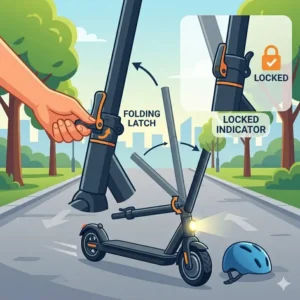
Inspect the Folding Mechanism: Make sure the latch is securely locked. You don’t want the scooter folding while you’re at top speed.
-
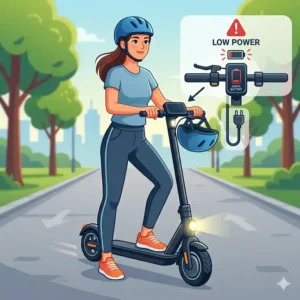
Battery Level: Ensure you have enough juice for your trip.
Step 2: Unfolding and Locking 🔓
Most modern scooters come folded for storage. To unfold, you usually release a latch near the base or on the rear fender. Lift the handlebar stem until it’s upright and clicks into place. Crucial Tip: Always double-check the locking collar or safety pin. If you’re learning how to start an electric scooter, this is the most common mistake—forgetting to fully engage the lock.
Step 3: Powering Up the Console 🔋
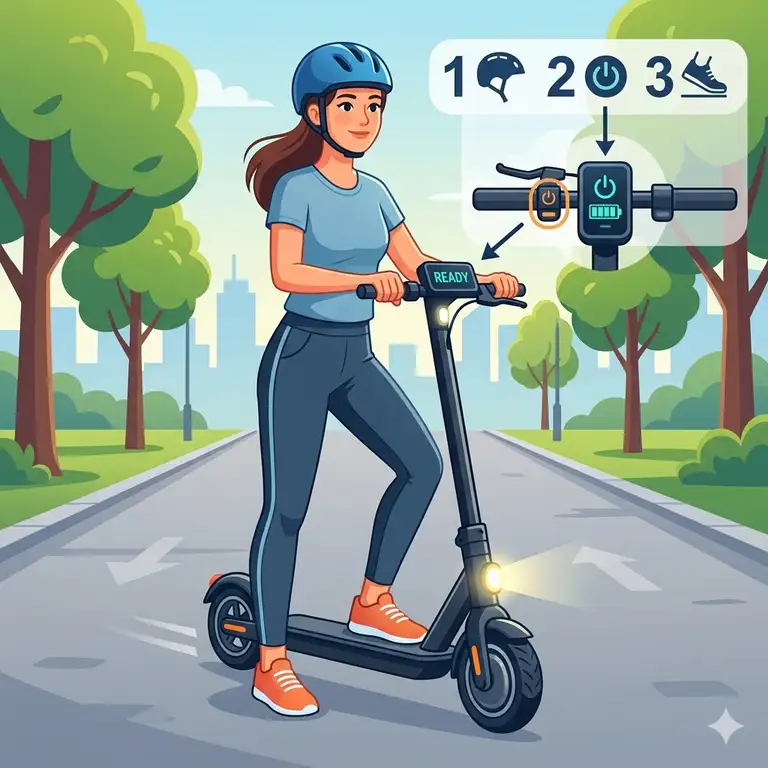
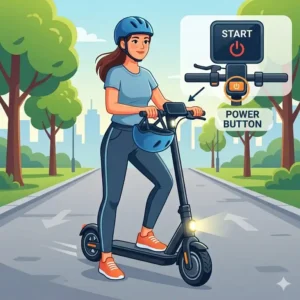
Locate the power button, usually found on the center of the handlebars or integrated into the throttle assembly. Press and hold it for 2-3 seconds. The display should light up, showing your speed, battery level, and current riding mode (usually Eco, Drive, or Sport).
-
Eco Mode: Best for beginners learning how to start electric scooter step by step. It limits acceleration and top speed.
-
Sport Mode: High torque and high speed. Save this for once you’ve mastered the basics!
Step 4: Kick-Start vs. Zero-Start 🦵
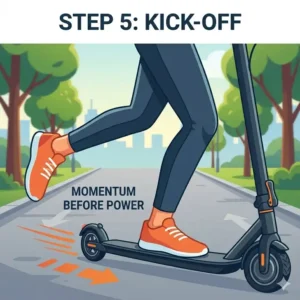
This is where many people get confused. Most electric scooters use a “kick-start” (or non-zero start) safety feature. This means the motor won’t engage until the scooter is already moving at about 2-3 mph.
-
Kick-Start: You must manually push off with one foot, get some momentum, and then press the throttle. This prevents the scooter from flying out of your hands if you accidentally bump the throttle while standing still.
-
Zero-Start: Some high-end models like the NAMI Burn-E 2 MAX allow you to start from a complete standstill. Use extreme caution here; the torque can be jarring.
Step 5: Mounting and Balance 🧘
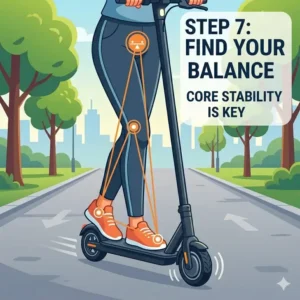
Place one foot (usually your non-dominant foot) on the front of the deck. Keep your knees slightly bent to absorb vibrations—don’t ride “stiff-legged.” As you push off with your other foot to gain speed, bring it up onto the deck. You can stand with your feet staggered (one in front of the other) or side-by-side if the deck is wide enough, like on the NIU KQi3 Max.
Step 6: Gradual Acceleration 🏎️
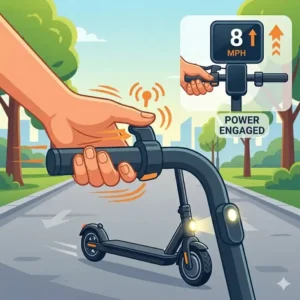
Gently press the thumb or finger throttle. Do not “whiskey throttle” (pulling it all the way back instantly). As the motor engages, you’ll feel a slight pull. Lean your body weight slightly forward to counter the acceleration. This is a key part of the start electric scooter instruction process—your body weight is your best tool for stability.
Step 7: How to Stop Safely 🛑
To slow down, release the throttle first. This often engages the electronic or regenerative braking. Then, gradually squeeze the hand brake. Shift your weight toward the back of the scooter to keep the rear wheel grounded.
Budget vs. Premium: Value Comparison
| Feature | Budget ($300-$600) | Mid-Range ($700-$1200) | Premium ($1300+) |
| Motor Type | Single Brushless DC | Enhanced Brushless | Dual Motors |
| Braking | Mechanical Disc/Drum | Dual Disc + Regen | Hydraulic Disc |
| Suspension | None or Basic Spring | Front/Rear Spring | Adjustable Hydraulic |
| Tires | Solid or Small Pneumatic | 10-inch Pneumatic | Self-healing/Off-road |
| Smart Tech | Basic LED Display | App Integration | GPS/Find My/NFC Lock |
Essential Secondary Keywords and Detailed Insights
While mastering how to start electric scooter step by step is the goal, there are several “sub-skills” you need to develop. Let’s break these down to make you a pro.
Understanding Electric Scooter Controls 🕹️
Most scooters follow a standard layout. On the right, you’ll find the throttle. On the left, the brake lever and often a bell. Some models, like the Apollo City 2024, include turn signal buttons. Learning these controls by feel is vital so you don’t have to look down while riding.
Charging Electric Scooter the Right Way 🔌
Your battery is the heart of your ride. To keep it healthy:
-
Don’t charge it immediately after a long ride; let the battery cool down for 15 minutes.
-
Use only the original charger.
-
Avoid letting the battery drop to 0%. Try to keep it between 20% and 80% for maximum longevity.
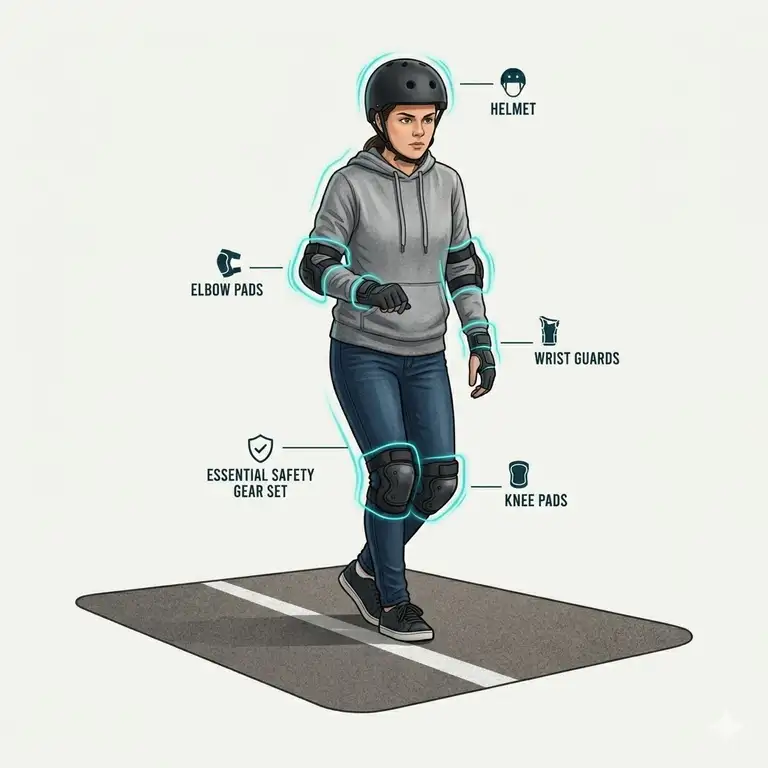
Scooter Safety Gear: Non-Negotiables ⛑️
If you’re asking “how do you start a scooter electric,” you should also be asking “how do I protect my head?”
-
Helmet: A standard bicycle helmet is okay for 15 mph, but for scooters hitting 20+ mph, I recommend a downhill MTB helmet or a full-face helmet.
-
Gloves: In a fall, your hands usually hit the ground first.
-
Lights: Even if your scooter has built-in lights, adding a high-lumen clip-on light to your helmet makes you much more visible to cars.
Locking Electric Scooter: Security Tips 🔒
Scooter theft is real. Never rely solely on the digital lock in your app. Use a high-quality U-lock or a heavy-duty chain lock. I recommend threading the lock through the folding mechanism or the frame, not just the wheel, which can sometimes be unscrewed.
Features and Benefits Comparison
| Feature | Benefit to the Rider | Best For |
| Regenerative Braking | Increases range, reduces brake wear. | Long-distance commuters. |
| Pneumatic Tires | Smoother ride, better grip on wet roads. | Rough city streets. |
| Solid Tires | Zero maintenance, no flat tires. | Riders who hate repairs. |
| Dual Motors | Better hill climbing, faster acceleration. | Hilly areas (like San Francisco). |
| IP Water Rating | Ability to ride in light rain safely. | All-weather commuters. |
Deep Dive: The Physics of Starting an Electric Scooter
When you engage the electric scooter startup process, several things happen under the deck. Most scooters use Brushless DC (BLDC) motors. Unlike old-school brushed motors, these are incredibly efficient and require almost zero maintenance.
The controller (the “brain” of the scooter) receives a signal from your throttle. It then draws current from the Lithium-ion battery and sends it to the motor in precisely timed pulses. If your scooter has “Sine Wave” controllers, the acceleration will feel buttery smooth. Cheaper “Square Wave” controllers can feel a bit jerky or “clicky.”
Understanding this helps you realize why a kick start is often required. BLDC motors can be inefficient and draw massive amounts of current when starting from a dead stop. By giving it a little kick, you’re helping the motor get past that initial resistance, which protects the electronics and extends your range.
Terrain Compatibility Analysis
| Terrain Type | Best Scooter Model | Key Feature Needed |
| Flat Pavement | Gotrax GXL V2 | Lightweight frame. |
| Bumpy Sidewalks | Segway Max G2 | Hydraulic suspension. |
| Steep Hills | NAMI Burn-E 2 | High-voltage battery (72V). |
| Wet Surfaces | Apollo City 2024 | High IP rating (IP66). |
| Indoor/Office | Unagi Model One | Ultra-portability. |
Maintenance and Long-Term Care 🛠️
Once you’ve figured out how to start electric scooter step by step, you need to know how to keep it running. A well-maintained scooter can last for thousands of miles.
-
Bolt Tightening: Vibrations from the road can loosen screws over time. Check your stem bolts and folding mechanism every 100 miles.
-
Tire Care: If you have pneumatic tires, check the pressure weekly. Low pressure is the #1 cause of “pinch flats.”
-
Cleaning: Use a damp cloth. Never pressure wash your scooter, even if it has a high IP rating. High-pressure water can bypass seals and fry your controller.
-
Brake Adjustment: Over time, brake cables stretch. You can usually adjust the tension with a small barrel adjuster located on the brake lever or the caliper itself.
Cost of Ownership Breakdown (Per Year)
| Expense Category | Estimated Cost | Notes |
| Electricity | $15 – $30 | Based on daily charging. |
| Tires/Tubes | $40 – $80 | Replacing 1-2 tubes or a tire. |
| Safety Gear Upgrade | $50 – $150 | New helmet or gloves. |
| Brake Pads | $20 – $40 | Every 500-1000 miles. |
| Total | **$125 – $300** | Much cheaper than a car or Uber! |
Common Variations of the Starting Process
Depending on where you live or what you’re searching for, you might see terms like “start e scooter” or “starting guide for e scooters.” Regardless of the terminology, the fundamentals remain the same. However, some specific brands have unique quirks:
-
App-Locked Scooters: Some models won’t even power on until you “unlock” them via a Bluetooth connection on your phone. This is a great anti-theft feature.
-
NFC Keycards: Some scooters require you to tap an NFC card against the display to start the startup guide for e scooters process.
-
Key Ignition: A few heavy-duty scooters use a physical key, just like a moped.
When you’re looking for how do you start a scooter electric, always check if your specific model has a “Hidden Menu” (P-settings). These settings allow you to toggle between kick-start and zero-start, change speed units (mph vs km/h), and adjust the strength of the regenerative braking.
User Compatibility Matrix
| Rider Profile | Recommended Scooter | Why? |
| College Student | Gotrax GXL V2 | Budget-friendly, light for dorms. |
| Daily Commuter | Segway Max G2 | Reliable, great range, low maintenance. |
| Heavy Rider (250+ lbs) | NIU KQi3 Max | Strong deck, high torque motor. |
| Thrill Seeker | NAMI Burn-E 2 | Extreme speed and suspension. |
| Aesthetic Focused | Unagi Model One | Modern, minimalist design. |
✨ Don’t Miss These Exclusive Deals!
🔍 Ready to grab your first ride? Click on the products we’ve analyzed to see the latest deals on Amazon. Whether you want a budget-friendly Gotrax or a premium Unagi, there’s a perfect scooter waiting for you. Don’t wait—start your journey today! 🚀
Conclusion
Learning how to start electric scooter step by step is the first step toward a more efficient, fun, and eco-friendly way of life. From the moment you unfold that stem to the second you feel the wind against your face as you accelerate, it’s an experience that never gets old. By choosing the right model—whether it’s the reliable Segway Ninebot KickScooter MAX G2 or the speedy Apollo City 2024—and following proper safety protocols, you’re setting yourself up for success.
Remember to always wear your helmet, respect the rules of the road, and take care of your battery. The world of micro-mobility is evolving fast, and with your new knowledge, you’re ready to lead the pack in 2026.
FAQs
✅ In most states, you do not need a specific license to ride an electric scooter, but local laws vary. Generally, if the scooter's top speed is under 20 mph, it's treated like a bicycle. Always check your city's DMV...
✅ Sidewalk riding laws depend on your specific city and state. Many major cities like NYC and Chicago prohibit sidewalk riding to protect pedestrians. It is generally safer and more legal to use bike lanes or the right-hand shoulder...
✅ Charging times typically range from 3-8 hours depending on the battery capacity and charger output. Budget models with smaller batteries charge faster, while long-range beasts like the NAMI may take 10+ hours if using a single standard charger...
✅ It depends on the IP (Ingress Protection) rating. Scooters with an IP66 or higher, like the Apollo City, can handle rain. However, most manufacturers advise against it because wet roads are slippery and water damage can void your warranty...
✅ First, check the battery level and ensure the charging port is clear. Next, verify the folding mechanism is locked, as some models have safety sensors. If the console lights up but the motor won't engage, ensure you've given it... ❓ Do I need a license to ride an electric scooter in the USA?
❓ Can I ride my electric scooter on the sidewalk?
❓ How long does it take to fully charge a scooter battery?
❓ Is it safe to ride an electric scooter in the rain?
❓ What should I do if my electric scooter won't start?
Recommended for You:
- How to Balance on Electric Scooter First Time: 7 Easy Pro Steps
- Master How to Ride an Electric Scooter Safely for Beginners: 7 Life-Saving Tips
- 7 Best Scooter Battery Chargers: Expert 2026 Review
Disclaimer: This article contains affiliate links. If you purchase products through these links, we may earn a small commission at no additional cost to you.
✨ Found this helpful? Share it with your friends! 💬🤗