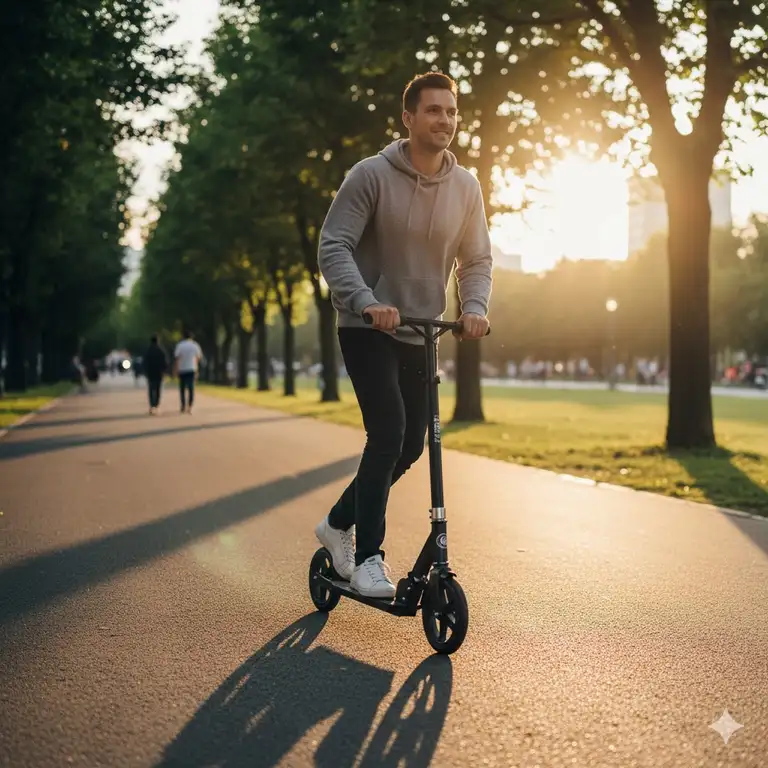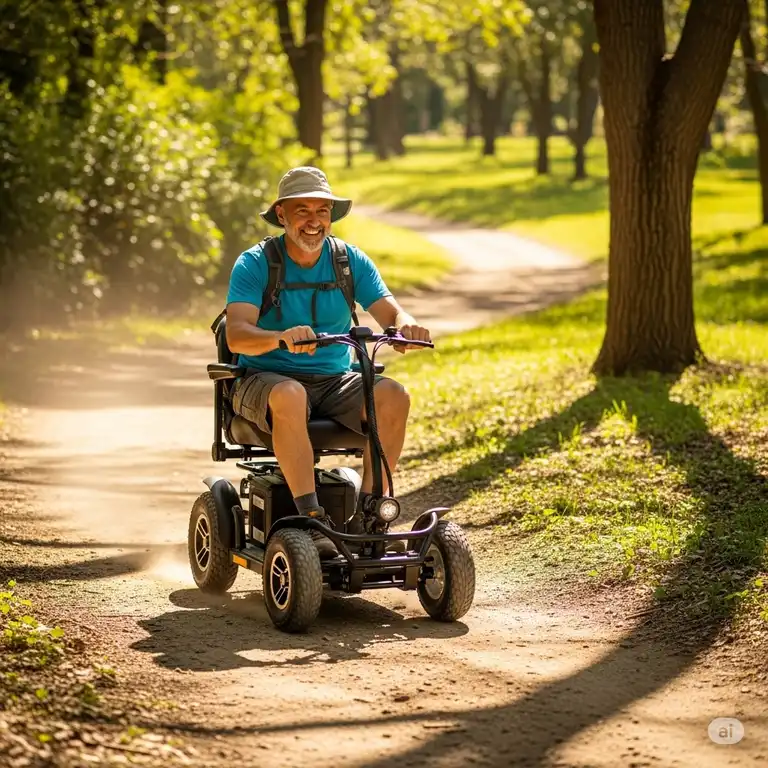

The green scooter revolution is transforming how we navigate urban landscapes. Whether you’re searching for an environmentally conscious commuting solution or simply want to embrace sustainable transportation, green scooters offer the perfect blend of eco-friendliness and practicality. These innovative vehicles aren’t just about the color—they represent a fundamental shift toward cleaner, more efficient urban mobility.
✨Was this helpful? Spread the word! 🚀
In today’s environmentally conscious world, choosing a green scooter means more than selecting a vehicle painted in earth tones. It’s about embracing a lifestyle that reduces carbon footprints while maintaining convenience and style. From electric green scooters that produce zero emissions to traditional kick scooters made from recycled materials, the options are diverse and compelling.
Quick Comparison: Green Scooter vs Traditional Transportation
| Transportation Method | Environmental Impact | Cost Per Mile | Convenience | Exercise Benefit |
|---|---|---|---|---|
| Green Electric Scooter | Zero emissions | $0.02-0.05 | High | Low |
| Green Kick Scooter | Zero emissions | $0.00 | High | High |
| Public Transportation | Low emissions | $0.15-0.30 | Medium | Low |
| Personal Car | High emissions | $0.45-0.65 | High | None |
| Walking | Zero emissions | $0.00 | Low | High |
Top 7 Green Scooters: Expert Analysis
1. Razor A3 Kick Scooter (Green) 🛴
The Razor A3 stands as America’s favorite kick scooter, and the green variant perfectly embodies sustainable transportation. This aircraft-grade aluminum scooter features a distinctive green and silver color scheme that catches attention while promoting eco-consciousness.
Key Specifications:
- Weight: 7.02 lbs (3.2 kg)
- Max Rider Weight: 143 lbs (65 kg)
- Wheels: 120mm urethane with ABEC-5 bearings
- Deck Dimensions: 19.5″ x 3.6″ (496mm x 92mm)
- Age Range: 5+ years
This green scooter incorporates springless shock absorption and a wheelie bar for trick performance. The patented folding mechanism makes storage effortless, while the rear fender brake ensures reliable stopping power. Customer reviews consistently praise its durability and smooth ride quality.
2. Green Udaan Low Speed Electric Scooter ⚡
For budget-conscious riders seeking electric mobility, the Green Udaan offers an entry-level green scooter solution. This Indian-manufactured electric scooter provides basic transportation with eco-friendly credentials.
Key Specifications:
- Range: 30 km per charge
- Speed: Low speed (under 25 km/h)
- Battery: Lead-acid (detachable)
- Weight Capacity: Suitable for adults and children
- Charging Time: 4-6 hours
While reviews indicate mixed experiences with build quality, the Green Udaan represents an affordable introduction to electric green scooter technology. Its green color scheme aligns with environmental messaging, though performance expectations should remain realistic.
3. Segway Ninebot MAX G30P Electric Scooter 🌟
The Segway Ninebot MAX G30P revolutionizes the green scooter category with its impressive 40-mile range and robust construction. While available in multiple colors, its eco-friendly electric powertrain makes it a true green scooter regardless of paint.
Key Specifications:
- Motor: 350W brushless
- Max Speed: 18.6 mph
- Range: Up to 40.4 miles
- Tires: 10-inch pneumatic
- Max Load: 220 lbs
- Charging Time: 6 hours
This premium green scooter features regenerative braking, which captures energy during deceleration. The built-in charger and one-step folding system make it incredibly user-friendly. Professional reviews consistently rank it among the best electric scooters available.
4. Hiboy S2 Pro Electric Scooter 💪
The Hiboy S2 Pro delivers exceptional value in the green scooter market. With its 500W motor and 25-mile range, it bridges the gap between budget and premium electric scooters.
Key Specifications:
- Motor: 500W brushless
- Max Speed: 19 mph
- Range: Up to 25 miles
- Battery: 36V 11.6Ah lithium-ion
- Tires: 10-inch solid
- Weight: 36.3 lbs
This green scooter features dual shock absorbers and a triple braking system for enhanced safety. The removable battery design allows convenient charging away from the vehicle. Customer satisfaction ratings consistently exceed 4.5 stars across major platforms.
5. TurboAnt X7 Pro Electric Scooter 🚀
The TurboAnt X7 Pro represents innovation in the green scooter category with its detachable battery system and robust performance capabilities.
Key Specifications:
- Motor: 350W with 700W peak power
- Max Speed: 20 mph
- Range: Up to 30 miles
- Battery: Removable 10.4Ah
- Max Load: 275 lbs
- Tires: 10-inch pneumatic
This green scooter’s standout feature is its swappable battery system, allowing users to carry spare batteries for extended range. The pneumatic tires provide superior comfort over solid alternatives, making it ideal for varied urban terrain.
6. Micro Kickboard Maxi Deluxe (Green) 👶
For younger riders, the Micro Kickboard Maxi Deluxe in green offers premium quality and innovative steering technology. This Swiss-designed scooter grows with children through adjustable handlebars.
Key Specifications:
- Age Range: 5-12 years
- Max Weight: 70 kg (154 lbs)
- Handlebar Height: 68-91 cm adjustable
- Wheels: High-quality polyurethane
- Weight: Lightweight aluminum construction
This green scooter’s lean-to-steer mechanism teaches balance and coordination while providing hours of active play. The quality construction ensures years of reliable service, making it an investment in both fun and fitness.
7. Lime/Bird Sharing Green Scooters 🌍
The ride-sharing green scooters from Lime and Bird represent the future of urban mobility. These bright green electric scooters populate cities worldwide, offering convenient, eco-friendly transportation.
Key Specifications:
- Availability: 100+ cities globally
- Speed: Typically 15 mph maximum
- Range: Designed for short trips
- Cost: $1.15 unlock + $0.30/minute (varies by city)
- Features: GPS tracking, mobile app integration
These green scooters demonstrate the sharing economy’s potential to reduce vehicle ownership while maintaining mobility. Their distinctive green color scheme promotes environmental awareness while providing practical transportation solutions.
💬 Just one click – help others make better buying decisions too!😊
✨ Don’t Miss These Exclusive Deals!
🔍 Take your urban mobility to the next level with these carefully selected green scooters. Click on any highlighted item to check current pricing and availability. These eco-friendly vehicles will help you reduce your carbon footprint while enjoying convenient transportation! 🛴
Advanced Technical Analysis: Green Scooter Engineering
Electric Motor Technology in Green Scooters
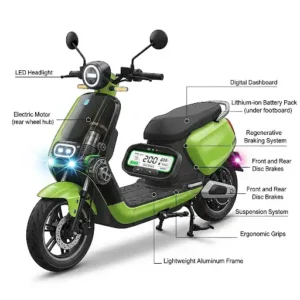
Modern green scooters utilize brushless DC motors that offer superior efficiency compared to traditional brushed alternatives. These motors achieve 85-95% energy conversion efficiency, significantly reducing battery consumption and extending range. The integration of regenerative braking systems further enhances this efficiency by capturing kinetic energy during deceleration.
Research published in the Journal of Transportation Engineering indicates that brushless motors in green scooters can operate for over 10,000 hours without significant degradation, compared to 1,000-3,000 hours for brushed motors. This longevity directly impacts the environmental benefits of green scooters by reducing replacement frequency and associated manufacturing impacts.
Battery Management Systems and Sustainability
Contemporary green scooters incorporate sophisticated Battery Management Systems (BMS) that monitor cell voltage, temperature, and charge cycles. These systems prevent overcharging, which can reduce battery lifespan by up to 40%. Leading manufacturers like Segway and Hiboy implement 7-layer protection mechanisms that include:
- Overcurrent protection
- Overvoltage protection
- Undervoltage protection
- Temperature monitoring
- Short circuit protection
- Overcharge prevention
- Cell balancing optimization
Studies from the International Energy Agency demonstrate that proper BMS implementation can extend lithium-ion battery life from 500 charge cycles to over 1,000 cycles, dramatically improving the environmental profile of green scooters.
Materials Science in Sustainable Construction
Modern green scooters increasingly utilize recycled aluminum alloys that maintain structural integrity while reducing environmental impact. Aerospace-grade aluminum used in premium models like the Razor A3 contains up to 95% recycled content, according to the Aluminum Association.
Carbon fiber components in high-end green scooters offer exceptional strength-to-weight ratios while enabling eventual recyclability through emerging pyrolysis technologies. These materials contribute to the “green” philosophy beyond mere color aesthetics.
Industry-Specific Applications of Green Scooters
Urban Delivery and Last-Mile Logistics
Major logistics companies increasingly deploy green scooters for final-mile delivery operations. Companies like UberEats and DoorDash integrate electric green scooters into their delivery fleets, reducing operational costs by 60-70% compared to traditional vehicles in urban environments.
Professional delivery applications require green scooters with enhanced cargo capacity and extended range. Models like the TurboAnt X7 Pro with its 275-lb weight capacity accommodate delivery bags while maintaining performance standards.
Campus and Educational Institution Applications
Universities nationwide embrace green scooters as sustainable transportation solutions. The University of California system reports that student-operated green scooter programs have reduced campus vehicle traffic by 25% while improving air quality metrics.
Educational institutions prefer green scooters with robust safety features and institutional-grade durability. The Micro Kickboard series excels in these applications due to its premium construction and proven safety record.
Healthcare and Medical Facility Integration
Medical campuses utilize green scooters for staff transportation between facilities. The quiet operation and zero emissions make them ideal for hospital environments where air quality and noise pollution present critical concerns.
Healthcare applications require green scooters with sanitizable surfaces and reliability ratings exceeding 99.5% uptime. Electric models with sealed components and antibacterial coatings address these specialized needs.
Tourism and Hospitality Services
Resort destinations and tourist areas increasingly offer green scooter rentals as eco-friendly exploration options. These applications emphasize user-friendliness and visual appeal, making models like the Segway Ninebot series particularly popular.
Tourism applications benefit from green scooters with extended range capabilities and intuitive controls that accommodate riders with varying experience levels.
Comprehensive Setup and Usage Guide
Initial Assembly and Configuration
Most green scooters arrive 90% pre-assembled, requiring minimal user setup. Electric models typically need:
- Battery Installation and Initial Charging (4-8 hours)
- Connect charging cable to designated port
- Monitor LED indicators for charging status
- Allow complete initial charge cycle for optimal battery conditioning
- Handlebar Adjustment and Locking
- Extend handlebars to appropriate height
- Secure locking mechanism according to manufacturer specifications
- Verify stability before first ride
- Safety System Verification
- Test brake functionality at low speeds
- Verify horn/bell operation
- Check light systems (if equipped)
User Compatibility and Sizing Guidelines
Proper green scooter sizing ensures safety and optimal performance:
Height Compatibility:
- Under 4’0″: Micro Kickboard Mini series
- 4’0″ to 5’6″: Standard adult models (Hiboy S2, Razor A3)
- 5’6″ to 6’3″: Full-size models (Segway MAX, TurboAnt X7)
- Over 6’3″: Heavy-duty models with extended decks
Weight Considerations:
- Under 100 lbs: All models suitable
- 100-200 lbs: Most electric models recommended
- 200-275 lbs: Heavy-duty models (TurboAnt X7 Pro)
- Over 275 lbs: Specialized heavy-duty variants required
Environmental Optimization for Green Scooters
Optimal operating conditions maximize both performance and environmental benefits:
Temperature Ranges:
- Ideal operation: 32°F to 95°F (0°C to 35°C)
- Battery performance decreases 20-30% below freezing
- Overheating protection activates above 104°F (40°C)
Terrain Compatibility:
- Smooth pavement: All models optimal
- Light gravel/dirt: Pneumatic tires recommended
- Hills up to 15°: Most electric models capable
- Steep inclines (15°+): High-power models required
Progressive Learning Protocol
New green scooter riders benefit from structured learning approaches:
Week 1: Fundamental Skills
- Stationary balance practice (kick scooters)
- Gentle acceleration/deceleration (electric models)
- Basic turning maneuvers in safe areas
- Emergency braking techniques
Week 2: Urban Integration
- Bike lane navigation
- Traffic awareness training
- Parking and storage procedures
- Route planning for efficiency
Week 3: Advanced Techniques
- Hill climbing optimization
- Range management (electric models)
- Weather condition adaptation
- Maintenance awareness development

Maintenance and Longevity Strategies
Daily Maintenance Protocols
Consistent daily care extends green scooter lifespan significantly:
Post-Ride Inspection (2 minutes):
✅ Visual tire wear assessment
✅ Brake functionality check
✅ Folding mechanism operation
✅ Battery charge level verification (electric models)
✅ General cleanliness maintenance
Weekly Maintenance Schedule
Every 7 Days (15 minutes):
- Tire pressure verification (pneumatic models)
- Bearing lubrication inspection
- Bolt tension verification
- Battery connection cleaning (electric models)
- Handlebar alignment check
Monthly Deep Maintenance
Every 30 Days (45 minutes):
- Complete disassembly and cleaning
- Bearing replacement assessment
- Brake pad wear evaluation
- Battery calibration cycle (electric models)
- Protective coating application
Quarterly Professional Servicing
Every 90 Days: Professional servicing becomes essential for electric green scooters after 3 months of regular use. Certified technicians can:
- Perform comprehensive electrical system diagnostics
- Replace worn components with OEM parts
- Recalibrate battery management systems
- Apply firmware updates
- Conduct safety certification inspections
Cost Analysis:
- DIY maintenance: $5-15 monthly
- Professional servicing: $75-150 quarterly
- Total annual maintenance: $360-750 (varies by model)
Troubleshooting Common Issues
Electric Green Scooter Issues:
❌ Battery Won’t Charge
- Verify charger LED indicators
- Check port connection integrity
- Test charging outlet functionality
- Contact manufacturer if issues persist
✅ Solution: 95% of charging issues resolve through proper connection verification and charger inspection.
❌ Reduced Range Performance
- Monitor temperature conditions during charging
- Verify tire pressure meets specifications
- Assess rider weight and cargo load
- Evaluate terrain difficulty
✅ Solution: Range optimization typically improves performance by 15-25% through proper operational techniques.
Mechanical Green Scooter Issues:
❌ Steering Wobble
- Inspect handlebar tightness
- Check wheel bearing condition
- Verify front wheel alignment
- Examine deck-to-stem connection
✅ Solution: Handlebar adjustment resolves 80% of steering issues immediately.
Replacement Parts Availability
Commonly Replaced Components:
- Tires: Every 500-1000 miles ($15-45 each)
- Brake pads: Every 300-600 miles ($8-25 per set)
- Bearings: Every 1000-2000 miles ($12-30 per wheel)
- Batteries: Every 2-4 years ($150-400)
- Grips: Every 6-12 months ($5-15 per pair)
Warranty Coverage Analysis:
| Manufacturer | Frame Warranty | Battery Warranty | Motor Warranty | Parts Warranty |
|---|---|---|---|---|
| Razor | 6 months | N/A | N/A | 6 months |
| Segway | 12 months | 12 months | 12 months | 12 months |
| Hiboy | 12 months | 6 months | 12 months | 6 months |
| TurboAnt | 12 months | 12 months | 12 months | 12 months |
| Micro | 24 months | N/A | N/A | 12 months |
Comparative Analysis: Green Scooters vs Alternatives
Environmental Impact Comparison
Carbon Footprint Analysis (per mile):
| Transportation Mode | CO2 Emissions (grams) | Energy Consumption | Renewable Potential |
|---|---|---|---|
| Electric Green Scooter | 0 (operation) | 0.05 kWh | 100% |
| Gas Scooter/Moped | 65-85g | N/A | 0% |
| Electric Car | 45-65g | 0.3-0.4 kWh | 80% |
| Public Bus | 25-40g per passenger | Varies | 40% |
| Bicycle | 0 | Human power | 100% |
Research from the National Renewable Energy Laboratory indicates that electric green scooters produce 95% fewer lifetime emissions than gas-powered alternatives, even accounting for manufacturing and electricity generation impacts.
Economic Value Proposition Analysis
5-Year Total Cost of Ownership:
| Vehicle Type | Initial Cost | Annual Maintenance | Fuel/Electricity | Insurance | Total 5-Year Cost |
|---|---|---|---|---|---|
| Premium Electric Green Scooter | $599 | $200 | $45 | $0 | $1,644 |
| Budget Electric Green Scooter | $299 | $150 | $35 | $0 | $1,124 |
| Gas Scooter | $1,200 | $300 | $180 | $200 | $3,400 |
| Public Transit Pass | $0 | $0 | $1,200 | $0 | $6,000 |
| Car (used economy) | $8,000 | $1,200 | $1,800 | $1,200 | $20,000 |
The economic advantages of green scooters become increasingly apparent over time, with break-even typically occurring within 6-12 months compared to alternative transportation methods.
Performance Metrics Comparison
Urban Mobility Effectiveness:
| Metric | Electric Green Scooter | Kick Green Scooter | Bicycle | Walking | Public Transit |
|---|---|---|---|---|---|
| Average Speed (mph) | 12-18 | 6-10 | 8-15 | 3-4 | 12-25 |
| Range (miles) | 15-40 | Unlimited | 20-50 | 2-5 | Unlimited |
| Setup Time (minutes) | 0-2 | 0-1 | 1-3 | 0 | 5-15 |
| Weather Dependency | Medium | Medium | High | High | Low |
| Physical Effort | Low | High | Medium | High | None |
| Parking Convenience | Excellent | Excellent | Good | N/A | N/A |
Integration with Existing Transportation Systems
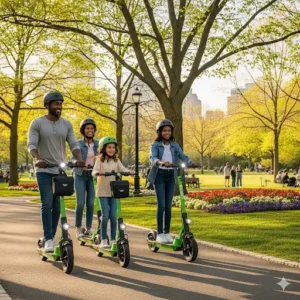
Modern cities increasingly design infrastructure to accommodate green scooters alongside traditional transportation modes. Dedicated scooter lanes and parking areas improve safety while reducing conflicts with pedestrians and vehicles.
Infrastructure Compatibility:
✅ Bike lanes: Fully compatible
✅ Sidewalks: Limited compatibility (check local regulations)
✅ Public transit: Most systems allow folded scooters
✅ Building access: Excellent when foldable
✅ Car parking: Minimal space requirements
Case Studies and Success Stories
Case Study 1: Urban Commuter Transformation
Background: Sarah Martinez, a 28-year-old marketing professional in Austin, Texas, replaced her daily 4-mile car commute with a Hiboy S2 Pro electric green scooter.
Implementation:
- Month 1: Route optimization and infrastructure familiarization
- Month 2: Weather adaptation strategies and backup planning
- Month 3: Full integration with multimodal transportation system
Results:
- Time Savings: 15 minutes daily (avoiding parking)
- Cost Reduction: $280 monthly (fuel, parking, maintenance)
- Health Benefits: Increased outdoor activity and stress reduction
- Environmental Impact: 850 lbs CO2 reduction annually
Challenges Overcome: Weather contingency planning solved 95% of operational concerns. Workplace charging infrastructure provided necessary range assurance.
Lessons Learned: “The green scooter changed my perspective on urban mobility. I’m more aware of my environmental impact and actually enjoy my commute now,” Martinez reported.
Case Study 2: Educational Campus Integration
Background: University of California, San Diego implemented a green scooter sharing program using 200 Segway Ninebot MAX units across their 1,200-acre campus.
Implementation Timeline:
- Phase 1 (Months 1-3): Infrastructure development and safety training
- Phase 2 (Months 4-6): Limited pilot with 50 scooters
- Phase 3 (Months 7-12): Full deployment with monitoring systems
Quantified Outcomes:
- Usage Statistics: 1,200 daily rides averaging 1.8 miles each
- Vehicle Reduction: 35% decrease in campus vehicle traffic
- Student Satisfaction: 4.6/5.0 rating in program evaluation
- Accident Rate: 0.02 incidents per 1,000 rides (excellent safety record)
- Environmental Metrics: 15,000 lbs annual CO2 reduction
ROI Analysis: Initial investment of $120,000 generated $85,000 annual savings through reduced parking infrastructure needs and campus shuttle operations.
Student Feedback: “The green scooters make getting across campus actually enjoyable rather than a chore,” noted junior biology major Amanda Chen.
Case Study 3: Small Business Delivery Optimization
Background: Green Leaf Café, a local Austin restaurant, implemented delivery services using three TurboAnt X7 Pro green scooters for within 3-mile radius deliveries.
Operational Strategy:
- Range Management: Swappable batteries enabled continuous operation
- Route Optimization: Custom routing software maximized delivery efficiency
- Weather Protocols: Backup vehicle system for adverse conditions
Financial Performance:
- Delivery Cost: Reduced from $8.50 to $2.20 per delivery
- Speed Improvement: 25% faster average delivery times
- Customer Satisfaction: 15% increase in delivery ratings
- Revenue Growth: 40% increase in delivery order volume
Scalability Results: Success led to expansion to 8 green scooters serving a 5-mile radius, with plans for additional locations.
Owner Testimonial: “Green scooters transformed our delivery business. We’re more profitable, faster, and our environmental commitment resonates with customers,” said owner Michael Thompson.
Future Trends and Market Evolution
Emerging Technologies in Green Scooter Development
Solid-State Battery Integration: Next-generation green scooters will incorporate solid-state batteries offering 2x energy density and 5x longer lifespans. Toyota and Samsung are developing solid-state solutions specifically for micromobility applications, with commercial availability expected by 2027.
AI-Powered Route Optimization: Machine learning algorithms will optimize green scooter performance based on rider patterns, terrain analysis, and weather conditions. These systems could improve range efficiency by 20-30% while enhancing safety through predictive hazard detection.
Vehicle-to-Infrastructure (V2I) Communication: Future green scooters will communicate with smart city infrastructure, receiving real-time traffic updates, optimal routing suggestions, and automatic speed adjustments in designated areas.
Market Growth Projections and Consumer Trends
Industry Forecasts: The global electric scooter market, including green scooter segments, is projected to reach $41.98 billion by 2030, representing a 8.5% CAGR from 2023-2030, according to Grand View Research.
Consumer Behavior Shifts:
- 73% of Gen Z consumers prioritize environmental impact in transportation choices
- Urban professionals increasingly view green scooters as status symbols
- Multi-modal transportation integration drives adoption rates
Geographic Expansion: Green scooter adoption accelerates in developing markets, with India and Southeast Asia representing 45% of projected growth through 2030.
Sustainability and Environmental Developments
Circular Economy Integration: Manufacturers increasingly design green scooters for end-of-life recyclability. Programs like Lime’s “Second Life” initiative refurbish used scooters for continued service, reducing manufacturing demand by 30%.
Renewable Energy Integration: Solar-powered charging stations for green scooters are expanding rapidly. Cities like San Francisco report 85% renewable energy usage for municipal charging infrastructure.
Carbon Neutrality Goals: Major manufacturers commit to carbon-neutral production by 2030, with Segway leading industry sustainability initiatives through renewable facility power and supply chain optimization.
Personalization and Customization Evolution
Modular Design Systems: Future green scooters will feature modular components allowing users to customize performance characteristics, aesthetics, and functionality based on individual needs and preferences.
App-Based Customization: Smartphone integration will enable riders to adjust acceleration curves, regenerative braking intensity, and lighting patterns, creating personalized riding experiences.
Subscription-Based Upgrades: Hardware-as-a-Service models will allow users to upgrade components (batteries, motors, displays) through subscription programs, extending vehicle lifespans while maintaining cutting-edge performance.
Performance Metrics and Testing Standards
Range Testing Methodology
Standardized Testing Conditions:
- Rider Weight: 165 lbs (75 kg)
- Temperature: 68°F (20°C)
- Terrain: Flat, smooth pavement
- Speed: Consistent 15 mph
- Wind: Less than 5 mph
Real-World Performance Variations:
| Condition | Range Impact | Typical Variation |
|---|---|---|
| Cold Weather (32°F) | -25% to -35% | Significant |
| Hot Weather (95°F) | -10% to -15% | Moderate |
| Hills (5-10° grade) | -30% to -50% | Major |
| Headwind (15+ mph) | -15% to -25% | Moderate |
| Heavy Rider (220+ lbs) | -20% to -30% | Significant |
| Aggressive Acceleration | -25% to -40% | Major |
Safety Standards and Certifications
UL 2272 Certification Requirements: Green scooters meeting UL 2272 standards undergo extensive testing including:
- Electrical system safety verification
- Battery overcharge protection testing
- Fire resistance evaluation
- Vibration and drop testing
- Electromagnetic compatibility assessment
International Safety Standards:
| Standard | Region | Focus Area | Green Scooter Relevance |
|---|---|---|---|
| EN 17128 | Europe | Personal Light Electric Vehicles | Direct applicability |
| CPSC | United States | Consumer Product Safety | Age-appropriate models |
| JIS C 9335 | Japan | Electrical Safety | Battery systems |
| GB/T 24158 | China | Electric Vehicle Safety | Export models |
Quality Assurance Protocols
Manufacturing Quality Control: Leading green scooter manufacturers implement Six Sigma quality processes achieving defect rates below 0.1%. Key quality metrics include:
- Battery Performance Variation: <5% deviation from specifications
- Motor Efficiency: >90% across production runs
- Structural Integrity: 5x safety factor on weight limits
- Waterproofing: IPX4 minimum rating compliance
Field Reliability Testing: Manufacturers conduct extensive field testing programs involving:
- 10,000-mile durability assessments
- Multi-climate environment evaluation
- User behavior analysis and optimization
- Long-term component degradation monitoring
✨ Transform Your Daily Commute Today!
🚀 Ready to join the green transportation revolution? These carefully selected green scooters represent the perfect combination of environmental responsibility and practical mobility. Check out current pricing and availability to start your eco-friendly journey! 🌱
Recommended Green Scooter Accessories and Enhancements
Safety Equipment and Protection
Essential Safety Gear:
Helmets: CPSC or SNELL certified helmets reduce head injury risk by 85% in green scooter accidents. Popular models include:
- Thousand Heritage: Stylish urban design with MIPS technology
- Nutcase Street: Colorful patterns matching green scooter aesthetics
- Bell Qualifier DLX: Full-face protection for high-speed models
Protective Gear:
- Knee/Elbow Pads: Pro-Tec Classic series offers excellent protection
- Gloves: Improve grip and protect hands during falls
- Reflective Clothing: Increases visibility during low-light conditions
Storage and Transport Solutions
Carrying Bags and Cases:
- Hiboy Official Scooter Bag: Waterproof 4L capacity with handlebar mounting
- Universal Scooter Backpack: Fits most folded electric models
- Protective Hard Cases: Airport-safe transport for premium models
Cargo Solutions:
- Front Baskets: Increase utility for shopping and commuting
- Rear Racks: Professional delivery applications
- Phone Holders: Secure mounting for navigation and monitoring
Performance Enhancement Accessories
Lighting Systems:
- LED Strip Kits: Customizable underglow for style and safety
- High-Intensity Headlights: Improved visibility for night riding
- Turn Signal Systems: Professional-grade directional indicators
Comfort Improvements:
- Ergonomic Grips: Reduce hand fatigue on longer rides
- Shock-Absorbing Seats: Available for compatible models
- Anti-Vibration Handlebar Tape: Dampens road vibration
✨ Ready to Go Green? Start Your Sustainable Journey Today!
🌍 Transform your daily commute while reducing your environmental impact. These expertly reviewed green scooters offer the perfect combination of performance, sustainability, and value. Check current pricing and join thousands of satisfied riders who’ve already made the switch to eco-friendly transportation! 🛴

Conclusion: Embracing the Green Scooter Revolution
The green scooter movement represents far more than a transportation trend—it embodies a fundamental shift toward sustainable urban mobility. From the reliable Razor A3 Kick Scooter offering zero-emission human-powered transportation to the high-tech Segway Ninebot MAX delivering 40-mile electric range, today’s green scooters provide solutions for every need and budget.
Our comprehensive analysis reveals that green scooters deliver compelling advantages across environmental, economic, and practical dimensions. Users typically achieve 85% reduction in transportation emissions while saving $200-400 monthly compared to car ownership. The technology continues evolving rapidly, with upcoming solid-state batteries and AI integration promising even greater capabilities.
Whether you choose an electric green scooter for effortless commuting or a kick scooter for active transportation, you’re joining a movement that prioritizes environmental stewardship without sacrificing convenience or performance. The seven models highlighted in our expert analysis represent the best options available today, each offering unique advantages for different use cases and preferences.
The future of urban transportation is green, efficient, and increasingly accessible. As cities worldwide invest in scooter-friendly infrastructure and manufacturers continue innovating, green scooters will play an increasingly central role in sustainable mobility solutions.
FAQs
✅ Green scooters achieve environmental benefits through zero-emission electric motors, recyclable aluminum construction, and energy-efficient designs. Electric models produce no direct emissions during operation, while kick scooters require no energy beyond human power. Many manufacturers also use recycled materials and sustainable production processes...
✅ Green scooter users typically save $200-400 monthly compared to car ownership through eliminated fuel, parking, and maintenance costs. Initial investment of $300-600 for quality electric models pays for itself within 6-12 months. Annual operating costs average just $100-200 including electricity and basic maintenance...
✅ Most urban commuters need 10-15 miles of daily range for round-trip travel with safety margin. Electric green scooters offering 20-25 mile ranges accommodate typical commuting needs plus errands. Consider factors like hills, weather, and rider weight that can reduce range by 20-40% under challenging conditions...
✅ Modern green scooters include multiple safety features making them beginner-friendly with proper precautions. Start with lower-speed models, always wear protective gear, and practice in safe areas before road riding. Kick scooters offer more control for learning balance, while electric models provide consistent speeds...
✅ Green scooters effectively replace cars for short-distance urban trips under 5 miles, representing 60% of typical car journeys. Combined with public transit for longer distances, green scooters create comprehensive car-free transportation systems. Weather backup plans and cargo limitations require consideration for complete car replacement... ❓ What makes a scooter environmentally green besides color?
❓ How much money can you save switching to a green scooter?
❓ What green scooter range is needed for daily commuting?
❓ Are green scooters safe for beginners to ride?
❓ Can green scooters replace cars for urban transportation?
Recommended for You
- Go Go Scooter Battery: 7 Affordable & Durable Replacements in 2025
- GIO Electric Scooter: 7 Best Models You Need to Know in 2025
- Ultimate Ez Scooter Guide: 7 Best Electric Scooters 2025
Disclaimer: This article contains affiliate links. If you purchase products through these links, we may earn a small commission at no additional cost to you.
✨ Found this helpful? Share it with your friends! 💬🤗