I’ve been there—standing in the garage, helmet on, ready to zip to the office, only to realize my ride is as dead as a doornail. Worse yet, I can’t find that black plastic brick that gives it life. We often treat our power cables as an afterthought, but understanding the different types of electric scooter chargers is actually the secret to making your battery last for years instead of months. Whether you have a budget commuter or a high-end speed demon, the right electric scooters charger makes all the difference in the world.
✨Was this helpful? Spread the word! 🚀
Choosing a replacement or an upgrade isn’t just about finding a plug that fits. It’s about voltage, amperage, and safety certifications. If you pick the wrong one, you’re not just wasting money; you could be looking at a literal fire hazard. In this guide, I’m going to walk you through everything I’ve learned about e scooter chargers so you can keep your wheels spinning safely.
Quick Comparison: OEM vs. Universal Chargers
Before we dive into the nitty-gritty, let’s look at how standard original equipment manufacturer (OEM) units stack up against the universal electric scooter chargers you see online.
| Feature | OEM Chargers | Universal Chargers | Fast Chargers |
| Compatibility | Guaranteed for specific model | Broad (requires checking specs) | High-end/Performance models |
| Charging Speed | Standard (usually 1.5A – 2A) | Variable (1A – 5A) | High (4A – 8A) |
| Price Point | Moderate to High | Low to Moderate | High |
| Safety Features | Manufacturer Certified | Varies (Look for UL) | Advanced Heat Dissipation |
| Portability | Light/Medium | Compact | Bulky (usually has fans) |
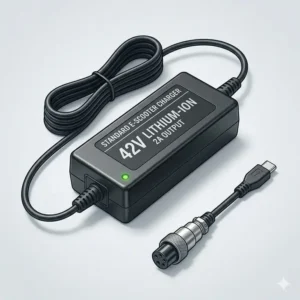
Top 7 types of electric scooter chargers: Expert Analysis
If you are looking for a reliable way to juice up your ride, these are the top-rated products currently available on Amazon that cater to various voltages and connector types.
1. EVIEUN 42V 2A Power Adapter
This is a staple in the world of e scooter chargers. If you own a Xiaomi M365 or a Segway Ninebot, you’ve likely seen this specific form factor. It is designed for 36V battery systems, providing a steady 2A output.
-
Technical Specifications: Output 42V 2A, Input 100-240V AC, Connector: 8mm DC Barrel.
-
Professional Applications: Ideal for daily commuters using lightweight folding scooters.
-
Customer Review Analysis: Users frequently praise its “silent operation” and the fact that it doesn’t get as hot as the original bricks. However, some mention the cable length could be longer.
-
Warranty: 1-year limited warranty.
-
Pros: Lightweight, multi-stage protection (over-current, short-circuit), affordable.
-
Cons: Not suitable for larger 48V or 52V batteries.
2. T-Power 42V Charger for Jetson Bolt
This specific charger for scooters is a lifesaver for owners of the Jetson Bolt, Hover-1, and various Swagtron models. It is known for its durability and heavy-duty casing.
-
Technical Specifications: Output 42V 2A, Connector: 1-prong plug, high-grade copper wiring.
-
Professional Applications: Great for entry-level “last mile” transport devices.
-
Customer Review Analysis: “Fits perfectly” is the most common feedback. Customers appreciate the snug fit of the connector which prevents accidental disconnections.
-
Warranty: 60-day money-back guarantee and 1-year replacement.
-
Pros: Sturdy build, long power cord, UL listed.
-
Cons: No cooling fan (can get warm during long sessions).
3. YZPOWER 54.6V 4A Fast Charger
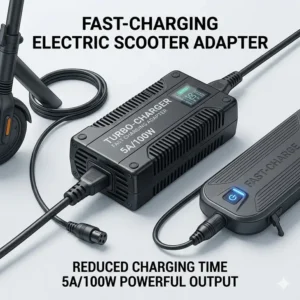
When we move into mid-range territory, we start seeing more powerful electric scooter chargers. This unit from YZPOWER is designed for 48V lithium-ion batteries and cuts charging time in half compared to 2A models.
-
Technical Specifications: 54.6V 4A, built-in cooling fan, GX16-3 (Aviation) connector.
-
Professional Applications: Delivery riders and enthusiasts who use their scooters multiple times a day.
-
Customer Review Analysis: High marks for speed. Users note the fan is “noticeable but effective” at keeping the unit cool.
-
Warranty: 12-month manufacturer warranty.
-
Pros: Fast charging, active cooling, aluminum alloy shell.
-
Cons: Larger and heavier than standard chargers.
4. Tangspower 67.2V 2A Charger
For those rocking 60V systems (often found in high-performance scooters like Kaabo or Zero), the Tangspower 67.2V 2A Charger is a reliable companion.
-
Technical Specifications: 67.2V 2.0A, smart LED indicator (Red for charging, Green for full).
-
Professional Applications: High-speed performance scooters used for longer weekend treks.
-
Customer Review Analysis: Reviewers appreciate the “smart” chip that prevents overcharging, which is critical for expensive 60V battery packs.
-
Warranty: 18-month warranty.
-
Pros: High voltage stability, slim profile for its power class.
-
Cons: 2A is relatively slow for huge 60V batteries.
5. LotFancy 24V 1.5A Charger
We can’t forget the classics. Many older or youth-oriented scooters, like those from Razor, require a lower voltage. The LotFancy 24V 1.5A Charger uses the 3-prong inline connector that was the industry standard for years.
-
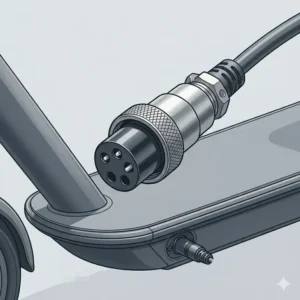
Technical Specifications: 24V 1.5A, 3-Prong Female (XLR-style) connector.
-
Professional Applications: Youth scooters and electric wheelchairs.
-
Customer Review Analysis: Parents love how it “revived” old scooters that sat in the garage. It is noted for its high compatibility with Razor E100/E300.
-
Warranty: 1-year warranty.
-
Pros: Extremely affordable, widely compatible with older tech.
-
Cons: Not for modern Lithium-ion 36V+ systems.
6. WATE 42V 5A Smart Fast Charger
If you have a 36V scooter and you’re tired of waiting 8 hours for a full charge, the WATE 42V 5A Smart Fast Charger is a beast. It’s an “active” charger with a dedicated cooling system.
-
Technical Specifications: 42V 5.0A, DC 5.5mm connector, auto-cutoff feature.
-
Professional Applications: Fleet management or heavy-duty daily commuters.
-
Customer Review Analysis: Users warn to “check your battery BMS” to ensure it can handle 5A, but those who can use it say it’s a “game changer.”
-
Warranty: 2-year technical support.
-
Pros: Incredibly fast, robust metal housing.
-
Cons: Can be loud due to the fan; not for small batteries.
7. Outdoortoy 42V 2.0A Charger with GX16
Lastly, we have a specialized variant of electric scooters charger that uses the GX16 connector. This is common on brands like TurboAnt or Emove.
-
Technical Specifications: 42V 2.0A, GX16-3 (3-pin aviation) plug.
-
Professional Applications: Mid-tier commuter scooters.
-
Customer Review Analysis: Praised for the “lock-in” connector that doesn’t wiggle around.
-
Warranty: 1-year exchange policy.
-
Pros: Secure connection, reliable performance, good price-to-quality ratio.
-
Cons: Limited to scooters with the aviation port.
🔍 Check the Latest Deals on Amazon!
⚡ Upgrade your ride with these top-rated chargers. Click on any item above to see current availability and find the perfect match for your scooter’s battery. Your next adventure is just a full charge away! 🔋
💬 Just one click – help others make better buying decisions too!😊
The Technical Deep Dive: Why Your Charger Choice Matters
When you start looking for a charger for scooters, you aren’t just buying a power cord. You are buying a device that manages a delicate chemical reaction inside your lithium cells. According to the Department of Energy, battery management is the single most important factor in the lifespan of electric vehicles.
Understanding Voltage (The “V”)
The most common mistake I see people make is buying a charger that matches their battery’s “nominal” voltage. For example, if you have a 36V scooter, you might think you need a 36V charger. Incorrect. A 36V lithium-ion battery actually requires a 42V charger to reach a full state. This is because lithium batteries have a peak voltage that is higher than their nominal rating. Here is a quick breakdown to keep you safe:
| Battery Nominal Voltage | Correct Charger Voltage |
| 24V | 29.4V |
| 36V | 42.0V |
| 48V | 54.6V |
| 52V | 58.8V |
| 60V | 67.2V |
Amperage and Charging Speed (The “A”)
The “A” or Amps on your e scooter chargers determines how fast the energy flows. Think of it like a water hose; a higher amperage is a wider hose. Most standard chargers are 1.5A or 2A.
Consequently, if you have a 10Ah (Amp-hour) battery and use a 2A charger, it will take roughly 5 hours to charge ($10 \div 2 = 5$). If you switch to a 5A fast charger, that time drops to 2 hours. However, you must ensure your battery’s Battery Management System (BMS) can handle the higher current. Pushing too many amps into a small battery can lead to overheating and, in extreme cases, fire.
Comparison of Charger Features and User Needs
| User Profile | Recommended Charger Type | Key Feature to Look For |
| The Student | Standard 2A (Budget) | UL Certification for dorm safety |
| The Courier | 4A – 5A Fast Charger | Aluminum shell & Cooling fan |
| The Parent | 24V Razor Compatible | 3-prong security plug |
| The Enthusiast | High-Voltage (67.2V+) | Precise voltage calibration |
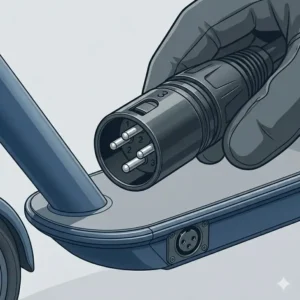
Different Connector Types: The “Alphabet Soup” of Plugs
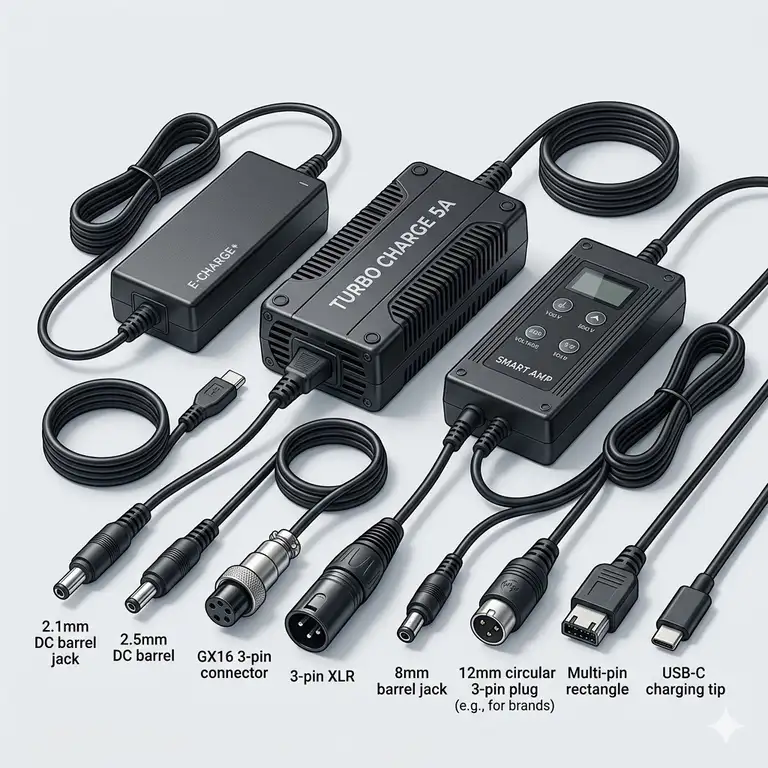
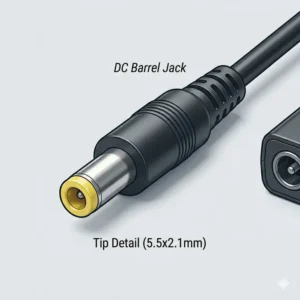
One of the most frustrating parts of finding the right electric scooter chargers is the physical plug. Even if the voltage is right, the plug might not fit. I’ve seen everything from simple pins to complex multi-pin aviation connectors.
-
DC Barrel Jack (5.5mm x 2.1mm or 2.5mm): The most common for Xiaomi and Segway. It looks like a standard laptop plug.
-
GX16 (Aviation Plug): A threaded, circular plug with 3 pins. It’s very secure because it screws into place.
-
XLR (3-Pin): Often used on older models and electric bikes. It’s large and durable.
-
M365 Proprietary: A specific small barrel with a center pin, mostly for the Xiaomi ecosystem.
-
Clover/Custom: Some high-end brands use unique shapes to force you to buy their specific brand.
Feature Matrix: Connector Durability and Security
| Connector Type | Security Level | Durability | Ease of Use |
| DC Barrel | Low (Can pull out) | Moderate | Very Easy |
| GX16 Aviation | High (Screws in) | High | Moderate |
| XLR 3-Pin | Moderate | Very High | Easy |
| Lenovo Style | Moderate | High | Easy |
The Science of Smart Charging: CC/CV Phases
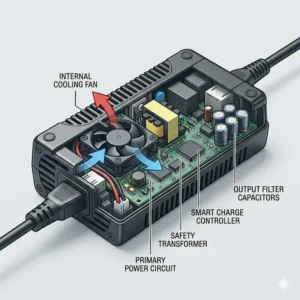
I often get asked why a charger takes forever to finish the last 10%. This is due to the “CC/CV” (Constant Current / Constant Voltage) charging method used by almost all types of electric scooter chargers.
-
Constant Current (CC): In this first phase, the charger pushes a steady stream of amps into the battery. This is when the most “work” is done.
-
Constant Voltage (CV): Once the battery reaches its peak voltage (e.g., 42V), the charger holds the voltage steady and slowly tapers off the current. This “trickle” phase ensures the cells are balanced and not overstressed.
Furthermore, a high-quality electric scooters charger will have a smart chip to manage these transitions. Cheap, unbranded chargers might skip the CV phase or fail to cut off power entirely, which is how batteries get “cooked.” Always look for UL 2272 certification, which is the gold standard for personal e-mobility safety as noted by UL Solutions.
Benefits of Upgrading Your Charger
Why would you buy a new one if yours isn’t broken? Specifically, there are several benefits to having a secondary or upgraded unit.
| Benefit | Upgraded Fast Charger | Standard/Backup Charger |
| Time Savings | Reduces wait time by up to 60% | No time savings |
| Battery Health | Better thermal management | Standard protection |
| Convenience | Keep it at home/work | Keep one in your backpack |
| Reliability | Metal casing lasts longer | Plastic casing is fragile |
Safety First: How to Avoid a “Hot Mess”
I cannot stress this enough: your charger for scooters is a power-converting beast. It takes 120V or 240V from your wall and transforms it into a DC voltage your battery can swallow. This process generates heat.
-
Don’t Cover the Brick: I’ve seen people wrap their chargers in towels or hide them under couches. This is a recipe for a fire. The heat needs to dissipate.
-
Check for UL Marks: Underwriters Laboratories (UL) tests these devices for safety. If an electric scooter chargers doesn’t have a UL or CE mark, I wouldn’t let it near my house.
-
Smell and Sound: If your charger starts smelling like burnt plastic or makes a high-pitched whining sound, unplug it immediately. It’s a sign of a failing capacitor.
-
Sequence Matters: I always recommend plugging the charger into the wall first, then the scooter. This helps the charger’s internal capacitors stabilize before they hit the battery load.
Performance Metrics: What to Expect
When analyzing the effectiveness of different electric scooter chargers, you should look at the “Efficiency Rating.” Most modern switch-mode power supplies are about 85-90% efficient. This means 10% of the electricity is lost as heat. If you find a charger that is exceptionally hot, it likely has poor efficiency and cheap internal components.
Cost vs. Performance Comparison
| Price Range | Expected Life | Key Components | Best For |
| $15 – $25 | 1 – 2 years | Plastic shell, no fan | Occasional riders |
| $30 – $60 | 3 – 5 years | Better heat sinks, UL listed | Daily commuters |
| $70 – $120 | 5+ years | Aluminum casing, Fan, LED display | High-performance/Pros |
🔋 Don’t Let Your Battery Die!
⚡ Ready to get back on the road? Don’t settle for a generic, unverified charger. Get the best electric scooters charger for your specific model today and enjoy faster, safer charging. Click the links above to find your perfect match on Amazon! ✨
Conclusion
Finding the perfect fit among the various types of electric scooter chargers doesn’t have to be a headache. By focusing on matching your voltage (remember, 42V for 36V batteries!), selecting the right connector, and prioritizing safety certifications like UL, you can ensure your ride is always ready for the road. Whether you’re looking for a standard replacement or a high-speed upgrade, the products we discussed today—like the EVIEUN 42V 2A or the YZPOWER 54.6V 4A—represent some of the best reliability on the market.
In addition to buying the right hardware, remember to practice good charging habits. Don’t let your battery sit at 0% for weeks, and avoid charging in extreme temperatures. Your scooter is an investment in your freedom and mobility, so treat its “fuel source” with the respect it deserves.
FAQs
✅ You must match the voltage and connector type exactly. Check your original charger or battery label for the 'Output Voltage' (e.g., 42V). Then, identify your plug shape, such as a 5.5mm barrel or 3-pin GX16...
✅ No, never do this. Using a higher voltage charger than what your battery is rated for will likely damage the battery cells, trigger a BMS shutdown, or potentially cause a fire. Always match the voltage specified by the manufacturer...
✅ Charging involves converting AC power to DC, which naturally generates heat. While warmth is normal, it shouldn't be too hot to touch. Ensure the charger is in a well-ventilated area and never cover it with any materials...
✅ Most modern smart chargers have an auto-cutoff feature once the battery is full. However, for maximum safety, it is recommended to unplug the device once the light turns green. Never charge a scooter unattended for long periods...
✅ If the amperage is within the battery's supported limits (usually up to 5A for mid-range batteries), it won't ruin it. However, constant fast charging generates more heat, which can slightly degrade lithium-ion batteries faster over several years... ❓ How do I know which of the types of electric scooter chargers I need?
❓ Can I use a 48V charger on a 36V electric scooter?
❓ Why does my electric scooters charger get so hot during use?
❓ Is it safe to leave my e scooter chargers plugged in overnight?
❓ Will a fast charger for scooters ruin my battery life?
Recommended for You
- 7 Best Ways to Replace Mobility Scooter Battery: 2026 Expert Guide
- All Terrain Scooter for Adults: 7 Shocking Secrets Revealed 🤯
- 7 Best 3 Prong Scooter Chargers: Expert Reviews 2025
Disclaimer: This article contains affiliate links. If you purchase products through these links, we may earn a small commission at no additional cost to you.
✨ Found this helpful? Share it with your friends! 💬🤗