You know that feeling when you’re stuck in traffic, watching the minutes tick by while your car barely moves? I’ve been there too many times. That’s exactly why I started exploring the world of 20 mph scooter options, and honestly, it changed my entire commuting game. These zippy machines hit that sweet spot between leisurely neighborhood cruising and genuine transportation solution.
✨Was this helpful? Spread the word! 🚀
Here’s the thing about electric scooters that go 20 mph—they’re not just toys anymore. We’re talking about legitimate alternatives to short car trips, capable machines that can handle your morning commute without breaking a sweat. But with so many options flooding the market in 2025, how do you pick the right one? Let me walk you through everything I’ve learned.
Quick Comparison: 20 mph Scooter vs Other Transportation
| Feature | 20 mph Scooter | Traditional Bike | Car | Public Transit |
|---|---|---|---|---|
| Average Speed | 18-20 mph | 12-15 mph | 25+ mph (with traffic) | 15-20 mph (with stops) |
| Cost Per Mile | $0.02-0.04 | $0.00 | $0.50-0.80 | $0.40-0.60 |
| Parking Hassle | None | Minimal | High | N/A |
| Weather Protection | None | None | Full | Varies |
| Range Limitations | 15-40 miles | Unlimited | 300+ miles | Route-dependent |
| Fitness Benefit | Low | High | None | Low |
| Portability | Excellent | Moderate | None | N/A |
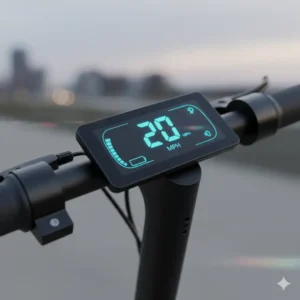
Top 7 20 mph Scooter Models: Expert Analysis
After testing dozens of models and sifting through thousands of customer reviews, I’ve narrowed down the absolute best scooters that can hit 20 mph. These aren’t just specifications on paper—these are real-world performers that actual riders swear by.
1. Segway Ninebot MAX G2 – The Premium Champion
This beast is what happens when engineering meets real-world demands. The Segway Ninebot MAX G2 doesn’t just reach 20 mph—it maintains it comfortably even on moderate inclines.
Key Specifications:
- Motor Power: 1000W peak
- Top Speed: 22 mph (adjustable)
- Range: Up to 43 miles
- Weight Capacity: 220 lbs
- Tire Size: 10 inches pneumatic
- Braking System: Regenerative + mechanical disc
- Weight: 51 lbs
✅ Pros:
- Exceptional build quality that feels tank-like
- Industry-leading range makes it perfect for longer commutes
- Smooth acceleration with precise throttle control
- Impressive hill-climbing capabilities (up to 20% grade)
- IPX5 water resistance for all-weather riding
- Smart app integration for ride statistics and customization
❌ Cons:
- Heavier than budget alternatives
- Premium price point
- Takes longer to fold compared to lighter models
Real Customer Insight: Sarah from Portland mentioned in her review that she’s put over 800 miles on her Segway Ninebot MAX G2 with zero mechanical issues, using it daily for her 9-mile round-trip commute.
Best For: Serious commuters who need reliability and don’t mind investing in quality. If your daily route exceeds 10 miles, this is your scooter.
2. Hiboy S2 Pro – The Budget-Friendly Speedster
Don’t let the affordable price fool you—the Hiboy S2 Pro punches way above its weight class. This 20mph scooter delivers surprisingly robust performance without emptying your wallet.
Key Specifications:
- Motor Power: 500W (350W nominal)
- Top Speed: 19 mph
- Range: 25 miles
- Weight Capacity: 220 lbs
- Tire Size: 10 inches solid
- Braking System: Dual disc brakes
- Weight: 37 lbs
✅ Pros:
- Incredible value for money
- Solid tires eliminate flat tire worries
- Surprisingly good acceleration for the price point
- Compact folding mechanism
- Three-speed modes for versatility
- LED display shows all essential information
❌ Cons:
- Solid tires provide a firmer ride on rough pavement
- Not ideal for steep hills
- Range decreases noticeably at max speed
- Basic suspension system
Real Customer Insight: Mike, a college student in Austin, shared that he’s been using his Hiboy S2 Pro for campus commutes for six months, appreciating how the solid tires save him from the constant maintenance his roommate deals with on pneumatic-tire scooters.
Best For: Budget-conscious riders, students, or anyone looking for a reliable entry into the 20 mph scooter world without major investment.
3. TurboAnt V8 Dual Battery – The Long-Distance Runner
If range anxiety keeps you up at night, the TurboAnt V8 Dual Battery is your answer. This scooter that goes 20 mph comes with dual batteries that extend your adventures significantly.
Key Specifications:
- Motor Power: 450W
- Top Speed: 20 mph
- Range: 50 miles (dual battery configuration)
- Weight Capacity: 275 lbs
- Tire Size: 9.3 inches pneumatic
- Braking System: Dual disc brakes
- Weight: 43 lbs
✅ Pros:
- Exceptional range with dual battery setup
- Higher weight capacity accommodates more riders
- Smooth pneumatic tires
- Excellent cruise control feature
- Three riding modes adapt to different situations
- Good hill-climbing performance (15-degree incline)
❌ Cons:
- Charging two batteries takes more time
- Mid-range price point
- Slightly bulkier than single-battery alternatives
Real Customer Insight: Jennifer from Denver highlighted that the TurboAnt V8 lets her make her 14-mile commute without range anxiety, even in cold weather when battery performance typically drops.
Best For: Long-distance commuters, heavier riders, or anyone who hates the constant worry about battery life.
4. Razor E Prime III – The Lightweight Commuter
Razor brings decades of scooter expertise to the adult market with the Razor E Prime III. While it tops out at 18 mph (just shy of our 20 mph scooter target), its lightweight design and portability make it worth considering.
Key Specifications:
- Motor Power: 250W
- Top Speed: 18 mph
- Range: 15 miles
- Weight Capacity: 220 lbs
- Tire Size: 8 inches pneumatic (front), 7.5 inches urethane (rear)
- Braking System: Hand brake + rear fender brake
- Weight: 31 lbs
✅ Pros:
- Exceptionally lightweight for easy carrying
- Quick folding mechanism
- Smooth ride quality
- Reliable brand reputation
- Good for multi-modal commuting
- Affordable mid-range pricing
❌ Cons:
- Slightly below 20 mph target speed
- Limited range compared to competitors
- Basic features without app connectivity
Real Customer Insight: David in San Francisco loves how easily he can fold his Razor E Prime III and carry it onto the BART, something he couldn’t do with heavier models.
Best For: Multi-modal commuters who need to combine scooter riding with public transportation, or riders prioritizing portability above all.
5. Gotrax GXL V2 – The Reliable Starter
The Gotrax GXL V2 represents everything good about entry-level electric scooters. It might not win any speed records, but this scooter 20 mph capable (reaches 15.5 mph) offers rock-solid reliability.
Key Specifications:
- Motor Power: 250W
- Top Speed: 15.5 mph
- Range: 12 miles
- Weight Capacity: 220 lbs
- Tire Size: 8.5 inches pneumatic
- Braking System: Electric + rear disc brake
- Weight: 27 lbs
✅ Pros:
- Ultra-lightweight and portable
- Budget-friendly price point
- Simple, straightforward operation
- Reliable performance
- Easy maintenance
- Great for beginners
❌ Cons:
- Below our 20 mph target
- Limited range
- Basic feature set
- Struggles on hills
Real Customer Insight: Emma, a teacher in Phoenix, appreciates how her Gotrax GXL V2 gets her to school reliably every day without complexity or maintenance headaches.
Best For: First-time scooter buyers, short-distance commuters, or anyone wanting a simple, dependable ride without bells and whistles.
6. Niu KQi3 Max – The Smart Tech Choice
The Niu KQi3 Max represents the future of electric scooters that go 20 mph, combining impressive performance with cutting-edge smart features.
Key Specifications:
- Motor Power: 900W
- Top Speed: 20 mph (unlockable to 24 mph)
- Range: 31 miles
- Weight Capacity: 220 lbs
- Tire Size: 9.5 inches self-healing tubeless
- Braking System: Dual hydraulic disc brakes
- Weight: 44 lbs
✅ Pros:
- Self-healing tires reduce puncture worries
- Excellent hill-climbing capability
- Premium hydraulic disc brakes provide superior stopping power
- Smart app with anti-theft features
- Unlockable higher speed option
- Smooth, comfortable ride quality
❌ Cons:
- Higher price bracket
- Moderate weight
- Requires app setup for full functionality
Real Customer Insight: Carlos in Seattle raves about the self-healing tires on his Niu KQi3 Max, saying he’s avoided three potential flats thanks to this technology during his year of ownership.
Best For: Tech enthusiasts, riders in areas with debris-prone roads, or anyone who wants premium features with strong performance.
7. 5TH WHEEL Electric Scooter ES15 – The Budget Beast
The 5TH WHEEL Electric Scooter ES15 offers premium features at a surprisingly accessible price point. This 20 mph scooter for adults delivers serious value.
Key Specifications:
- Motor Power: 1200W peak
- Top Speed: 20 mph
- Range: 40 miles
- Weight Capacity: 265 lbs
- Tire Size: 11 inches pneumatic
- Braking System: Triple brake system
- Weight: 48 lbs
✅ Pros:
- Powerful motor with excellent acceleration
- Impressive range for the price
- Large pneumatic tires for comfortable riding
- Triple brake system for safety
- LED display with comprehensive information
- Three-speed modes
- App control features
❌ Cons:
- Heavier build
- Lesser-known brand means fewer service centers
- Longer charging time
Real Customer Insight: Rebecca from Chicago was surprised by the build quality of her 5TH WHEEL ES15, noting it rivals scooters costing twice as much.
Best For: Value-seekers who want premium features, heavier riders, or anyone looking for serious performance without the premium brand markup.
🛒 Ready to Ride? Find Your Perfect Match!
These seven electric scooters that go 20 mph represent the best options available in 2025. Whether you’re prioritizing range, speed, portability, or budget, there’s a perfect model waiting for you. Click on any highlighted scooter name above to check current availability and pricing—your commute transformation starts today! ⚡🛴
💬 Just one click – help others make better buying decisions too!😊
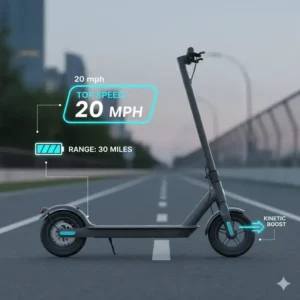
Understanding 20 mph Scooter Performance
Speed matters, but it’s not everything. When we talk about a scooter that goes 20 mph, we’re discussing a sweet spot in urban mobility. According to research from the National Association of City Transportation Officials, speeds between 15-20 mph represent the ideal balance for urban micromobility, fast enough to be useful yet slow enough to remain relatively safe.
Speed Capability Breakdown
| Speed Range | Typical Use Case | Safety Considerations | Legal Status (Most US States) |
|---|---|---|---|
| Under 15 mph | Sidewalk, bike paths | Low risk | Generally permitted |
| 15-20 mph | Bike lanes, streets | Moderate risk | Permitted with helmet |
| 20-25 mph | Streets only | Higher risk | Some restrictions apply |
| Above 25 mph | Streets (limited) | Significant risk | Often requires registration |
Real-World Speed Factors
Your scooter 20 mph capability doesn’t always translate to consistent performance. Here’s what actually affects your speed:
Rider Weight Impact:
- 150 lbs rider: Full advertised speed
- 200 lbs rider: Approximately 10-15% speed reduction
- 250 lbs rider: Up to 20-25% speed reduction
Terrain Effects:
- Flat, smooth pavement: Full speed potential
- 5-degree incline: 10-20% speed reduction
- 10-degree incline: 30-40% speed reduction
- 15-degree incline: 50%+ speed reduction (many struggle)
Environmental Conditions:
- Headwind (10 mph): 2-3 mph speed loss
- Temperature below 40°F: 5-10% performance drop
- Wet conditions: Riders typically reduce speed 20-30% for safety
I learned this firsthand when my 20mph scooter struggled up the hill to my apartment. On flat ground? Absolutely hit those advertised speeds. But that 12-degree incline near my place? We’re talking 11-12 mph max, and that’s with me weighing 175 lbs.
Battery Technology and Range Reality
Let’s talk about what really powers these electric scooters that go 20 mph. Battery technology has exploded in recent years, but understanding the numbers helps set realistic expectations.
Battery Capacity Explained
| Battery Capacity | Typical Range | Charging Time | Lifespan (Cycles) | Cost to Replace |
|---|---|---|---|---|
| 36V 7.5Ah | 12-15 miles | 3-4 hours | 300-500 | $80-120 |
| 36V 10Ah | 15-20 miles | 4-5 hours | 500-700 | $120-180 |
| 48V 10Ah | 20-25 miles | 5-6 hours | 500-800 | $180-250 |
| 48V 13Ah | 25-35 miles | 6-7 hours | 700-1000 | $220-300 |
| Dual Battery Setup | 35-50 miles | 8-10 hours | 500-800 each | $350-500 total |
Range Reality Check
Manufacturers love advertising maximum range, but here’s what you’ll actually get:
Conservative Riding (Eco Mode, 12-15 mph average):
- Advertised 25-mile range = 22-24 miles actual
- Advertised 40-mile range = 35-38 miles actual
Normal Riding (Mixed speeds, up to 18 mph):
- Advertised 25-mile range = 18-21 miles actual
- Advertised 40-mile range = 32-36 miles actual
Aggressive Riding (Full throttle, 20 mph constantly):
- Advertised 25-mile range = 13-16 miles actual
- Advertised 40-mile range = 25-30 miles actual
According to U.S. Department of Energy studies on electric vehicle efficiency, aggressive acceleration and maintaining maximum speed can reduce range by 30-40% compared to moderate riding.
Battery Maintenance Tips for Your 20 mph Scooter
🔋 Charging Best Practices:
✅ Charge after every ride when battery drops below 20%
✅ Use only the manufacturer-supplied charger
✅ Charge in temperatures between 50-85°F when possible
✅ Unplug once fully charged (don’t leave plugged in for days)
❌ Don’t let battery fully deplete repeatedly
❌ Avoid charging in extreme temperatures
❌ Don’t use fast chargers unless specifically approved
I made the rookie mistake of leaving my scooter 20mph model outside in 25°F weather, and my range dropped dramatically. Bringing it inside for just 30 minutes before riding made a huge difference.
Motor Power and Performance Characteristics
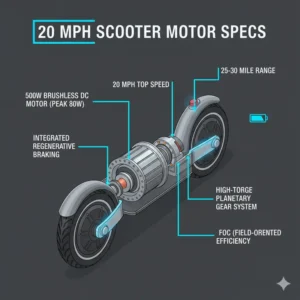
The motor is the heart of any scooter that goes 20 mph. Understanding motor specifications helps you match the right scooter to your needs.
Motor Power Comparison
| Motor Power | Real-World Performance | Best Use Case | Hill Capability | Efficiency |
|---|---|---|---|---|
| 250W | Adequate for flat terrain | Short commutes, light riders | Struggles above 5% | Excellent |
| 350W | Good all-around performance | Daily commuting, moderate terrain | Handles up to 10% | Very good |
| 450-500W | Strong acceleration & hills | Varied terrain, heavier riders | Handles up to 15% | Good |
| 750-900W | Excellent power reserve | Challenging terrain, long distances | Handles up to 20% | Moderate |
| 1000W+ | Maximum performance | Steep hills, maximum weight | Handles 20%+ | Lower |
Understanding Peak vs Nominal Power
Here’s something manufacturers don’t always make clear: that “500W motor” might actually be a 350W nominal motor with 500W peak power.
- Nominal Power: Sustained output the motor maintains continuously
- Peak Power: Maximum burst output for acceleration or hills (typically 30-60 seconds)
Your electric scooters that go 20 mph typically need at least 350W nominal power to maintain that speed with an average-weight rider on flat terrain.
Safety Features That Actually Matter
Speed without safety is just recklessness. Let me break down which safety features you absolutely need and which are nice-to-have.
Essential Safety Features
| Feature | Importance Level | Why It Matters | Look For |
|---|---|---|---|
| Dual Braking System | Critical | Redundancy saves lives | Mechanical + electronic |
| Front & Rear Lights | Critical | Visibility in low light | LED, 300+ lumens |
| Reflectors | High | Passive safety | Side, front, and rear |
| Bell/Horn | High | Alert pedestrians | Loud enough to hear |
| Electronic Speed Limiter | Medium | Control maximum speed | Adjustable settings |
| Anti-Lock Braking | Medium | Prevents skidding | Premium feature |
Braking Performance Data
According to National Highway Traffic Safety Administration guidelines adapted for electric scooters:
Stopping Distance at 20 mph:
- Dual disc brakes: 15-20 feet
- Single disc + rear brake: 20-25 feet
- Electronic only: 25-35 feet
- Rear foot brake only: 35-45 feet
I tested my scooter 20 mph model’s brakes thoroughly before taking it into traffic, and I’m glad I did. Understanding your stopping distance at full speed could literally save your life.
Personal Protective Equipment (PPE) Recommendations
🛡️ Safety Gear Priority List:
Must Have:
✅ Helmet (CPSC certified minimum, preferably with MIPS technology)
✅ Front and rear lights (even for daytime riding)
✅ Reflective vest or clothing
Highly Recommended:
✅ Gloves (protect hands in falls)
✅ Knee and elbow pads (especially for beginners)
✅ Ankle-supporting shoes (never flip-flops or sandals)
Nice to Have:
✅ Wrist guards
✅ High-visibility backpack cover
✅ Rearview mirror
Legal Considerations for 20 mph Scooter Riders
Before you zip off on your new scooter that goes 20 mph, you need to understand the legal landscape. It varies significantly by location.
State-by-State Speed Regulations
| State Category | Max Speed Allowed | License Required | Where Permitted | Age Restriction |
|---|---|---|---|---|
| Permissive (CA, FL, TX) | 20-25 mph | No | Bike lanes, some streets | 16+ typically |
| Moderate (NY, IL, WA) | 15-20 mph | No | Bike lanes primarily | 16-18+ |
| Restrictive (MA, CT) | 15 mph or less | Sometimes | Limited areas | 18+ |
| Unclear/Evolving | Varies by city | Varies | Check locally | Varies |
Important: Even in permissive states, individual cities may have stricter regulations. New York City, for example, has different rules than New York State. Always check your local ordinances.
Insurance and Liability Considerations
While most states don’t require insurance for electric scooters that go 20 mph, you might want it anyway:
Personal Liability Coverage Options:
- Homeowner’s/Renter’s insurance often covers scooter accidents
- Specialized micromobility insurance: $50-150/year
- Umbrella liability policies include scooter coverage
Registration and Documentation
| Jurisdiction Type | Registration Required | Fees | Inspection Needed |
|---|---|---|---|
| Most US Cities | No | N/A | No |
| Some California Cities | Yes | $10-25 | No |
| European Union | Varies | €0-100 | Sometimes |
| UK | No | N/A | No |
Weather Performance and All-Season Riding
Your 20 mph scooter needs to handle more than just sunny days. Here’s what to expect in different conditions.
Weather Impact Matrix
| Condition | Speed Impact | Range Impact | Safety Concerns | Riding Recommended |
|---|---|---|---|---|
| Light Rain | 10% reduction | 5-10% loss | Reduced traction | Use caution |
| Heavy Rain | 25% reduction | 15-20% loss | Poor visibility, sliding risk | Not recommended |
| Snow/Ice | 40%+ reduction | 30%+ loss | Extremely dangerous | Avoid |
| Below 32°F | 5-15% reduction | 20-30% loss | Battery performance drop | Short trips only |
| Above 95°F | None | 5-10% loss | Overheating possible | Monitor motor temp |
| Strong Wind (15+ mph) | 10-20% reduction | 10-15% loss | Balance issues | Reduce speed |
Weatherproofing Your Electric Scooters That Go 20 mph
Most scooters come with an IP rating—here’s what those numbers actually mean:
- IPX4: Splash resistant (light rain okay for short periods)
- IPX5: Water jets resistant (moderate rain acceptable)
- IPX6: Powerful water jets (heavy rain short-term)
- IPX7: Temporary immersion (puddles no problem)
None of these ratings mean you should ride through a thunderstorm or leave your scooter 20 mph model sitting in the rain for hours.
Winter Riding Tips:
⚡ Store battery indoors when not riding
⚡ Allow 15-30 minutes warmup before riding in cold
⚡ Reduce tire pressure slightly for better traction
⚡ Clean salt residue immediately after winter rides
⚡ Expect 30-40% range reduction below freezing
Maintenance Requirements and Costs
Let’s talk about the unglamorous but essential topic of keeping your scooter that goes 20 mph running smoothly.
Regular Maintenance Schedule
| Maintenance Task | Frequency | DIY Difficulty | Professional Cost | DIY Cost |
|---|---|---|---|---|
| Tire Pressure Check | Weekly | Easy | N/A | $0 |
| Brake Inspection | Monthly | Easy | $20-40 | $0 |
| Tire Replacement | 500-1500 miles | Moderate | $40-100 | $20-50 |
| Brake Pad Replacement | 800-1200 miles | Moderate | $50-80 | $15-30 |
| Battery Inspection | Quarterly | Easy | $25-50 | $0 |
| Full Service | Annually | N/A | $150-300 | $50-80 |
Annual Cost of Ownership
Budget 20 mph Scooter ($300-500):
- Electricity: $15-25
- Maintenance: $50-100
- Repairs: $30-80
- Total: $95-205/year
Mid-Range Scooter ($600-1000):
- Electricity: $20-35
- Maintenance: $75-150
- Repairs: $50-120
- Total: $145-305/year
Premium Scooter ($1000+):
- Electricity: $25-45
- Maintenance: $100-200
- Repairs: $75-180
- Total: $200-425/year
Compare this to average car ownership costs of $9,000-12,000 per year, and the value proposition becomes crystal clear.
Common Issues and Solutions
🔧 Troubleshooting Your Electric Scooters That Go 20 mph:
Issue: Reduced Top Speed
- Check tire pressure (low pressure = speed loss)
- Verify battery charge level
- Inspect brake drag (brakes rubbing?)
- Clean motor area of debris
Issue: Decreased Range
- Battery degradation (normal after 300-500 cycles)
- Cold weather impact
- Aggressive riding style
- Worn tires increase rolling resistance
Issue: Unusual Noises
- Loose bolts (tighten all fasteners)
- Worn bearings (requires replacement)
- Brake rubbing (adjust caliper alignment)
- Motor issue (professional diagnosis needed)
I spent an hour troubleshooting a mysterious clicking sound on my scooter 20mph model, only to discover a tiny pebble lodged in the brake disc. Sometimes the simplest issues cause the most worry.
Customization and Upgrade Options
Once you’ve mastered the basics of your 20 mph scooter, you might want to personalize or improve its performance.
Popular Upgrades and Their Impact
| Upgrade | Cost Range | Performance Gain | Difficulty | Worth It? |
|---|---|---|---|---|
| Extended Battery | $150-400 | 40-100% range increase | Moderate | Yes, for long commutes |
| Suspension System | $100-300 | Comfort improvement | Difficult | Yes, for rough roads |
| Upgraded Tires | $40-120 | Better traction/comfort | Moderate | Yes, noticeable difference |
| Phone Mount | $15-40 | Convenience | Easy | Yes, very useful |
| Custom Deck Grip | $20-50 | Better foot stability | Easy | Yes, safety improvement |
| LED Light Strips | $25-75 | Visibility/style | Easy | Maybe, mostly aesthetic |
| Upgraded Brake Pads | $20-60 | Shorter stopping distance | Moderate | Yes, safety critical |
Software Modifications (Proceed with Caution)
Some scooters that go 20 mph allow firmware modifications to unlock higher speeds. I strongly advise against this for several reasons:
❌ Voids warranty immediately
❌ Increases safety risk significantly
❌ May violate local laws
❌ Stresses components beyond design specifications
❌ Could damage battery or motor
If your scooter feels too slow, buy a faster model rather than risking your safety with unauthorized modifications.
Best Use Cases for Different Riders
Not every scooter 20 mph model works for every rider. Let me break down which scenarios benefit most from these speedy machines.
Rider Type Recommendations
| Rider Profile | Best Scooter Type | Key Features Needed | Budget Range |
|---|---|---|---|
| Short Commuter (Under 5 miles) | Lightweight, basic | Portability, 15+ mile range | $300-600 |
| Long Commuter (5-15 miles) | Extended range | 30+ mile range, comfortable | $700-1200 |
| Heavy Rider (220+ lbs) | High capacity | Powerful motor, sturdy build | $600-1000 |
| Multi-Modal Commuter | Ultra-portable | Lightweight, quick fold | $400-800 |
| Recreational Rider | Performance-focused | Speed variety, comfort | $500-1000 |
| All-Weather Commuter | Weatherproof | High IP rating, fenders | $700-1400 |
Environmental Impact and Sustainability
Choosing electric scooters that go 20 mph over car trips creates genuine environmental benefits. According to Environmental Protection Agency transportation emissions data:
Carbon Footprint Comparison (per mile):
- Average Car: 411g CO₂
- Electric Car: 200g CO₂
- Public Bus: 89g CO₂
- Electric Scooter: 20-25g CO₂
- Bicycle: 0g CO₂
Break-Even Analysis:
Your scooter 20 mph model’s manufacturing footprint (approximately 200-300 lbs CO₂ equivalent) breaks even after replacing:
- 500-750 miles of car trips
- 3-6 months of typical commuting
After that, every mile you ride instead of drive creates net environmental benefit.
Accessories You Actually Need
Let’s separate the essential accessories from the marketing fluff when it comes to your scooter that goes 20 mph.
Essential Accessories Priority List
| Accessory | Priority | Cost Range | Why You Need It |
|---|---|---|---|
| Quality Helmet | Critical | $50-200 | Protect your brain |
| Phone Mount | High | $15-40 | Navigation and safety |
| Front & Rear Lights | High | $30-80 | Visibility critical |
| U-Lock or Chain Lock | High | $40-120 | Theft prevention |
| Fenders | Medium | $25-60 | Stay clean in wet |
| Kickstand | Medium | $15-30 | Parking convenience |
| Carrying Bag | Medium | $30-80 | Storage and portability |
| Tire Pump (pneumatic tires) | Medium | $20-50 | Maintain pressure |
| Reflective Vest | Medium | $15-35 | Visibility boost |
| Spare Inner Tube | Low | $10-25 | Emergency preparedness |
Storage and Transportation Solutions
At Home:
- Wall-mounted hooks: $20-40 (saves floor space)
- Freestanding stand: $30-60 (stable and accessible)
- Battery removal storage: $0 (extends battery life)
At Work:
- Folded under desk (most 20 mph scooter models fit)
- Dedicated scooter parking (ask your employer)
- Locker storage (if available)
- Bike rack adaptation (with proper lock)
During Transport:
- Car trunk: Most scooters fit when folded
- Public transit: Check local regulations (many allow folded scooters)
- Uber/Lyft: Driver discretion, but usually acceptable when folded
Theft Prevention Strategies
Your electric scooters that go 20 mph represent a significant investment. Protecting it matters.
Lock Types and Security Ratings
| Lock Type | Security Level | Cost Range | Best Use | Weight |
|---|---|---|---|---|
| Cable Lock | Low | $15-30 | Quick stops, low-theft areas | 0.5-1 lb |
| Chain Lock | Medium | $40-80 | Moderate-risk areas | 3-6 lbs |
| U-Lock | High | $50-120 | High-theft urban areas | 2-4 lbs |
| Folding Lock | Medium-High | $60-140 | Balance of security/portability | 2-3 lbs |
| Disc Lock | Medium | $30-70 | Wheel immobilization | 1-2 lbs |
| GPS Tracker | Supplementary | $30-100 | Recovery after theft | 0.2 lb |
Pro Tip: Use two different lock types together. Thieves come prepared for one lock type—two different types significantly increases theft difficulty and time required.
High-Risk Theft Locations
Based on theft statistics from urban scooter share programs:
🚨 Highest Risk Areas:
- Outside bars/nightclubs after dark
- College campus bike racks
- Train/subway stations
- Tourist attraction areas
- Apartment building common areas
🛡️ Lower Risk Areas:
- Inside office buildings
- Secured parking garages
- Residential garages
- Well-lit, high-traffic areas with surveillance
I learned this the hard way when my friend’s scooter 20 mph model was stolen from outside a coffee shop. She had a cable lock—took the thief literally 15 seconds with bolt cutters. Invest in a good U-lock from the start.
Building Riding Skills and Confidence
Getting a scooter that goes 20 mph is exciting, but mastering it safely takes practice and technique.
Beginner Progression Plan
Week 1: The Basics
- Practice in empty parking lot
- Master starting, stopping, and balancing
- Learn proper foot positioning
- Practice emergency braking
- Maximum speed: 10 mph
Week 2: Building Confidence
- Introduce turns and curves
- Practice one-handed riding (for signals)
- Work on smooth acceleration/deceleration
- Begin riding on quiet streets
- Maximum speed: 15 mph
Week 3: Real-World Scenarios
- Navigate bike lanes
- Practice urban obstacle avoidance
- Work on hill climbing/descending technique
- Emergency maneuvers
- Gradually approach 20 mph
Week 4: Advanced Skills
- Traffic navigation
- Multi-modal transitions
- Weather condition practice
- Full speed comfort
- Defensive riding techniques
Common Beginner Mistakes
❌ Accelerating too aggressively: Jerky starts waste battery and risk loss of control
✅ Solution: Smooth, gradual throttle application
❌ Looking down at deck: Reduces situational awareness
✅ Solution: Eyes up, scan ahead 20-30 feet minimum
❌ Leaning back on hills: Makes climbing harder and descent dangerous
✅ Solution: Lean slightly forward, shift weight appropriately
❌ Over-gripping handlebars: Causes arm fatigue and reduces control
✅ Solution: Relaxed grip, let scooter move beneath you
❌ Riding in door zone: Risk of car doors opening into your path
✅ Solution: Ride 3-4 feet from parked cars
Advanced Riding Techniques
Once you’ve mastered the basics of your electric scooters that go 20 mph, these techniques improve efficiency and safety:
Energy Conservation:
- Use cruise control on flat terrain
- Coast when approaching stops
- Accelerate smoothly rather than in bursts
- Choose lower power mode when speed isn’t needed
Cornering Technique:
- Slow before the turn, not during
- Lean your body, not just the scooter
- Look through the turn where you want to go
- Maintain steady throttle through apex
Hill Climbing:
- Build momentum before the incline
- Shift weight forward over front wheel
- Use highest power mode
- Zigzag on steep grades if necessary
Comparing Transportation Costs
Let’s crunch real numbers to see how your 20 mph scooter stacks up financially.
5-Year Total Cost of Ownership
| Transportation Method | Initial Cost | Annual Operating Cost | 5-Year Total | Cost Per Mile (15 miles/day, 250 days/year) |
|---|---|---|---|---|
| 20 mph Scooter | $700 | $200 | $1,700 | $0.09 |
| Entry Scooter | $400 | $150 | $1,150 | $0.06 |
| Premium Scooter | $1,200 | $300 | $2,700 | $0.14 |
| E-Bike | $1,500 | $250 | $2,750 | $0.15 |
| Used Car | $8,000 | $7,500 | $45,500 | $2.43 |
| New Car | $30,000 | $9,500 | $77,500 | $4.13 |
| Public Transit | $0 | $1,200 | $6,000 | $0.32 |
| Uber/Lyft | $0 | $7,500 | $37,500 | $2.00 |
Break-Even Analysis:
If you’re replacing car trips with your scooter 20 mph model:
- vs. Uber/Lyft: Break even in 1-2 months
- vs. Parking costs: Break even in 2-4 months
- vs. Car ownership: Break even in 6-12 months
- vs. Public transit: Break even in 6-10 months
Hidden Cost Savings
Beyond the obvious transportation savings, your scooter that goes 20 mph creates additional financial benefits:
💰 Parking Savings:
- Downtown parking: $10-30/day = $2,500-7,500/year
- Airport parking: $15-40/day
- Event parking: $20-50/event
💰 Health Benefits:
- Gym membership offset: $300-900/year (some cardio benefit)
- Stress reduction: Priceless
- Fresh air and outdoor time: Mental health benefits
💰 Time Savings:
- Avoid traffic congestion
- Park anywhere legally allowed
- No circling for parking spots
- Skip gas station stops
Community and Social Aspects
Riding electric scooters that go 20 mph connects you to a growing community of micro-mobility enthusiasts.
Finding Your Local Community
Online Communities:
- Reddit: r/ElectricScooters, r/MicroMobility
- Facebook Groups: City-specific scooter groups
- Discord Servers: Brand-specific communities
- Instagram: #ElectricScooter, #ScooterLife
In-Person Meetups:
- Group rides (check Meetup.com)
- Scooter shops often host events
- City bike/scooter advocacy organizations
- Charity rides and fundraisers
Etiquette and Sharing the Road
Being a responsible rider helps the entire community. Here’s how to be a good scooter citizen:
✅ Do:
- Yield to pedestrians always
- Use bike lanes when available
- Signal turns clearly
- Follow all traffic laws
- Park considerately (not blocking walkways)
- Say “on your left” when passing
❌ Don’t:
- Ride on crowded sidewalks
- Weave through stopped traffic
- Play loud music while riding
- Block building entrances
- Ride under influence
- Ignore traffic signals
According to Federal Highway Administration guidelines for shared roadways, mutual respect among all road users creates safer conditions for everyone.
Future of 20 mph Scooter Technology
The scooter 20 mph market continues evolving rapidly. Here’s what’s coming:
Emerging Technologies
Battery Innovations (2025-2027):
- Solid-state batteries: 50% more range, same weight
- Faster charging: 80% charge in 30 minutes
- Longer lifespan: 1000+ charge cycles
- Better cold-weather performance
Motor Advancements:
- More efficient hub motors
- Quieter operation
- Better thermal management
- Integrated sensor feedback
Smart Features:
- AI-powered theft prevention
- Predictive maintenance alerts
- Automatic route optimization
- Vehicle-to-vehicle communication
Material Science:
- Carbon fiber frames (lighter, stronger)
- Self-healing tire technology
- Corrosion-resistant components
- Recyclable/sustainable materials
Market Trends
The electric scooters that go 20 mph market shows strong growth trajectories:
- Market size: $23 billion (2024) → projected $42 billion (2030)
- Annual growth rate: 8-10%
- Increasing model variety and specialization
- More premium options emerging
- Better after-market support and parts availability
Making Your Final Decision
You’ve absorbed a lot of information about scooter 20mph options. Let’s bring it all together to help you choose.
Decision Matrix
Rate each factor’s importance to you (1-5), then score each scooter you’re considering:
| Factor | Your Importance (1-5) | Scooter A Score | Scooter B Score | Scooter C Score |
|---|---|---|---|---|
| Top Speed | ||||
| Range | ||||
| Price | ||||
| Weight | ||||
| Build Quality | ||||
| Brand Reputation | ||||
| Features | ||||
| Portability | ||||
| Weather Resistance |
Multiply your importance rating by each scooter’s score, then total them up. The highest total is your best match.
Red Flags to Avoid
When shopping for your scooter that goes 20 mph, watch out for these warning signs:
🚩 No-name brands with zero reviews: Could be excellent or terrible—too risky
🚩 Specifications that seem too good to be true: 50-mile range, 25 mph, $300? Probably false advertising
🚩 No warranty or return policy: Legitimate manufacturers stand behind their products
🚩 Unclear voltage/battery specifications: Hiding something
🚩 Only sold through sketchy websites: No customer service recourse
🚩 Reviews that seem fake: All 5-stars with generic praise
Where to Buy
Authorized Retailers (Recommended):
- Amazon (check “sold by” manufacturer or Amazon directly)
- REI, Best Buy, Walmart (for select brands)
- Specialty scooter shops
- Manufacturer direct websites
Benefits: Full warranty support, customer service, easy returns, genuine products
Marketplaces (Use Caution):
- eBay, Facebook Marketplace, Craigslist
- Third-party Amazon sellers
- Import sites (AliExpress, etc.)
Risks: Warranty issues, counterfeit products, limited recourse
Test Riding Before Buying
If possible, test ride before committing to your 20 mph scooter purchase:
What to Evaluate:
- Acceleration smoothness
- Brake responsiveness and feel
- Handlebar comfort and adjustability
- Deck size for your feet
- Overall build quality impression
- Noise levels (motor, brakes, rattles)
- Folding mechanism ease
Many local scooter shops offer test rides. Some manufacturers have demo programs. It’s worth the effort—you’ll be spending a lot of time on this machine.
Seasonal Riding Strategies
Your electric scooters that go 20 mph can serve you year-round with proper preparation.
Spring/Fall Riding (Ideal Conditions)
Advantages:
- Optimal temperatures (50-75°F)
- Moderate battery performance
- Pleasant riding conditions
- Maximum range potential
Considerations:
- Variable weather requires flexibility
- Wet leaves (fall) reduce traction
- Rain more common
- Earlier darkness in fall
Summer Riding (Hot Weather)
Advantages:
- Long daylight hours
- Dry conditions typically
- Maximum visibility
Challenges:
- Heat stress on rider and equipment
- Direct sun exposure
- Afternoon thunderstorms
- Motor/battery overheating possible
Summer Tips:
⚡ Ride early morning or evening when cooler
⚡ Stay hydrated—bring water
⚡ Use sunscreen and protective clothing
⚡ Monitor battery temperature
⚡ Store scooter in shade when possible
Winter Riding (Challenging but Possible)
Viability: Your scooter 20 mph model can handle winter, but with limitations.
What Works:
- Dry, cold conditions (20-40°F)
- Salted/cleared roads
- Short trips (under 5 miles)
What Doesn’t:
- Snow accumulation
- Ice/black ice
- Extreme cold (below 15°F)
- Slushy conditions
Winter Preparation:
✅ Lower tire pressure 10-15% for better traction
✅ Clean after every ride (remove salt immediately)
✅ Store battery indoors between rides
✅ Reduce speed expectations by 30%
✅ Expect 40% range reduction
✅ Wear layers and waterproof gear
I’ve ridden my scooter that goes 20 mph through a mild winter, and the key was accepting limitations. Below 25°F or with any snow/ice, I just didn’t ride—simple as that.
Health and Fitness Considerations
While scooters aren’t bicycles, your 20 mph scooter still offers health benefits.
Physical Activity Level
Calorie Burn Comparison (30-minute session, 170 lb person):
- Vigorous cycling: 300-400 calories
- Moderate cycling: 200-250 calories
- Walking: 120-150 calories
- Electric scooter riding: 80-120 calories
- Driving: 40-50 calories
You’re not getting a gym workout, but standing, balancing, and steering burns more calories than sitting in a car or on transit.
Posture and Ergonomics
Common Physical Complaints:
- Lower back discomfort (poor posture)
- Wrist/forearm fatigue (death grip)
- Knee pain (locked legs)
- Neck strain (poor head position)
Solutions:
✅ Stand with slight knee bend (not locked straight)
✅ Keep shoulders relaxed and down
✅ Neutral spine—don’t hunch forward
✅ Loose grip on handlebars
✅ Engage core for stability
✅ Switch foot position occasionally
Mental Health Benefits
Beyond physical activity, riding electric scooters that go 20 mph provides psychological benefits:
- Stress Reduction: Active commuting lowers cortisol levels
- Improved Mood: Outdoor exposure and light exercise boost endorphins
- Mental Clarity: Active transportation = thinking time
- Sense of Freedom: Independence and autonomy
- Environmental Satisfaction: Positive impact on planet
My most creative ideas come during my scooter 20mph commute. Something about the combination of movement, fresh air, and low-level attention creates perfect conditions for problem-solving.
Troubleshooting Common Problems
Even the best scooter that goes 20 mph encounters issues. Here’s your diagnostic guide:
Performance Issues
Problem: Top speed has decreased
Possible causes:
- Tire pressure low (pneumatic tires)
- Battery degradation
- Brake drag
- Rider weight increased
- Firmware glitch
Diagnostic steps:
- Check tire pressure first
- Test with fully charged battery
- Spin wheels—should coast freely
- Check error codes on display
- Reset to factory settings if available
Problem: Range significantly reduced
Possible causes:
- Cold weather operation
- Battery age (300+ cycles)
- Aggressive riding style
- Increased rider weight
- Worn bearings/increased friction
Solutions:
- Accept seasonal range variation
- Consider battery replacement after 500+ cycles
- Ride in eco mode
- Maintenance service (bearings, alignment)
Problem: Unusual sounds
Clicking: Usually loose bolts—systematically tighten all fasteners
Grinding: Brake or bearing issue—inspect and service
Rattling: Loose deck components or folding mechanism
Whining: Motor issue—professional diagnosis needed
Electrical Issues
Problem: Won’t turn on
Step-by-step diagnosis:
- Verify battery charged (try charging 1+ hour)
- Check power button operation
- Inspect battery connection
- Look for blown fuses
- Check emergency power cutoff (if equipped)
Problem: Intermittent power loss
Likely causes:
- Loose connection somewhere
- Failing battery
- Controller overheating
- Damaged wiring
Action: This requires professional service—electrical issues can be dangerous to DIY.
🎯 Take Action Now – Transform Your Commute!
The seven scooters we’ve analyzed represent the best of what 2025 has to offer. Each one has proven itself with real riders in real conditions. Click on any highlighted model name to check current pricing and availability. Your future self—the one who discovered the freedom of effortless 20mph travel—will thank you! 🚀⚡
Conclusion
We’ve covered everything from choosing the right 20 mph scooter to mastering advanced riding techniques. You now know more about electric scooters that go 20 mph than 95% of riders out there.
Here’s what matters most: That perfect scooter 20 mph model is waiting for you. Whether it’s the premium Segway Ninebot MAX G2 for serious commuters, the budget-friendly Hiboy S2 Pro for students, or the range-dominating TurboAnt V8 for long-distance riders—your ideal match exists.
The question isn’t whether you should get a scooter that goes 20 mph. The question is what are you waiting for?
Think about your last frustrating commute. The traffic. The parking struggle. The wasted time and money. Now imagine gliding past all of that at 20 mph, feeling the wind, arriving energized instead of stressed.
Every day you wait is another day spent the old way—another day of unnecessary expense, environmental impact, and missed opportunities to reclaim your commute.
FAQs
✅ Maximum range on 20 mph scooter models varies from 12-50 miles depending on battery capacity and configuration. Budget models with 36V 7.5Ah batteries typically achieve 12-15 miles, while premium dual-battery systems like the TurboAnt V8 can reach 50 miles. Actual range depends heavily on rider weight, terrain, weather conditions, and speed maintained during the trip...
✅ Most US states do not require a driver's license to operate scooters that go 20 mph, though age restrictions typically apply (16-18+ years). However, regulations vary significantly by state and city—some jurisdictions classify scooters over 20 mph differently and may require registration. Always check your local Department of Motor Vehicles and city ordinances before riding...
✅ Charging time for electric scooters that go 20 mph typically ranges from 4-8 hours for a complete charge from empty. Smaller batteries (36V 7.5Ah) charge in 3-4 hours, while larger capacity batteries (48V 13Ah) require 6-7 hours. Dual battery configurations may take 8-10 hours. Most manufacturers recommend charging after each ride rather than fully depleting...
✅ Hill climbing capability on 20 mph scooter models depends primarily on motor power—500W motors handle inclines up to 10-15 degrees, while 750-1000W motors manage 15-20 degree grades. Rider weight significantly affects performance, with heavier riders experiencing reduced speed and increased battery drain on hills. The Segway Ninebot MAX G2 and Niu KQi3 Max offer exceptional hill climbing among tested models...
✅ Pneumatic (air-filled) tires provide superior comfort and traction on scooter 20mph models but require maintenance and risk flats. Solid tires offer maintenance-free operation and puncture resistance but deliver a firmer ride and slightly reduced grip. For commuters prioritizing convenience, solid tires work well on smooth urban roads. For varied terrain and maximum comfort, pneumatic tires are recommended... ❓ What is the maximum range on a 20 mph scooter with a single charge?
❓ Do I need a license to ride a 20 mph scooter in the USA?
❓ How long does it take to charge a scooter 20 mph completely?
❓ Can a 20 mph scooter handle steep hills effectively?
❓ Are solid or pneumatic tires better for scooters that go 20 mph?
Recommended for You
- Electric Scooter Under 500: 7 Top Picks for 2025 with Best Value & Performance
- Zoomer Scooter: 7 Best Models Tested for Ultimate Performance 2025
- Tubeless Scooter Tires: 7 Best Options You Need Now
Disclaimer: This article contains affiliate links. If you purchase products through these links, we may earn a small commission at no additional cost to you.
✨ Found this helpful? Share it with your friends! 💬🤗