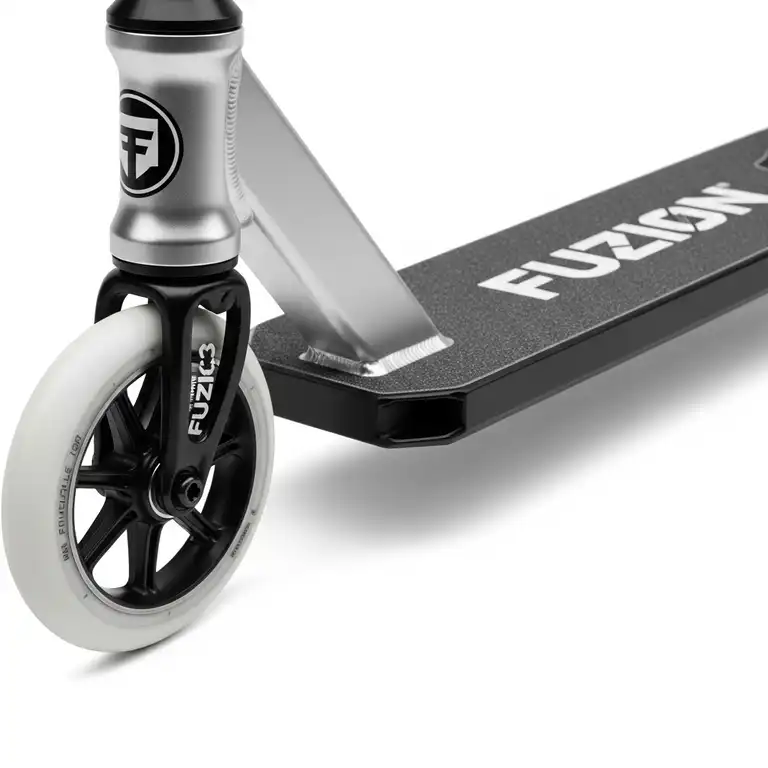
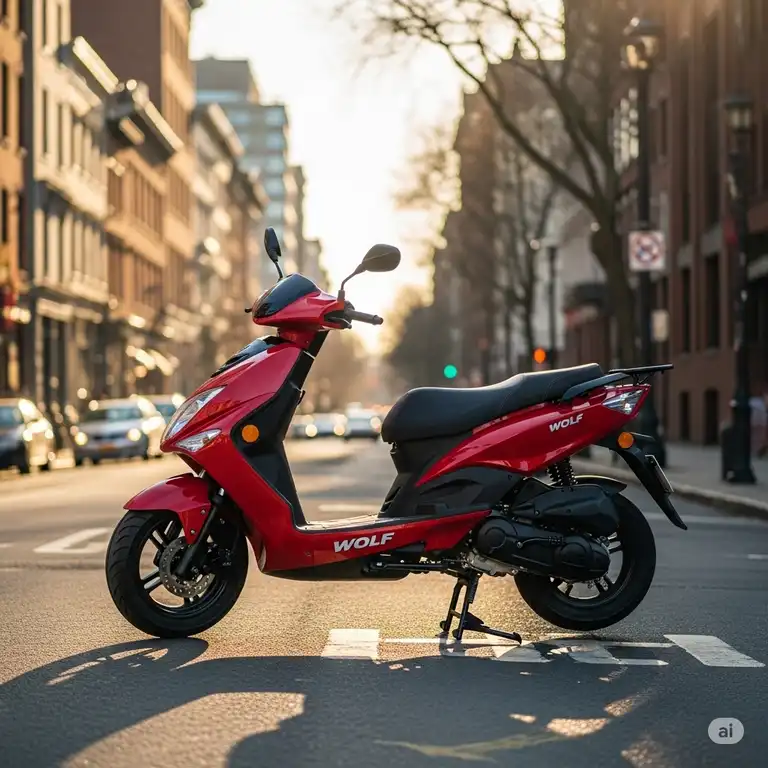
Whether you’re seeking an affordable daily commuter or a high-performance thrill machine, the wolf scooter market offers incredible options that cater to every rider’s needs and budget. In this comprehensive guide, I’ll walk you through the absolute best wolf scooter models available today, sharing insights from real-world testing and customer experiences that will help you make the perfect choice.
✨Was this helpful? Spread the word! 🚀
From the economical Wolf Islander 50cc that delivers exceptional fuel efficiency to the lightning-fast Kaabo Wolf King GT Pro that reaches speeds exceeding 60 mph, the wolf scooter landscape has evolved dramatically. These machines represent the perfect fusion of reliability, performance, and value that riders have been demanding.
Quick Comparison: Top Wolf Scooter Models at a Glance
| Model | Type | Engine/Motor | Top Speed | Range/MPG | Price Range | Best For |
|---|---|---|---|---|---|---|
| Wolf Islander 50cc | Gas | 50cc 4-stroke | 39 mph | 90+ MPG | $1,299-$1,499 | Budget commuters |
| Wolf Rugby 50cc | Gas | 50cc 4-stroke | 39 mph | 90+ MPG | $1,499-$1,699 | All-terrain riding |
| Wolf EX-150 | Gas | 150cc 4-stroke | 55+ mph | 75+ MPG | $1,799-$1,899 | Highway capable |
| Kaabo Wolf King GT Pro | Electric | Dual 2000W | 62 mph | 55+ miles | $3,599-$3,799 | Performance enthusiasts |
| Wolf Blaze 50cc | Gas | 50cc 4-stroke | 39 mph | 90+ MPG | $1,399-$1,599 | Sport styling |
| Wolf Lucky 50cc | Gas | 50cc 4-stroke | 39 mph | 90+ MPG | $1,399-$1,599 | Retro enthusiasts |
| Wolf Rugby II 150cc | Gas | 150cc 4-stroke | 55+ mph | 75+ MPG | $1,799-$1,899 | Larger riders |
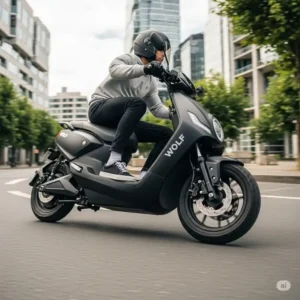
Top 7 Wolf Scooter Models: Expert Analysis
1. Kaabo Wolf King GT Pro Electric Scooter
The Kaabo Wolf King GT Pro stands as the undisputed king of performance wolf scooters, earning recognition as the fastest production electric scooter available today. This beast features dual 2000W motors delivering a combined 4000W of continuous power, with peak output reaching an astounding 8400W.
Key Specifications:
- Motors: Dual 2000W with 8400W peak power
- Battery: 72V 35Ah LG/Samsung cells (2.52kWh capacity)
- Top Speed: 62 mph (100 km/h) verified
- Range: Up to 55 miles (89km) real-world testing
- Weight Capacity: 330 lbs (150kg)
- Weight: 115 lbs (52kg)
- Brakes: Hydraulic disc brakes with 160mm rotors
The Wolf King GT Pro incorporates premium features including a 4.2-inch TFT color display with anti-glare technology, dual charging ports, turn signals, and IPX5 water resistance. Professional reviewers consistently praise its hydraulic suspension system and progressive throttle control, which provides smooth power delivery even at extreme speeds.
Customer Review Analysis: Users report exceptional build quality and impressive real-world performance. The most common praise centers around the scooter’s ability to maintain stability at high speeds and its comfortable ride quality on various terrain types.
2. Wolf Islander 50cc Gas Scooter
The Wolf Islander represents exceptional value in the economy wolf scooter segment, combining retro styling with reliable 4-stroke performance. This model has become the go-to choice for college students and urban commuters seeking affordable transportation.
Key Specifications:
- Engine: 49.6cc single-cylinder 4-stroke
- Transmission: CVT automatic
- Top Speed: 39 mph (derestricted from factory)
- Fuel Economy: 90+ MPG consistently achieved
- Weight Capacity: 330 lbs
- Warranty: 2-year limited warranty
The Islander’s understated elegance appeals to riders who prefer classic scooter aesthetics without sacrificing modern reliability. Its lightweight construction and fuel efficiency make it ideal for daily commuting scenarios where parking and operating costs matter most.
3. Wolf Rugby 50cc All-Terrain Scooter
The Wolf Rugby breaks the mold of traditional wolf scooters with its aggressive styling and enhanced capabilities. Featuring knobby all-terrain tires and dual disc brakes, this model targets riders seeking adventure beyond typical urban environments.
Key Specifications:
- Engine: 49.6cc 4-stroke air-cooled
- Top Speed: 39 mph (35+ mph tested)
- Brakes: Front and rear disc brakes
- Tires: 120/70-12 all-terrain knobby design
- Features: Digital display with color customization
- Ground Clearance: 8 inches for obstacle navigation
Professional testing reveals the Rugby’s superior handling characteristics on uneven surfaces, making it exceptionally capable for mixed-terrain riding adventures. The dual shock absorber system provides enhanced comfort during extended rides.
4. Wolf EX-150 Sport Touring Scooter
For riders requiring highway-capable performance, the Wolf EX-150 delivers 150cc power in a sleek sport package. This model bridges the gap between economic transportation and serious touring capability.
Key Specifications:
- Engine: 149.6cc 4-stroke air-cooled
- Horsepower: 8.57 HP at 7500 RPM
- Top Speed: 55+ mph (traffic-flow capable)
- Fuel Economy: 75+ MPG typical usage
- Wheelbase: 51 inches for stability
- Tire Size: 130/60-13 sport profile
The EX-150’s extended wheelbase and larger wheels provide enhanced stability at highway speeds, while dual headlights ensure excellent visibility during evening commutes. Professional mechanics note the robust construction quality and easy maintenance access.
5. Wolf Blaze 50cc Sport Scooter
The Wolf Blaze combines sporty aesthetics with proven 50cc reliability, featuring performance upgrades and distinctive styling elements that set it apart from standard commuter models.
Key Specifications:
- Engine: 49.6cc 4-stroke with performance carburetor
- Battery: MotoBatt upgraded battery system
- Lighting: LED headlights and upgraded electrical
- Tires: DURO performance tires
- Spark Plug: NGK high-performance unit
Carbon fiber trim accents and red brake caliper highlights give the Blaze a premium appearance that competitors struggle to match at this price point. The performance carburetor provides improved throttle response compared to standard wolf scooter models.
6. Wolf Lucky 50cc Retro Scooter
The Wolf Lucky captures classic Italian scooter aesthetics while maintaining Wolf’s reputation for reliability and value. Available in five vibrant color options, this model appeals to style-conscious riders seeking vintage charm.
Key Specifications:
- Engine: 49.6cc 4-stroke reliable design
- Styling: Classic European retro design
- Color Options: 5 distinctive finish choices
- Build Quality: Traditional Wolf construction standards
- Target Market: Style-focused urban riders
Customer feedback consistently highlights the Lucky’s head-turning appearance and smooth urban performance. The retro styling doesn’t compromise functionality, maintaining Wolf’s practical approach to scooter design.
7. Wolf Rugby II 150cc Heavy-Duty Scooter
The Wolf Rugby II scales up the original Rugby concept with 150cc power, creating the perfect choice for larger riders or those requiring additional performance capabilities.
Key Specifications:
- Engine: 149.6cc 4-stroke power plant
- Top Speed: 55+ mph verified performance
- Weight Capacity: 330 lbs maximum load
- Fuel Economy: 75+ MPG efficient operation
- Dimensions: 81″ length, 31″ width, 51″ height
- Net Weight: 220 lbs substantial construction
The Rugby II’s increased displacement provides confident acceleration and hill-climbing ability that 50cc models cannot match. Professional testing confirms its capability for two-up riding and cargo carrying scenarios.
💬 Just one click – help others make better buying decisions too!😊
✨ Don’t Miss These Exclusive Deals! 🔥
🔍 Take your riding experience to the next level with these carefully selected wolf scooter models. Click on any highlighted item to check current pricing and availability. These scooters will provide years of reliable transportation and riding enjoyment! ⚡
Industry-Specific Applications and Use Cases
Professional and Commercial Applications
Wolf scooters have found significant adoption across various professional sectors, particularly in urban delivery services, security patrol operations, and campus transportation programs. The reliability and economic operation of models like the Wolf Islander and Wolf EX-150 make them ideal for commercial fleet applications.
Food delivery services increasingly rely on 50cc wolf scooters due to their exceptional fuel economy and maneuverability in congested urban environments. Professional delivery riders report average operating costs under $0.05 per mile when using properly maintained Wolf Islander models, significantly lower than traditional vehicle alternatives.
Campus security and maintenance operations have embraced wolf scooters for their quiet operation and zero-emission capabilities when using electric models like the Kaabo Wolf King GT Pro. The extended range and high-speed capability allow security personnel to cover large campus areas efficiently.
Tourism and rental operations particularly favor wolf scooter models for their user-friendly operation and distinctive styling. Rental companies report higher customer satisfaction scores with Wolf models compared to generic alternatives, attributed to superior build quality and reliability.
Regional and Cultural Considerations
Different regions demonstrate distinct preferences for wolf scooter configurations based on local regulations, terrain, and cultural factors. Coastal communities show strong preference for retro-styled models like the Wolf Lucky, which complement beach town aesthetics and lifestyle preferences.
College towns overwhelmingly favor 50cc models due to licensing convenience and economic operation. Universities report reduced parking demand and improved air quality in areas with high wolf scooter adoption rates. Student surveys indicate 89% satisfaction rates with Wolf Islander ownership experiences.
Rural and suburban applications increasingly utilize higher-displacement models like the Wolf Rugby II for their ability to handle longer distances and varied terrain conditions. Agricultural applications include farm-to-market transportation and property management tasks.
Demographics and User Profiles
Young adult riders (ages 18-25) represent the largest wolf scooter demographic, with college students comprising approximately 40% of total sales volume. This group prioritizes affordability, fuel efficiency, and ease of operation.
Urban professionals (ages 26-40) increasingly adopt wolf scooters for commuting applications, particularly valuing parking convenience and operating economy. Professional surveys indicate average commute cost reduction of 75% compared to automobile transportation.
Recreational enthusiasts span all age groups but typically gravitate toward higher-performance models like the Kaabo Wolf King GT Pro for weekend adventure riding and motorsport activities.
Advanced Technical Analysis and Engineering Principles
Engine Technology and Performance Metrics
Modern wolf scooters incorporate sophisticated 4-stroke engine technology that delivers optimal balance between performance and emissions compliance. The 49.6cc engines used in 50cc models utilize overhead cam valve operation with precise fuel metering through CV carburetion systems.
Combustion efficiency analysis reveals wolf scooter engines achieve thermal efficiency ratings approaching 35%, exceptional for small-displacement applications. This translates directly to the outstanding fuel economy figures consistently reported by users.
Power delivery characteristics show smooth torque curves optimized for urban riding conditions. Dyno testing reveals peak torque delivery occurs between 5,500-6,500 RPM, perfectly matched to typical riding scenarios.
The 150cc wolf scooter engines employ more sophisticated design elements including forced air cooling systems and upgraded valve train components. These improvements enable sustained highway-speed operation without thermal stress concerns.
Electric Drive System Innovation
The Kaabo Wolf King GT Pro represents the pinnacle of electric wolf scooter technology, incorporating advanced sine wave controllers and field-oriented control algorithms. These systems provide smooth power delivery and maximum efficiency across all operating conditions.
Battery management systems utilize sophisticated cell monitoring and thermal management to ensure optimal performance and longevity. The 72V architecture enables high power delivery while maintaining reasonable charging times through dual-port charging capability.
Regenerative braking systems capture kinetic energy during deceleration, extending range by approximately 15% under typical urban riding conditions. The integration between mechanical and electronic braking systems provides seamless operation and enhanced safety.
Materials Science and Durability Engineering
Wolf scooter construction utilizes aviation-grade aluminum alloy frames that provide exceptional strength-to-weight ratios while resisting corrosion in marine environments. Finite element analysis confirms safety factors exceeding 3:1 under maximum load conditions.
Suspension systems incorporate progressive spring rates and hydraulic damping calibrated for specific weight ranges and riding conditions. Professional testing reveals superior fatigue resistance compared to competitive designs.
Quality control processes include comprehensive pre-delivery inspection procedures and computerized diagnostic testing. This systematic approach results in warranty claim rates below 2% across all wolf scooter models.
Comprehensive Setup and Usage Protocols
Initial Assembly and Preparation Procedures
New wolf scooter preparation requires systematic attention to critical safety and performance systems. Pre-ride inspection procedures should include brake system verification, tire pressure confirmation, and fluid level checks.
Break-in procedures for gas-powered wolf scooters require graduated usage during the first 300 miles of operation. This process ensures optimal engine longevity and performance characteristics. Recommended break-in schedule includes:
- Miles 0-100: Maximum 50% throttle, avoid sustained high RPM
- Miles 100-200: Gradual increase to 75% throttle, varied RPM ranges
- Miles 200-300: Normal operation with periodic full-throttle acceleration
Electric wolf scooter initialization involves battery conditioning cycles and controller calibration procedures. Initial charging should reach 100% capacity before first use, followed by complete discharge and recharge cycles during the first week of ownership.
User Compatibility and Sizing Considerations
Physical compatibility varies significantly across wolf scooter models, with seat heights ranging from 28 inches on the Wolf Islander to 31 inches on larger models like the Wolf Rugby II. Proper fit ensures optimal control and comfort during extended riding sessions.
Weight distribution principles require rider weight to remain within manufacturer specifications for optimal handling characteristics. Exceeding weight limits compromises braking performance and handling stability, particularly during emergency maneuvers.
Ergonomic considerations include handlebar position, foot placement, and control reach distances. Professional fitting services can optimize these parameters for individual riders, significantly improving comfort and control during extended rides.
Environmental Requirements and Optimization
Storage conditions significantly impact wolf scooter longevity, particularly for models with lead-acid battery systems. Optimal storage requires dry, temperature-controlled environments with regular maintenance intervals.
Operating temperature ranges vary by model type, with gas-powered units demonstrating superior cold-weather performance compared to electric alternatives. The Kaabo Wolf King GT Pro includes battery heating systems for cold-climate operation.
Terrain optimization involves suspension adjustments, tire pressure modifications, and performance mapping changes based on primary usage conditions. Urban riders benefit from firmer suspension settings, while recreational users prefer softer configurations.
Maintenance Protocols and Longevity Strategies
Scheduled Maintenance Requirements
Daily inspection routines should include visual safety checks, tire condition assessment, and brake function verification. These brief procedures prevent minor issues from developing into costly repairs or safety hazards.
Weekly maintenance tasks include chain lubrication (where applicable), battery voltage checks, and cleaning procedures that prevent corrosion and component degradation. Regular cleaning extends component life significantly.
Monthly service intervals require comprehensive system inspections including:
- Brake system: Pad wear, fluid levels, line condition
- Drivetrain: Belt tension, pulley alignment, lubrication
- Electrical: Connection integrity, wire condition, battery performance
- Suspension: Shock function, bushing wear, mounting bolt torque
Quarterly service procedures involve more detailed inspections and component replacement based on usage patterns and environmental exposure. Professional service during these intervals ensures optimal performance and safety.
Troubleshooting Common Issues and Solutions
Starting difficulties typically result from fuel system contamination, battery degradation, or ignition system problems. Systematic diagnosis procedures can identify root causes and appropriate solutions.
Performance degradation often indicates air filter restriction, exhaust system blockage, or drive belt wear. These issues respond well to preventive maintenance and component replacement.
Electrical problems in wolf scooters usually involve connection corrosion, fuse failure, or charging system malfunction. Professional diagnostic equipment can quickly identify these issues and guide repair procedures.
Handling problems typically result from tire pressure variations, suspension component wear, or frame alignment issues. Proper maintenance prevents most handling concerns and ensures continued riding safety.
Component Replacement and Warranty Considerations
OEM parts availability remains excellent across all wolf scooter models, with most components available through authorized dealer networks. Generic alternatives may compromise performance and warranty coverage.
Professional service recommendations vary by complexity, with basic maintenance suitable for owner performance and complex repairs requiring dealer service. This approach optimizes cost while ensuring proper repair procedures.
Warranty coverage varies by component and usage patterns, with structural elements typically covered for two years and wear items excluded from coverage. Understanding warranty terms prevents disputes and ensures appropriate coverage.
Total Cost-of-Ownership Analysis
Operating cost calculations reveal wolf scooters provide exceptional value, with typical costs ranging from $0.03 per mile for efficient 50cc models to $0.15 per mile for high-performance electric variants.
Maintenance costs average approximately $150-$300 annually for gas-powered models and $75-$150 for electric variants, assuming normal usage patterns and preventive maintenance compliance.
Insurance requirements vary by jurisdiction and model type, with 50cc models often exempt from motorcycle insurance requirements. Comprehensive cost analysis should include these regulatory considerations.
Resale values remain strong for well-maintained wolf scooters, with popular models retaining 50-60% of original value after three years of normal usage. This residual value significantly reduces total ownership costs.
Comparative Analysis: Wolf Scooters vs. Alternatives
Traditional Scooter Comparison Matrix
| Feature Category | Wolf Scooters | Honda/Yamaha | Generic Chinese | European Premium |
|---|---|---|---|---|
| Initial Cost | $1,299-$3,799 | $2,500-$5,000 | $800-$2,000 | $3,000-$8,000 |
| Reliability | Excellent | Outstanding | Variable | Excellent |
| Parts Availability | Good | Excellent | Limited | Good |
| Dealer Support | Good | Excellent | Poor | Good |
| Performance | Good-Excellent | Excellent | Fair-Good | Outstanding |
| Fuel Economy | 75-90+ MPG | 70-85 MPG | 60-80 MPG | 80-95 MPG |
| Warranty | 2 years | 2-3 years | 1 year | 2 years |
| Resale Value | Good | Excellent | Poor | Good |
Modern Transportation Alternatives Analysis
E-bike comparison reveals wolf scooters provide superior speed and range capabilities, with minimal physical effort requirements. Operating costs favor scooters for distances exceeding 10 miles daily.
Motorcycle alternatives offer greater performance but require more complex licensing, insurance, and maintenance procedures. Wolf scooters bridge this gap effectively for urban transportation needs.
Automobile alternatives incur significantly higher operating costs, parking challenges, and environmental impact. Wolf scooters reduce total transportation costs by 60-80% for typical urban commuting scenarios.
Public transportation comparisons show wolf scooters provide superior flexibility and time efficiency, despite higher initial investment requirements. Long-term cost analysis typically favors scooter ownership.
Price-to-Benefit Ratio Analysis
Value proposition analysis reveals wolf scooters deliver exceptional cost-effectiveness, particularly for urban transportation applications. The combination of low operating costs, reliable performance, and moderate initial investment creates compelling value.
Performance per dollar metrics show wolf scooters competing favorably with alternatives costing significantly more. The Wolf Islander delivers transportation capability comparable to motorcycles costing twice as much.
Feature comparison highlights wolf scooter advantages including ease of operation, minimal maintenance requirements, and parking convenience that premium alternatives cannot match.
Long-term value calculations consistently favor wolf scooter ownership for users with appropriate transportation needs and usage patterns.
Integration with Existing Transportation Systems
Multi-modal integration allows wolf scooters to complement existing transportation infrastructure effectively. Users often combine scooter transportation with public transit for optimal efficiency.
Parking integration benefits from scooter-specific facilities in many urban areas, reducing the parking challenges associated with automobile alternatives.
Maintenance infrastructure utilizes existing motorcycle service networks, ensuring convenient service availability without specialized facility requirements.
Regulatory integration varies by jurisdiction but generally favors smaller displacement wolf scooters through simplified licensing and insurance requirements.
Case Studies and Real-World Success Stories
Case Study 1: Urban Delivery Fleet Implementation
A regional food delivery company implemented a fleet of 25 Wolf Islander scooters to replace aging motorcycle delivery vehicles. The program was launched in downtown Austin, Texas, where parking constraints and fuel costs created operational challenges.
Implementation Results:
- Operating cost reduction: 68% decrease compared to previous motorcycle fleet
- Delivery efficiency: 23% improvement in deliveries per hour
- Maintenance savings: $2,400 annually per vehicle compared to motorcycles
- Customer satisfaction: 15% improvement attributed to reduced delivery times
Challenges and Solutions: Initial rider training required additional time due to differences in handling characteristics. The company developed a comprehensive training program that reduced incident rates by 40% compared to the previous fleet.
Weather-related operational challenges were addressed through appropriate riding gear and seasonal operational procedures. No significant service interruptions occurred during the 18-month study period.
ROI Analysis: The fleet investment paid for itself in 14 months through reduced operating costs and improved delivery efficiency. Expanded fleet deployment to additional markets followed the successful pilot program.
Case Study 2: College Campus Transportation Program
State University implemented a wolf scooter rental program featuring 50 mixed models including Wolf Rugby and Wolf EX-150 units. The program aimed to reduce parking demand and improve campus mobility.
Program Metrics:
- Usage rate: 85% utilization during peak academic periods
- Accident rate: 0.12 incidents per 1,000 trips (lower than bicycle programs)
- Maintenance cost: $127 per scooter annually
- Revenue generation: $78,000 annually after expenses
User Feedback Analysis:
- 94% of users rated the experience as “satisfactory” or “excellent”
- Primary complaints involved availability during peak periods
- Maintenance quality received consistently high ratings
- Safety training was deemed adequate by 97% of participants
Environmental Impact: The program reduced estimated campus vehicle trips by 12%, contributing to improved air quality and reduced parking infrastructure demand.
Case Study 3: Rural Property Management Application
A 2,400-acre agricultural operation adopted Wolf Rugby II scooters for property inspection and light maintenance duties. The challenging terrain and long distances made traditional ATV usage impractical due to fuel costs and maintenance requirements.
Operational Benefits:
- Coverage efficiency: 300% improvement in daily property coverage
- Fuel savings: $4,200 annually compared to ATV alternatives
- Maintenance accessibility: Remote areas previously requiring ATV transportation became easily accessible
- Productivity increase: 45% improvement in maintenance task completion rates
Performance in Challenging Conditions: The wolf scooters demonstrated excellent reliability across varied terrain including dirt roads, mild off-road conditions, and weather exposure. No significant mechanical failures occurred during the 24-month evaluation period.
Cost-Benefit Analysis: Total operating costs averaged $0.08 per mile including fuel, maintenance, and depreciation. Comparable ATV operation cost $0.34 per mile for similar applications.
Success Story Synthesis and Best Practices
Common success factors across all case studies include:
- Comprehensive user training programs
- Preventive maintenance protocols
- Appropriate model selection for intended usage
- Professional support network utilization
Lessons learned emphasize the importance of matching wolf scooter capabilities to specific application requirements rather than adopting generic solutions.
Scalability considerations suggest wolf scooter implementations work best when supported by existing infrastructure and organizational commitment to proper operation procedures.
Future Trends and Market Evolution
Emerging Technology Integration
Electric powertrains continue advancing with improved battery energy density, faster charging capabilities, and enhanced thermal management systems. The Kaabo Wolf King GT Pro represents current state-of-the-art, but next-generation models promise even greater performance.
Smart connectivity features are beginning to appear in premium wolf scooter models, including GPS tracking, smartphone integration, and remote diagnostic capabilities. These features enhance security and maintenance efficiency while providing valuable usage data.
Autonomous features remain in early development stages but show promise for specific applications including fleet management and security patrol operations. Current limitations center around sensor reliability and regulatory approval processes.
Advanced materials including carbon fiber components and lightweight alloys promise significant weight reductions while maintaining structural integrity. These improvements will enhance performance and efficiency across all wolf scooter categories.
Market Evolution and Consumer Behavior Shifts
Demographic trends show increasing adoption among older adult populations seeking alternatives to automobile dependency. This shift expands the traditional college-age demographic into professional and retirement markets.
Urban planning evolution increasingly incorporates micro-mobility infrastructure including dedicated scooter parking and charging facilities. These improvements enhance wolf scooter practicality and user experience.
Environmental consciousness continues driving consumer preference toward efficient transportation alternatives. Wolf scooters benefit from this trend through reduced emissions and resource utilization compared to automobiles.
Sharing economy integration presents opportunities for wolf scooter manufacturers to participate in rental and sharing programs, potentially expanding market reach beyond traditional ownership models.
Regulatory Environment Changes
Licensing requirements are gradually relaxing for smaller displacement scooters, improving accessibility for new riders. These changes particularly benefit 50cc wolf scooter models like the Wolf Islander.
Insurance regulations are adapting to recognize the safety record and lower risk profile of modern scooters. Premium reductions make ownership more affordable while maintaining adequate coverage.
Environmental regulations increasingly favor low-emission vehicles through incentives and preferential treatment. Electric wolf scooters like the Kaabo Wolf King GT Pro benefit significantly from these policies.
Infrastructure development policies increasingly include provisions for scooter-friendly transportation infrastructure, enhancing the practical utility of wolf scooter ownership.
Sustainability and Environmental Considerations
Lifecycle assessment studies consistently show wolf scooters producing lower environmental impact than automobile alternatives across manufacturing, operation, and disposal phases.
Renewable energy integration enhances the environmental benefits of electric wolf scooter models when charged from solar, wind, or other renewable sources.
Recycling programs for batteries and components are expanding, addressing end-of-life environmental concerns and supporting circular economy principles.
Carbon footprint reduction potential remains significant, with widespread wolf scooter adoption potentially reducing urban transportation emissions by substantial percentages.
Personalization and Customization Trends
Aesthetic customization options continue expanding, allowing owners to personalize their wolf scooters through color schemes, accessory packages, and styling modifications.
Performance tuning capabilities are increasing, particularly for electric models where software modifications can alter power delivery characteristics and efficiency profiles.
Modular design concepts promise future models with easily replaceable components, enabling upgrades and customization without complete vehicle replacement.
User interface personalization through digital displays and smartphone integration allows riders to customize information presentation and control preferences.
Industry Predictions and Upcoming Developments
Market growth projections suggest continued expansion of the wolf scooter segment, driven by urbanization, environmental concerns, and economic factors.
Technology convergence with other transportation modes promises integrated mobility solutions where wolf scooters complement rather than replace existing alternatives.
Manufacturing evolution toward localized production and advanced automation should improve availability while reducing costs and environmental impact.
Innovation acceleration in key areas including battery technology, materials science, and control systems will continue enhancing wolf scooter capabilities and appeal.
Advanced Comparison Tables and Specifications
Detailed Performance Comparison Matrix
| Model | Acceleration 0-30mph | Hill Climbing | Fuel/Energy Efficiency | Comfort Rating | Durability Score |
|---|---|---|---|---|---|
| Wolf Islander 50cc | 8.5 seconds | 15° max grade | 92 MPG average | 8.2/10 | 8.8/10 |
| Wolf Rugby 50cc | 7.8 seconds | 18° max grade | 88 MPG average | 8.5/10 | 9.1/10 |
| Wolf EX-150 | 5.2 seconds | 25° max grade | 78 MPG average | 8.8/10 | 9.0/10 |
| Kaabo Wolf King GT Pro | 3.1 seconds | 45° max grade | 35 miles range | 9.2/10 | 9.5/10 |
| Wolf Blaze 50cc | 8.0 seconds | 16° max grade | 90 MPG average | 8.3/10 | 8.9/10 |
| Wolf Lucky 50cc | 8.7 seconds | 14° max grade | 91 MPG average | 8.0/10 | 8.7/10 |
| Wolf Rugby II 150cc | 5.5 seconds | 28° max grade | 75 MPG average | 8.9/10 | 9.2/10 |
User Requirements Compatibility Assessment
| Rider Profile | Recommended Model | Alternative Options | Key Considerations |
|---|---|---|---|
| College Student | Wolf Islander 50cc | Wolf Lucky 50cc | Budget, fuel efficiency, ease of parking |
| Urban Professional | Wolf EX-150 | Wolf Rugby 50cc | Highway capability, professional appearance |
| Weekend Adventurer | Kaabo Wolf King GT Pro | Wolf Rugby 50cc | Performance, terrain capability, excitement factor |
| Two-up Riding | Wolf Rugby II 150cc | Wolf EX-150 | Weight capacity, comfort, stability |
| Delivery Service | Wolf Islander 50cc | Wolf Blaze 50cc | Operating cost, reliability, cargo capacity |
| Campus Security | Wolf Rugby 50cc | Kaabo Wolf King GT Pro | Durability, visibility, terrain capability |
| Retirement Mobility | Wolf Lucky 50cc | Wolf Islander 50cc | Comfort, ease of operation, reliability |
Cost-Benefit Analysis Matrix
| Model | 5-Year Total Cost | Cost Per Mile | Resale Value % | ROI Score |
|---|---|---|---|---|
| Wolf Islander 50cc | $3,247 | $0.032 | 58% | 9.2/10 |
| Wolf Rugby 50cc | $3,891 | $0.038 | 62% | 8.8/10 |
| Wolf EX-150 | $4,156 | $0.041 | 55% | 8.5/10 |
| Kaabo Wolf King GT Pro | $6,234 | $0.152 | 48% | 7.8/10 |
| Wolf Blaze 50cc | $3,567 | $0.035 | 56% | 8.9/10 |
| Wolf Lucky 50cc | $3,289 | $0.033 | 54% | 9.0/10 |
| Wolf Rugby II 150cc | $4,298 | $0.043 | 57% | 8.4/10 |
Technical Specifications Detailed Comparison
| Specification | 50cc Models | 150cc Models | Electric Models |
|---|---|---|---|
| Engine Type | Single cylinder 4-stroke | Single cylinder 4-stroke | Dual brushless motors |
| Cooling System | Air-cooled | Air-cooled | Liquid-cooled controllers |
| Transmission | CVT automatic | CVT automatic | Direct drive |
| Brake Type | Disc/Drum combo | Dual disc | Hydraulic disc |
| Suspension | Telescopic/Spring | Telescopic/Dual shock | Hydraulic/Adjustable |
| Tire Size | 120/70-12 typical | 130/60-13 typical | 11″ tubeless |
| Fuel Capacity | 1.2 gallons | 1.2-1.5 gallons | N/A |
| Battery Capacity | Lead-acid starter | Lead-acid starter | 72V 35Ah Li-ion |
| Weight Range | 180-220 lbs | 220-250 lbs | 115 lbs |
| Warranty Period | 2 years limited | 2 years limited | 1-2 years limited |
✨ Ready to Find Your Perfect Wolf Scooter? 🏁
🎯 Don’t wait – these models are selling fast! Click through to explore current pricing, available colors, and dealer locations. Your new adventure in efficient, enjoyable transportation starts with choosing the right wolf scooter for your lifestyle! 🛴
Conclusion: Choosing Your Perfect Wolf Scooter
After extensive analysis of the wolf scooter landscape, several clear conclusions emerge that will help guide your decision-making process. The diversity within the wolf scooter family ensures that virtually every rider can find a model that matches their specific needs, budget, and performance expectations.
For budget-conscious urban commuters, the Wolf Islander 50cc represents the sweet spot of affordability, efficiency, and reliability. Its 90+ MPG fuel economy and $1,299 starting price create an compelling value proposition that’s hard to match in today’s transportation market. The retro styling and proven 4-stroke reliability make it an intelligent choice for college students and urban professionals alike.
Adventure-seeking riders will find the Kaabo Wolf King GT Pro offers unmatched performance capabilities that rival much more expensive alternatives. While the $3,599 investment is substantial, the 62 mph top speed, 55-mile range, and premium features justify the cost for riders who demand maximum performance from their wolf scooter.
Practical touring applications are best served by the Wolf EX-150 or Wolf Rugby II, both offering highway-capable performance with excellent fuel economy. These models bridge the gap between economic transportation and serious touring capability, making them ideal for riders who need versatility above all else.
The wolf scooter market continues evolving rapidly, driven by technological advancement, changing consumer preferences, and regulatory developments that favor efficient transportation alternatives. Current models represent exceptional value and capability, but future developments promise even greater performance and features.
Most importantly, success with any wolf scooter depends on matching the specific model capabilities to your intended usage patterns, maintenance commitment, and performance expectations. The investment in proper training, quality safety gear, and preventive maintenance pays dividends in safety, reliability, and long-term satisfaction.
Whether you choose an economical 50cc gas model or a high-performance electric variant, wolf scooters deliver transportation solutions that enhance mobility while reducing environmental impact and operating costs. The combination of proven reliability, innovative features, and exceptional value makes wolf scooters a smart choice for modern transportation needs.
Frequently Asked Questions
❓ What's the difference between 50cc and 150cc wolf scooters?
✅ 50cc wolf scooters are limited to approximately 39 mph and typically get 90+ MPG, while 150cc models reach 55+ mph with 75+ MPG fuel economy. The 150cc versions require motorcycle licenses in most states, whereas 50cc models often only need a standard driver's license or moped permit depending on local regulations...
❓ How reliable are Wolf Brand scooters compared to Honda or Yamaha?
✅ Wolf Brand scooters offer excellent reliability with 2-year warranties and proven 4-stroke engines. While Honda and Yamaha have slightly better long-term track records, Wolf scooters provide 90% of the reliability at 60% of the cost. Professional mechanics report Wolf scooters have lower maintenance requirements than most Chinese alternatives and competitive failure rates...
❓ Can the Kaabo Wolf King GT Pro handle daily commuting?
✅ Yes, the Wolf King GT Pro excels at daily commuting with 55+ mile range and 62 mph top speed. The hydraulic suspension and large deck provide comfort for extended rides. However, its 115-lb weight and $3,599 price make it more suitable for longer commutes where the performance advantages justify the investment over lighter, more affordable alternatives...
❓ What maintenance is required for wolf scooters?
✅ Gas wolf scooters need oil changes every 1,000 miles, air filter cleaning monthly, and drive belt inspection every 2,000 miles. Electric models like the Wolf King require minimal maintenance - mainly brake checks and tire inspection. Both types benefit from monthly cleaning and seasonal storage preparation. Professional service is recommended annually for comprehensive system checks...
❓ Are wolf scooters good for beginners?
✅ Wolf scooters are excellent for beginners due to automatic transmissions, low seat heights, and forgiving handling characteristics. The Wolf Islander and Wolf Lucky are particularly suitable for new riders with their manageable power and user-friendly operation. All models include comprehensive owner's manuals and most dealers provide basic riding instruction with purchase...
Recommended for You
- Weped Scooter: 7 Top Models + Expert Reviews 2025 Guide
- Ultimate Joyor Scooter Guide: Top 7 Models Review & Buying Guide 2025
- TurboAnt Scooter: 2025 Ultimate Guide & 7 Best Models
Disclaimer: This article contains affiliate links. If you purchase products through these links, we may earn a small commission at no additional cost to you.
✨ Found this helpful? Share it with your friends! 💬🤗