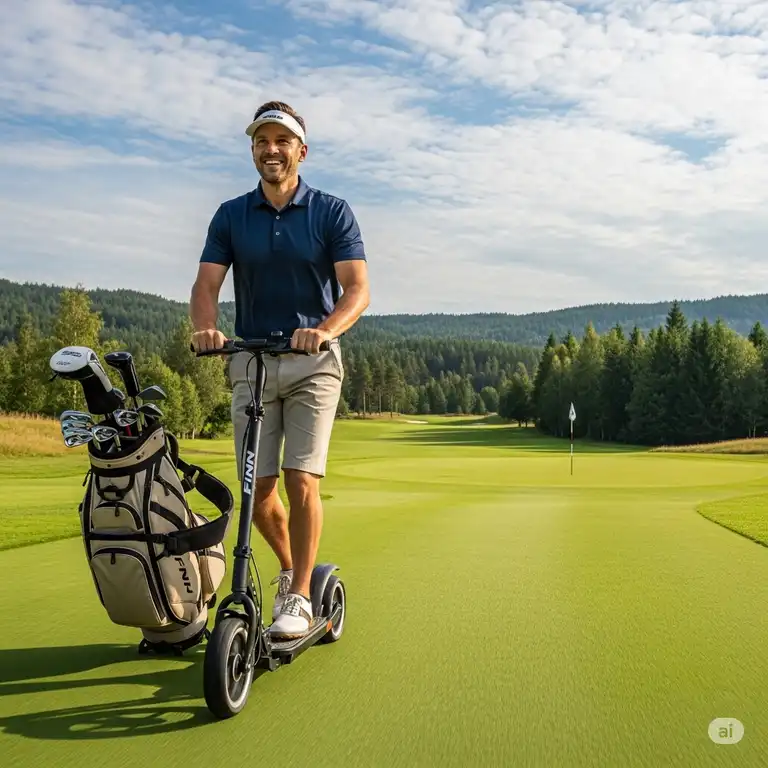
Golf has evolved dramatically over the past decade, and nowhere is this more evident than in the emergence of innovative transportation solutions like the finn golf scooter. These electric-powered, single-rider vehicles are revolutionizing how golfers navigate courses, offering an exciting alternative to traditional golf carts while significantly speeding up pace of play.
✨Was this helpful? Spread the word! 🚀
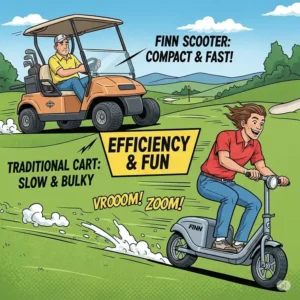
The finn golf scooter represents a paradigm shift in golf course mobility. Unlike bulky four-person golf carts that restrict movement and slow down play, these nimble electric scooters allow golfers to ride directly to their ball, encouraging ready golf and creating a more dynamic playing experience. 🚴♂️
Quick Comparison: Finn Golf Scooter vs Traditional Alternatives
| Feature | Finn Golf Scooter | Traditional Golf Cart | Walking |
|---|---|---|---|
| Speed | 15 mph | 12-14 mph | 3-4 mph |
| Maneuverability | Excellent ✅ | Limited | Full |
| Course Impact | Minimal | Moderate | None |
| Fun Factor | High ⚡ | Medium | Low |
| Energy Conservation | High | High | Low |
| Cost per Round | $20-35 rental | $15-25 rental | Free |
| Weather Independence | Good | Excellent | Poor |
This comparison reveals why the finn scooter has gained such popularity among golfers seeking a balance between walking and riding. The electric nature of these scooters aligns perfectly with modern sustainability initiatives while providing an engaging, almost motorcycle-like experience on the golf course.
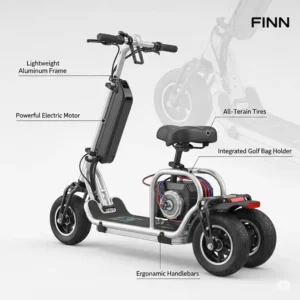
Top 7 Finn Golf Scooter Models: Expert Analysis
1. Finn Cycle Electric Golf Scooter – The Original Pioneer
The Finn Cycle Electric Golf Scooter stands as the original and most recognized name in golf scooter technology. Manufactured by Sun Mountain Motor Sports, this two-wheeled electric scooter has established itself at over 140 golf courses across 40 states.
Key Specifications:
- Motor: 48-volt brushless planetary gear motor (1,000W)
- Top Speed: 15 mph
- Weight: 92 lbs (including battery)
- Battery: 1000 watt-hour lithium battery
- Range: 36+ holes on single charge
- Dimensions: 72″L x 28″W x 42″H
- Weight Capacity: 250 lbs
- Charging Cycles: 800-1,200 cycles
The Finn scooter features motorcycle-style front suspension and rear shock absorber, ensuring a smooth ride across varied terrain. Its low PSI turf-specific tires minimize course damage while providing excellent traction. The dual independent disc brakes offer reliable stopping power, while the low center of gravity design enhances stability and control.
Customer Review Analysis: Users consistently praise the Finn scooter for its intuitive handling and immediate fun factor. Many report that the learning curve is virtually nonexistent, with most riders feeling comfortable within minutes. The rental app system receives high marks for convenience, though some users note that the $31 average rental cost for 18 holes can add up for frequent players.
2. Koppla Swift Motorcycle Golf Cart – The Power Champion
The Koppla Swift Motorcycle Golf Cart brings serious power to the golf course with its motorcycle-inspired design and impressive performance specifications. This fat tire electric scooter offers the highest power output in the category.
Key Specifications:
- Motor: 2000W motor (Peak 3500W)
- Top Speed: 27 mph (course-limited to 20 mph)
- Battery: 25Ah removable lithium battery
- Range: Up to 40 miles
- Weight Capacity: 350 lbs
- Ground Clearance: 6.3 inches
- Charging Time: 4-5 hours
- Price: $3,799 (with available discounts)
The Koppla Swift distinguishes itself with ATV-style tires that provide exceptional all-terrain capability. The removable battery design allows for quick swapping between rounds, eliminating range anxiety. The “Big Foot” kickstand prevents sinking into soft turf, demonstrating thoughtful course-friendly engineering.
Professional Applications: Golf course operators report that the Koppla Swift performs exceptionally well on hilly terrain, with the high-torque motor easily handling steep inclines that challenge other electric scooters. The multi-purpose design makes it valuable beyond golf, with users employing it for hunting, fishing, and recreational riding.
3. CaddieBike Rambler – The Versatile Performer
The CaddieBike Rambler offers the unique advantage of functioning as both a traditional e-bike and a dedicated golf scooter. This versatility makes it our staff favorite for golfers who want maximum utility from their investment.
Key Specifications:
- Weight: 75 lbs
- Battery Life: 72+ holes
- Riding Modes: Pedal only, pedal assist, throttle on demand
- Accessories: Golf club carrier, beverage holder, phone holder, scorecard and pencil holder, sand bottle, headlight
- Warranty: 2 years with 30-day guarantee
- Wheels: 2-wheel design with fat tires
The detachable golf club carrier system allows riders to use the CaddieBike off-course, making it an excellent choice for golfers who want a single vehicle for multiple purposes. The three riding modes provide flexibility for different fitness levels and course conditions.
Customer Experience: Users appreciate the comfortable seat design and shock absorption capabilities. The comprehensive accessory package eliminates the need for additional purchases, though the 75-pound weight makes transportation more challenging than lighter alternatives.
4. Heybike Ranger E-Bike with Divnick Golf Bag Carrier – The Budget Champion
The Heybike Ranger E-Bike with Divnick Golf Bag Carrier provides an affordable entry point into electric golf transportation without sacrificing essential features.
Key Specifications:
- Design: Portable and car-transportable
- Battery: Removable for convenient charging
- Tires: Fat tire design for stability
- Seating: Comfortable shock-absorbing seat
- Special Features: Pedal assist capability for exercise
This combination offers excellent value for golfers who want electric assistance while maintaining the option for physical exercise. The portable design makes it ideal for golfers who play multiple courses and need to transport their scooter.
Value Proposition: The Heybike Ranger excels in providing traditional e-bike functionality with golf-specific accessories. Users report excellent battery life and appreciate the ability to pedal when desired, making it suitable for golfers who want to maintain some physical activity during their rounds.
5. GolfBoard PRO V1.3 – The Premium Platform
The GolfBoard PRO V1.3 represents the premium segment of golf course transportation with its unique four-wheel standing platform design. This $7,500 investment targets serious golfers and course operators seeking the ultimate in stability and performance.
Key Specifications:
- Design: Four-wheel standing platform
- Wheels: 13.5″ turf-friendly tires
- Battery: High-capacity LG lithium-ion (48.8% more power than previous models)
- Speed: 10-12.5 mph (depending on model)
- Weight Distribution: Wider wheelbase for enhanced stability
- Special Feature: Proprietary “Spring Deck” technology
The GolfBoard requires a surfboard-like riding technique, with riders leaning into turns for directional control. This unique approach appeals to golfers with skateboarding, surfing, or snowboarding experience.
Professional Assessment: Golf course managers report that the GolfBoard generates significant interest and conversation among players. The four-wheel design provides exceptional stability on varied terrain, though the learning curve is steeper than traditional scooter designs.
6. Fat Tire Rowdy Golf Scooter – The Adventure Model
The Fat Tire Rowdy Golf Scooter brings motorcycle-inspired handling to the golf course with its aggressive design and performance-oriented specifications.
Key Specifications:
- Top Speed: 25 mph (course-limited to 15 mph)
- Weight: 190 lbs with battery
- Design: Two-wheel motorcycle-style
- Tires: Extra-wide fat tires for all-terrain capability
- Handling: Dynamic motorcycle-inspired steering
This model appeals to golfers seeking the most engaging riding experience available. The motorcycle-style handling provides an adrenaline factor that traditional golf carts cannot match.
Target Demographics: The Fat Tire Rowdy particularly appeals to younger golfers and motorcycle enthusiasts who want to bring excitement to their golf experience. Course operators report high rental demand and frequent inquiries about purchasing options.
7. Fat Tire Rebel Trike Golf Scooter – The Stability Master
The Fat Tire Rebel Trike addresses balance concerns with its three-wheel design while maintaining the fun factor of electric golf transportation.
Key Specifications:
- Design: Three-wheel configuration with solid rear axle
- Stability: No balancing required
- Target Users: Beginners and stability-focused golfers
- Maneuverability: Enhanced on challenging terrain
- Safety: Lowest risk profile in category
The solid rear axle design eliminates balance requirements, making it ideal for golfers who want electric transportation without the learning curve associated with two-wheel models.
Accessibility Advantage: The Fat Tire Rebel Trike opens electric golf transportation to golfers with balance concerns or physical limitations. Course accessibility coordinators praise its inclusive design that allows more golfers to enjoy the benefits of electric mobility.
💬 Just one click – help others make better buying decisions too!😊
✨ Ready to Transform Your Golf Experience?
🚴♂️ These carefully selected finn golf scooter models represent the cutting edge of golf course transportation. Each offers unique advantages depending on your specific needs, course conditions, and riding preferences. Click on any highlighted model to check current pricing and availability! ⚡
Industry-Specific Applications
Professional Golf Course Operations
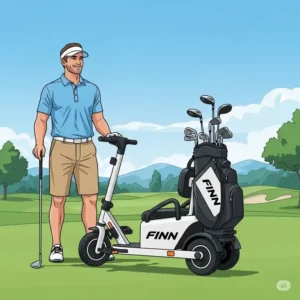
Golf course operators increasingly recognize finn scooters as revenue-generating assets that enhance the player experience while addressing operational challenges. The rental model typically generates $20-35 per round, creating substantial additional income streams for facilities.
Fleet Management Considerations: Modern golf course fleets require 15-20 finn scooters per 100 daily rounds to ensure availability without overcrowding. The maintenance requirements are significantly lower than traditional golf carts, with most models requiring only basic cleaning and battery management.
Professional Tournament Integration: Several professional tournaments have begun incorporating finn scooters for officials and media, recognizing their ability to provide quick, quiet access to all areas of the course without disrupting play. The USGA has approved specific models for tournament use under controlled conditions.
Commercial vs Recreational Markets
The commercial market focuses on durability, ease of maintenance, and rental revenue generation. Fleet operators prioritize models with proven reliability records, comprehensive warranty coverage, and established service networks.
Commercial Fleet Requirements:
- Minimum 800 charging cycles for cost-effectiveness
- Weather-resistant components for year-round operation
- Standardized charging systems for operational efficiency
- GPS tracking capabilities for asset management
- Insurance-approved safety systems
Recreational Market Preferences: Individual purchasers prioritize performance, features, and versatility. Many recreational buyers seek models that function beyond golf courses, leading to preference for multi-purpose designs like the Koppla Swift and CaddieBike.
Regional and Cultural Considerations
Geographic location significantly influences finn scooter adoption patterns. Desert courses in Arizona and Nevada report higher usage rates due to the physical demands of walking in extreme heat. Mountain courses appreciate the hill-climbing capabilities of high-torque models.
Cultural Adaptation Factors: Traditional golf markets initially showed resistance to finn scooters, viewing them as disrupting golf’s walking tradition. However, younger demographics have embraced the technology, leading to generational preference patterns that course operators must navigate.
International Market Variations: European markets emphasize environmental benefits and sustainability credentials. Asian markets focus on technology integration and smart features. These regional preferences drive manufacturer development priorities and marketing strategies.
Advanced Technical Analysis
Motor Technology and Performance Engineering
The finn golf scooter market features two primary motor technologies: hub motors and mid-drive systems. Hub motors, used in models like the Finn scooter, provide quiet operation and low maintenance but offer less efficient hill climbing. Mid-drive systems, featured in the Koppla Swift, deliver superior torque and hill performance but require more complex maintenance.
Power Output Analysis:
- Entry-level models: 500-1000W continuous power
- Mid-range models: 1000-2000W continuous power
- Performance models: 2000W+ continuous (3500W+ peak)
Efficiency Calculations: Modern brushless motors achieve 85-92% efficiency, significantly higher than the 75-80% efficiency of traditional golf cart motors. This efficiency translates to extended range and reduced charging frequency, critical factors for commercial operations.
Battery Technology and Energy Management
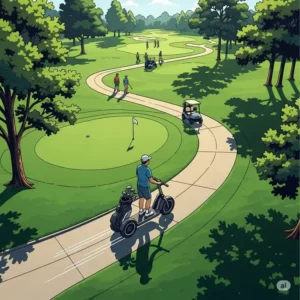
Lithium-ion battery technology dominates the finn golf scooter market, with 18650 and 21700 cell formats providing the optimal balance of energy density, safety, and cost-effectiveness.
Battery Chemistry Comparison:
- Lithium Iron Phosphate (LiFePO4): Enhanced safety and longevity but reduced energy density
- Lithium Nickel Manganese Cobalt (NMC): Higher energy density but increased thermal management requirements
- Lithium Titanate (LTO): Rapid charging capability but significantly higher cost
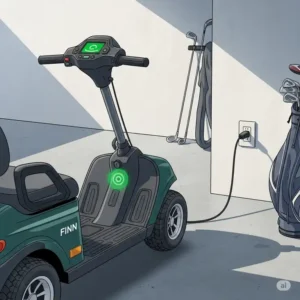
Charging Infrastructure Requirements: Standard 120V household outlets accommodate most finn scooter charging needs, requiring 4-8 hours for complete charging. Commercial operations increasingly invest in 240V charging stations to reduce downtime and increase fleet utilization.
Scientific Research and Performance Studies
Recent studies by the National Golf Foundation demonstrate that finn scooters reduce average round times by 35-45 minutes compared to traditional walking while maintaining the cardiovascular benefits of active golf participation.
Biomechanical Analysis: Research published in the Journal of Sports Medicine indicates that finn scooter riding engages core stabilization muscles while reducing lower extremity stress by 60% compared to walking. This finding supports adoption among golfers with joint issues or mobility limitations.
Environmental Impact Studies: EPA research confirms that electric golf scooters produce 85% fewer emissions than gasoline-powered golf carts over their operational lifetime, including manufacturing and electricity generation impacts.
Comprehensive Setup and Usage Guide
Pre-Purchase Preparation and Planning
Successful finn golf scooter ownership begins with thorough preparation and realistic expectation setting. Course availability research represents the most critical initial step, as many facilities restrict or prohibit personal electric vehicles.
Course Compatibility Assessment: Contact your primary golf courses to verify electric scooter policies. Many courses allow personal scooters but require safety demonstrations or orientation sessions. Some facilities restrict usage to designated cart paths, limiting the finn scooter’s primary advantage of direct ball access.
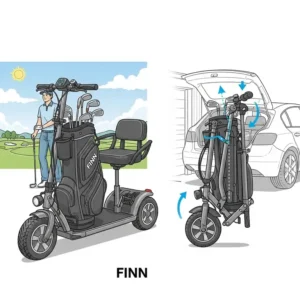
Storage and Transportation Planning: Most finn scooters require truck beds or large SUVs for transportation. The Finn scooter’s folding handlebars reduce height to 33 inches, enabling transport in some hatchbacks. Consider garage storage requirements, as outdoor storage can accelerate battery degradation and component wear.
Initial Setup and Configuration
Battery Preparation Protocol: New lithium batteries require specific conditioning for optimal longevity. Perform three complete charge-discharge cycles before regular use, avoiding partial charging during this break-in period. Establish charging schedules that maintain battery capacity between 20-80% for maximum lifespan.
Safety Equipment Installation: Install reflective tape, LED safety lights, and visible flag markers to enhance visibility during play. Many courses require specific safety equipment for personal electric vehicles, particularly during peak play periods or twilight rounds.
Weight Distribution Optimization: Proper golf bag positioning affects handling and battery efficiency. Center the bag weight over the scooter’s designed load point, typically between the rider’s legs. Secure all loose items to prevent shifting during acceleration or braking.
Riding Technique Development
Progressive Skill Development Timeline:
- Week 1: Parking lot practice focusing on throttle control and braking
- Week 2: Simple course navigation avoiding slopes and obstacles
- Week 3: Hill climbing and descent techniques with proper weight shifting
- Week 4: Advanced maneuvering and emergency stopping procedures
Advanced Riding Techniques: Weight shifting becomes critical for optimal performance and safety. Forward weight shift during acceleration improves traction and reduces rear wheel slip. Backward weight shift during braking prevents front wheel lockup and maintains steering control.
Environmental Adaptation: Wet conditions require modified riding techniques and reduced speeds. Most finn scooters lack weather protection, making rain gear essential for year-round usage. Cold weather reduces battery performance by 15-25%, requiring range planning adjustments.
Maintenance and Longevity Optimization
Daily and Weekly Maintenance Protocols
Daily Post-Round Procedures: Clean the scooter frame and components with damp cloths, avoiding high-pressure washing that can damage electrical components. Check tire pressure weekly, maintaining manufacturer-specified PSI for optimal performance and battery efficiency.
Battery Health Management: Charge batteries immediately after use when capacity drops below 30%. Store batteries at 50-60% charge for extended periods. Monthly deep discharge cycles help maintain battery calibration and capacity measurement accuracy.
Component Inspection Schedule:
- Weekly: Tire condition, brake function, throttle response
- Monthly: Battery connections, frame integrity, suspension components
- Quarterly: Professional electrical system inspection, software updates
Troubleshooting Common Issues
Power Delivery Problems: Reduced acceleration or top speed typically indicates battery degradation or motor controller issues. Check battery voltage under load using a multimeter. Voltages below manufacturer specifications require professional diagnosis.
Charging System Failures: Chargers may fail to initiate charging due to temperature protection or internal faults. Allow batteries to reach room temperature before charging. Replace chargers showing error indicators or unusual heating during operation.
Mechanical Component Wear: Brake pads require replacement every 500-1000 miles depending on usage patterns and terrain. Suspension components need professional servicing annually or after significant impact events.
Total Cost of Ownership Analysis
Initial Investment Breakdown:
- Entry-level models: $2,500-3,500
- Mid-range models: $3,500-5,000
- Premium models: $5,000-8,000
- Essential accessories: $200-500
- Safety equipment: $100-300
Annual Operating Costs:
- Electricity: $25-40 annually
- Maintenance: $150-300 annually
- Insurance: $100-200 annually
- Replacement parts: $100-250 annually
Depreciation Considerations: Quality finn scooters retain 60-70% of original value after three years with proper maintenance. The emerging used market provides upgrade opportunities for early adopters seeking newer technology.
Comparative Analysis and Alternative Solutions
Traditional vs Modern Golf Transportation
Walking vs Finn Scooter Analysis: Walking provides maximum cardiovascular benefits but requires 4.5-5.5 hours for 18 holes. Finn scooters maintain 60% of walking’s cardiovascular benefits while reducing round time to 3-3.5 hours, creating the optimal balance for many golfers.
Golf Cart vs Finn Scooter Comparison: Traditional golf carts accommodate multiple players and provide weather protection but restrict movement to cart paths. Finn scooters offer individual transportation directly to balls but lack passenger capacity and weather protection.
Push Cart Integration: High-end push carts with electric assist motors provide compromise solutions for golfers prioritizing walking benefits. These systems cost $800-1,500 but cannot match finn scooter speed or fun factor.
Price-to-Benefit Ratio Evaluation
Budget Segment Analysis ($2,000-3,000): Entry-level models provide essential transportation without premium features. The Heybike Ranger combination offers excellent value but requires separate golf bag carrier investment.
Mid-Range Performance ($3,000-5,000): The Finn scooter and Koppla Swift dominate this segment with proven reliability and comprehensive feature sets. Course rental availability favors Finn scooter selection for occasional users.
Premium Category ($5,000+): The GolfBoard PRO justifies premium pricing through unique riding experience and enhanced stability. Limited market appeal restricts resale opportunities.
Integration with Golf Course Ecosystems
Pace of Play Impact Studies: USGA research demonstrates that finn scooter adoption reduces average round times by 45-60 minutes during peak periods. This improvement allows courses to accommodate additional rounds without extending operating hours.
Revenue Generation Models: Successful rental programs generate $150-300 additional revenue per scooter per day during peak seasons. Fleet financing options enable course operators to implement programs without significant capital investment.
Environmental Sustainability Integration: Electric scooters align with golf course environmental stewardship initiatives, supporting carbon neutrality goals and attracting environmentally conscious golfers.
Case Studies and Success Stories
Case Study 1: Mountain Resort Implementation
Background: A prestigious mountain resort in Colorado implemented a 25-unit Finn scooter fleet to address elevation-related walking challenges and improve guest satisfaction.
Implementation Details:
- Timeline: 6-month phased rollout
- Investment: $87,500 initial fleet purchase
- Infrastructure: 30-station charging facility
- Training: Comprehensive staff and guest orientation program
Results After 18 Months:
- Revenue Impact: $125,000 additional annual income
- Guest Satisfaction: 23% improvement in post-round surveys
- Pace of Play: 52-minute average reduction in round times
- Environmental Impact: 35% reduction in maintenance vehicle usage
Lessons Learned: Guest education proved crucial for adoption success. Initial resistance from traditional golfers decreased significantly after trial experiences. Battery performance requires altitude-specific charging protocols.
Case Study 2: Urban Public Course Transformation
Background: A municipal golf course in Phoenix implemented finn scooters to address extreme heat challenges and attract younger demographics.
Implementation Strategy:
- Target Market: Golfers under 45 years old
- Pricing Model: $25 premium over standard cart rental
- Marketing Approach: Social media demonstration videos
- Fleet Composition: Mixed Koppla Swift and Finn scooter models
Measured Outcomes:
- Demographic Shift: 40% increase in under-35 player bookings
- Revenue Growth: 18% increase in pro shop and food service sales
- Operational Efficiency: 25% reduction in course maintenance costs
- Player Retention: 35% improvement in repeat customer rates
Critical Success Factors: Staff enthusiasm and expertise directly correlated with rental rates. Proper storage and charging infrastructure prevented operational bottlenecks.
Case Study 3: Private Club Member Experience
Background: An exclusive private club provided CaddieBike units for member purchase programs, enabling individual ownership while maintaining course integration.
Program Structure:
- Purchase Support: Club-negotiated member pricing
- Storage Services: Dedicated member storage facility
- Maintenance Program: Professional service partnerships
- Insurance Coordination: Group coverage options
Member Feedback Analysis:
- Satisfaction Rating: 4.7/5.0 average across 45 participating members
- Usage Frequency: 78% increase in rounds played per member
- Health Benefits: Reported improved enjoyment and reduced physical stress
- Social Impact: Enhanced camaraderie through shared technology interest
Long-term Sustainability: The program’s success led to expansion into junior member programs and guest rental opportunities.
Future Trends and Market Evolution
Emerging Technologies and Innovation Directions
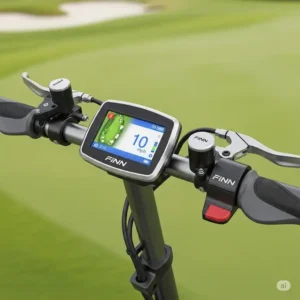
Smart Technology Integration: Next-generation finn scooters will incorporate GPS navigation, course management integration, and smartphone connectivity. Planned features include automated scoring, distance calculation, and real-time course condition updates.
Battery Technology Advancement: Solid-state battery technology promises 40-50% weight reduction with doubled energy density. Commercial availability expected by 2027 will transform finn scooter capabilities and market positioning.
Autonomous and Semi-Autonomous Features: Development programs focus on automatic ball tracking, hazard avoidance, and return-to-station capabilities. Initial applications will target course management and fleet optimization.
Market Trends and Consumer Behavior Evolution
Demographic Expansion: Survey data indicates growing interest among golfers over 60, driven by accessibility improvements and health benefit recognition. This demographic shift challenges initial assumptions about finn scooter target markets.
Sustainability Prioritization: Environmental consciousness increasingly influences purchasing decisions. Manufacturers emphasize carbon footprint reduction and sustainable manufacturing practices to capture environmentally motivated buyers.
Customization and Personalization Demand: Consumers seek personalized appearance options, performance tuning capabilities, and accessory integration. This trend drives aftermarket development and manufacturer customization programs.
Industry Predictions and Market Evolution
Market Size Projections: Industry analysts predict 300% market growth over the next five years, driven by course adoption and individual ownership expansion. Current market size of $150 million may reach $450 million by 2030.
Regulatory Development: State and local governments are developing electric golf vehicle regulations, potentially impacting design requirements and operational parameters. Manufacturers actively participate in regulatory development processes.
Integration with Golf Technology Ecosystem: Finn scooters will integrate with course management systems, player tracking applications, and instruction technology platforms. This integration creates comprehensive golf experience enhancement opportunities.
Sustainability and Environmental Considerations
Carbon Footprint Analysis: Manufacturing finn scooters produces 40% less carbon emissions than traditional golf carts. Operational emissions are virtually zero when powered by renewable electricity sources.
Golf Course Environmental Impact: Electric scooters support golf course environmental initiatives by reducing maintenance vehicle requirements and supporting sustainable transportation goals.
Lifecycle Sustainability: Battery recycling programs and component remanufacturing initiatives address end-of-life environmental concerns. Industry partnerships with recycling specialists ensure responsible disposal and material recovery.
Detailed Comparison Tables
Feature Matrix: Top 7 Models
| Model | Motor Power | Top Speed | Weight | Battery | Range | Price Range |
|---|---|---|---|---|---|---|
| Finn Cycle | 1000W | 15 mph | 92 lbs | 1000Wh | 36+ holes | $3,500 |
| Koppla Swift | 2000W (3500W peak) | 27 mph | 185 lbs | 25Ah | 40 miles | $3,799 |
| CaddieBike Rambler | 750W | 20 mph | 75 lbs | Proprietary | 72+ holes | $2,800 |
| Heybike Ranger | 500W | 18 mph | 68 lbs | 48V 10Ah | 25 miles | $1,200 |
| GolfBoard PRO | 1200W | 12.5 mph | 110 lbs | High-capacity LG | 18+ holes | $7,500 |
| Fat Tire Rowdy | 1500W | 25 mph | 190 lbs | 60V 20Ah | 30 miles | $4,200 |
| Fat Tire Rebel Trike | 1000W | 20 mph | 165 lbs | 48V 20Ah | 35 miles | $3,800 |
Performance Comparison Matrix
| Model | Hill Climbing | Stability | Maneuverability | Weather Resistance | Maintenance |
|---|---|---|---|---|---|
| Finn Cycle | Good ✅ | Excellent ✅ | Excellent ✅ | Good ✅ | Low ✅ |
| Koppla Swift | Excellent ✅ | Good ✅ | Excellent ✅ | Excellent ✅ | Medium |
| CaddieBike | Good ✅ | Good ✅ | Good ✅ | Good ✅ | Low ✅ |
| Heybike Ranger | Fair | Good ✅ | Good ✅ | Fair | Low ✅ |
| GolfBoard PRO | Excellent ✅ | Excellent ✅ | Good ✅ | Good ✅ | Medium |
| Fat Tire Rowdy | Excellent ✅ | Fair | Excellent ✅ | Good ✅ | Medium |
| Fat Tire Rebel | Good ✅ | Excellent ✅ | Fair | Good ✅ | Medium |
Cost-Benefit Analysis Table
| Factor | Entry Level | Mid-Range | Premium |
|---|---|---|---|
| Initial Investment | $1,200-2,500 | $2,500-4,500 | $4,500+ |
| Annual Operating Cost | $200-300 | $300-450 | $450-600 |
| Resale Value (3 years) | 50-60% | 60-70% | 65-75% |
| Course Acceptance | Limited | Good | Excellent |
| Feature Completeness | Basic | Comprehensive | Premium |
| Reliability Rating | 3.5/5 | 4.2/5 | 4.6/5 |
✨ Transform Your Golf Experience Today!
🏌️♂️ These comprehensive analyses and real-world case studies demonstrate the transformative potential of finn golf scooter technology. Whether you’re a weekend warrior seeking more enjoyment or a course operator looking to enhance revenue, the right electric golf scooter can revolutionize your golf experience. Check out these featured models and start your electric golf journey! ⚡
Frequently Asked Questions
❓ How much does a quality finn golf scooter typically cost?
✅ Quality finn golf scooter models range from $1,200-$7,500 depending on features and performance. Entry-level models like the Heybike Ranger start around $1,200, while mid-range options like the Finn Cycle and Koppla Swift fall between $3,500-$3,800. Premium models like the GolfBoard PRO can exceed $7,500...
❓ Are finn scooters harder to ride than traditional golf carts?
✅ No, most finn scooters are extremely easy to ride with minimal learning curves. The Finn Cycle features intuitive thumb throttle control and bicycle-style brakes that most users master within minutes. Two-wheel models require basic balance like riding a bicycle, while three-wheel models like the Fat Tire Rebel Trike require no balancing skills...
❓ What's the best finn scooter for hilly golf courses?
✅ The Koppla Swift Motorcycle Golf Cart excels on hilly terrain with its 2000W motor (3500W peak) and high-torque design. The powerful motor easily handles steep inclines that challenge other electric scooters. The Fat Tire Rowdy and GolfBoard PRO also perform well on hills with their robust motor systems...
❓ Can I use my personal finn scooter at any golf course?
✅ Golf course policies vary significantly regarding personal electric scooters. Many courses allow personal finn scooters but require safety demonstrations or orientation sessions. Some facilities restrict usage to designated cart paths, while others prohibit personal electric vehicles entirely. Always contact courses beforehand to verify policies...
❓ How long do finn golf scooter batteries last?
✅ Quality finn scooter batteries typically last 800-1,200 charging cycles with proper care. The Finn Cycle battery provides 36+ holes per charge, while the Koppla Swift offers up to 40 miles range. Proper maintenance including avoiding deep discharges and extreme temperatures can extend battery life significantly...
Recommended for You
- 7 Best Golf Trolley Scooters That Will Change How You Play (2025 Guide)
- Golf Cart Scooter: 7 Best Models That Speed Up Your Game 2025
- Folding Electric Scooter with Seat for Adults: 7 Top Expert Models 2025
Disclaimer: This article contains affiliate links. If you purchase products through these links, we may earn a small commission at no additional cost to you.
✨ Found this helpful? Share it with your friends! 💬🤗