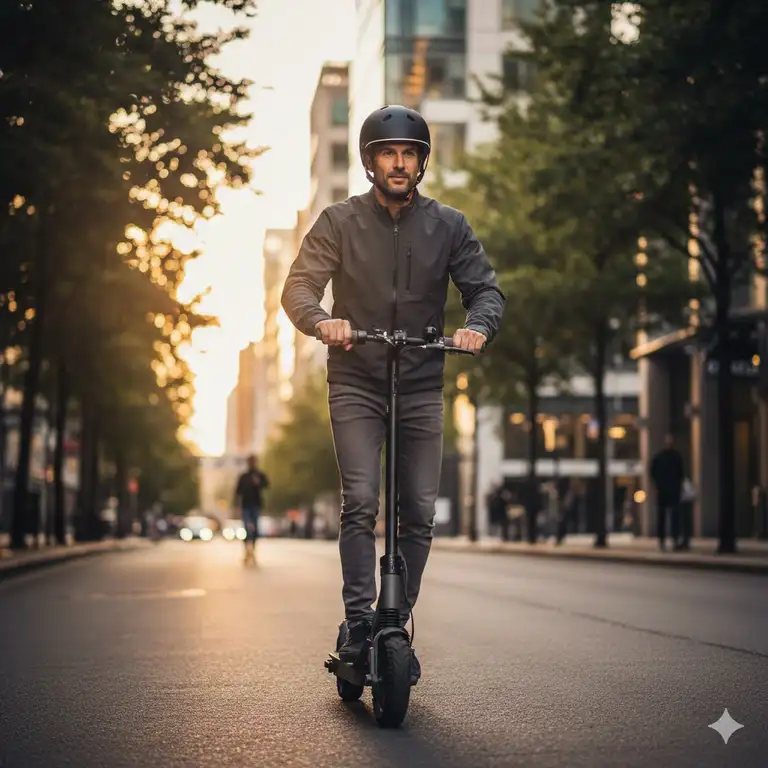

I remember the first time I stared down a 15% grade hill in San Francisco on my brand-new e-scooter. My heart was thumping against my ribs like a trapped bird. I’d spent all this money on a shiny machine, but I realized I didn’t actually know how to ride electric scooter downhill safely. It’s one thing to zip along a flat bike path at 18 miles per hour, but it’s a whole different ball game when gravity decides to take the wheel. If you don’t handle the descent correctly, that “fun ride” can turn into a sketchy situation faster than you can say “worn-out brake pads.”
✨Was this helpful? Spread the word! 🚀
Learning the ropes of descending isn’t just about squeezing the brakes and hoping for the best. It’s a mix of body physics, mechanical understanding, and a little bit of “road zen.” Whether you are commuting to work or exploring mountain trails, knowing how to ride electric scooter downhill safely is the difference between a smooth arrival and an unplanned trip to the clinic. Below, I’ve broken down everything I’ve learned over thousands of miles of riding, including a look at the best gear to keep you upright.
Downhill Descent Comparison: Scooter vs. Alternatives
| Feature | Electric Scooter | Electric Bike | Skateboard/Longboard |
| Braking Control | High (Dual/Regen) | Very High (Large Discs) | Low (Foot/Slide) |
| Stability | Medium (Small wheels) | High (Large wheels) | Low (No handles) |
| Steep Hill Safety | Excellent with technique | Top Tier | Experts Only |
| Portability | High | Low | Extreme |
| Learning Curve | Moderate | Easy | Hard |
Top 7 Electric Scooters for Steep Hills: Expert Analysis
If you want to master how to ride electric scooter downhill safely, you need a machine that can actually handle the heat—literally. Here are the top 7 models currently dominating the market in 2026, selected for their superior braking and stability.
1. Segway Ninebot Max G2
The Segway Ninebot Max G2 is the gold standard for commuters who face daily inclines. It features a sophisticated triple-braking system that includes a front drum brake and a rear electronic brake combined with regenerative capabilities.
-
Technical Specifications: 1000W Peak Power, 22 mph top speed, 10-inch tubeless tires with “RideyLong” technology.
-
Customer Review Analysis: Users consistently praise the “bomb-proof” build and the confidence provided by the rear suspension when hitting bumps during a descent.
-
Warranty: 1-year limited warranty on core components.
-
Professional Applications: Ideal for “last-mile” urban delivery and heavy daily commuting.
-
Pros: Incredible reliability, self-healing tires, great app integration.
-
Cons: A bit heavy for a “portable” scooter; drum brakes require less maintenance but offer less “bite” than discs.
2. Apollo City Pro 2024
The Apollo City Pro 2024 is famous for its “Power Regen” braking system. Instead of relying purely on friction, you can use a dedicated thumb throttle to slow down, recharging your battery while keeping your mechanical brakes cool.
-
Technical Specifications: Dual 500W motors, 32 mph top speed, IP66 water resistance rating.
-
Customer Review Analysis: Riders love the “integrated” feel of the scooter. One reviewer noted, “The regen brake is so strong I barely touch the physical levers.”
-
Warranty: 12-month warranty with an option to extend to 2 years.
-
Professional Applications: High-end commuting and tech-focused urban transport.
-
Pros: Minimal maintenance due to drum brakes + regen; excellent lighting.
-
Cons: Premium price point; software can be finicky.
3. NAMI Burn-E 2
When it comes to descending mountains, the NAMI Burn-E 2 is a beast. This isn’t a toy; it’s a high-performance vehicle equipped with full hydraulic disc brakes.
-
Technical Specifications: 72V system, dual motors, Logan hydraulic brakes, adjustable hydraulic suspension.
-
Customer Review Analysis: Extreme enthusiasts call this the “limousine of scooters.” The stopping power is described as “instant and smooth.”
-
Warranty: 1-year warranty with a strong community support network.
-
Professional Applications: Off-road exploration, enthusiast racing, and long-range touring.
-
Pros: Massive power, incredible suspension travel, best-in-class braking.
-
Cons: Weighs over 100 lbs; overkill for city streets.
4. NIU KQi3 Max
The NIU KQi3 Max offers a perfect balance for those wondering how to ride electric scooter downhill safely without spending $4,000. It uses dual disc brakes that provide consistent stopping power.
-
Technical Specifications: 450W rated motor (900W peak), 23.6 mph top speed, 9.5-inch rubber tires.
-
Customer Review Analysis: Customers appreciate the wider deck and handlebars, which provide extra stability during fast descents.
-
Warranty: 2-year limited warranty (one of the best in the industry).
-
Professional Applications: Campus security, corporate commuters, and students.
-
Pros: Great deck space, excellent build quality, very intuitive.
-
Cons: No dedicated suspension; can feel bumpy on rough hills.
5. Gotrax G6
For the budget-conscious, the Gotrax G6 (part of the GX series) provides dual braking at an entry-level price. It’s proof that you don’t need a mortgage to find a safe way to ride an e scooter downhill.
-
Technical Specifications: 500W motor, 20 mph top speed, 10-inch pneumatic tires.
-
Customer Review Analysis: Most reviews highlight its value. Users say it feels “sturdier than expected” for a budget brand.
-
Warranty: 180-day limited warranty.
-
Professional Applications: Short urban commutes and recreational park riding.
-
Pros: Lightweight, easy to fold, dual braking system.
-
Cons: Shorter warranty period; lower hill-climbing torque.
6. VSETT 10+
The VSETT 10+ is a legendary performance scooter. Its dual-motor setup is great for climbing, but its large Zoom hydraulic brakes are what make it a winner for descending.
-
Technical Specifications: Dual 1400W motors, 60V 28Ah battery, Nutt or Zoom hydraulic brakes.
-
Customer Review Analysis: Long-term riders appreciate the “tactile feedback” of the brakes. It’s a favorite for those who like to customize their ride.
-
Warranty: 1-year warranty through major US distributors.
-
Professional Applications: Enthusiast group rides and heavy-duty commuting.
-
Pros: Fast, high-quality brakes, signature “VSETT” yellow look.
-
Cons: Folding mechanism can develop “creaks” over time.
7. Kaabo Mantis King GT
The Kaabo Mantis King GT rounds out our list with its incredible sine-wave controllers, which allow for very smooth acceleration and braking—essential for riding e scooter downhill safely.
-
Technical Specifications: Dual 1100W motors, TFT display, fully adjustable hydraulic suspension.
-
Customer Review Analysis: Reviewers emphasize the “smoothness” of the power delivery. “It doesn’t jerk you around when you tap the brakes,” says one 5-star review.
-
Warranty: 1-year limited warranty.
-
Professional Applications: High-performance commuting and light off-roading.
-
Pros: Best-in-class display, very agile, excellent suspension.
-
Cons: Stem design requires regular bolt checks.
✨ Don’t Miss These Exclusive Deals! 🔍
Take your downhill adventures to the next level with these carefully selected products. Click on any highlighted item to check current pricing and availability. These scooters and safety accessories will help you maintain control and confidence on every descent! ⚡
💬 Just one click – help others make better buying decisions too!😊
Detailed Feature Comparison Matrix
| Model | Brake Type | Suspension | Best For |
| Segway Max G2 | Drum + Electronic | Front/Rear Spring | Daily Commute |
| Apollo City Pro | Dual Drum + Regen | Triple Spring | Low Maintenance |
| NAMI Burn-E 2 | Hydraulic Disc | Hydraulic (Adjustable) | Extreme Terrain |
| NIU KQi3 Max | Dual Disc | None | Reliability/Value |
| Gotrax G6 | Disc + Electronic | Front | Budget Buyers |
| VSETT 10+ | Hydraulic Disc | Coil/Swingarm | High Performance |
| Kaabo Mantis King GT | Hydraulic Disc | Hydraulic | Smooth Control |
The Physics of Riding E Scooter Downhill
To truly grasp how to ride electric scooter downhill safely, you have to understand what’s happening between your tires and the asphalt. When you head down a slope, your weight naturally shifts forward. If you slam on the front brakes, you risk a “stoppie” (the back wheel lifting off the ground) or worse, a “superman” over the handlebars.
Weight Distribution and Center of Gravity
I always tell people to think like a downhill skier. When descending, you should shift your hips back and lower your center of gravity. This puts more weight over the rear wheel, which is your anchor. By keeping your knees slightly bent, you act as a human shock absorber. This is a crucial part of descending hills on electric scooter setups because it prevents you from being bucked off if you hit a pothole.
Managing Brake Heat
Did you know that friction brakes can actually “fade” or lose effectiveness if they get too hot? This is common on long descents. If you are riding e scooter downhill on a trail that lasts for miles, don’t just hold the brakes down the whole time. Instead, use “cadence braking”—firmly apply the brakes to shed speed, then release them for a few seconds to let the air cool the discs or drums. This technique is vital for electric scooter downhill safety.
Benefits of Safe Downhill Techniques vs. “Wing it” Methods
| Benefit | Using Pro Techniques | “Wing it” Approach |
| Brake Life | Extended (less heat soak) | Reduced (glazing/warping) |
| Safety | High (Controlled stops) | Low (Risk of skidding) |
| Battery Life | Potential Gain (Regen) | Loss (Heat waste) |
| Stress Level | Chill and fun | Terrifying |
Essential Gear for Downhill Riding
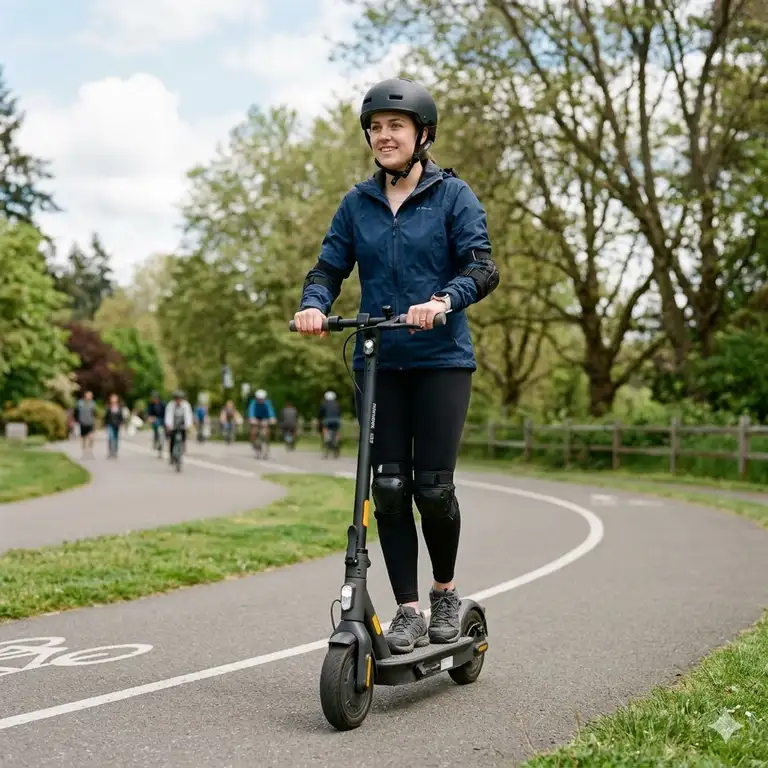
You can’t talk about how to ride electric scooter downhill safely without talking about protection. In 2026, the tech has advanced, but the ground is still just as hard. According to Consumer Reports, head injuries are the most common serious injury in scooter accidents.
-
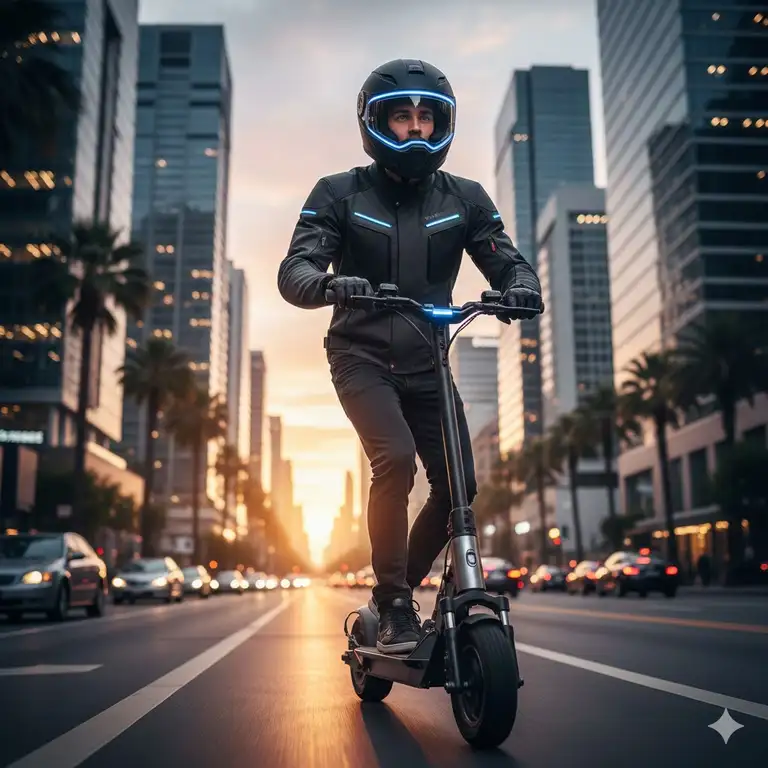
Full-Face Helmet: If you’re going over 20 mph downhill, a standard bicycle helmet isn’t enough. Look for a downhill mountain bike helmet or a lightweight motorcycle helmet.
-
Gloves with Wrist Sliders: When we fall, our instinct is to put our hands out. Sliders allow your hands to slide along the pavement rather than catching and snapping your wrist.
-
High-Visibility Vest: Descending at high speeds means you might be moving faster than cars expect. Be seen.
-
Mirror: You need to know if a car is riding your tail while you’re focusing on the hill ahead.
Safety Gear Performance Metrics
| Gear Item | Impact Protection (%) | Abrasion Resistance | Essential Level |
| Full-Face Helmet | 95% | Extreme | Mandatory |
| Wrist Guards | 70% | High | High |
| Knee Pads | 60% | Medium | Recommended |
| Padded Jacket | 50% | Extreme | Optional (for speed) |
Step-by-Step Guide: How to Ride Electric Scooter Downhill Safely
If you’re standing at the top of a hill right now, here is exactly what I want you to do:
Phase 1: The Pre-Check
Before you even tip the scooter forward, check your brakes. Give the levers a squeeze. Do they feel firm? If the lever touches the handlebar, stop immediately. You also want to check your tire pressure. Low pressure makes the scooter feel “squishy” and unstable during a ride electric scooter down hill safely attempt.
Phase 2: The Stance
As you start to pick up speed, move one foot to the very back of the deck (or the kickplate if your scooter has one). Lean back. Keep your arms relaxed—stiff arms lead to “speed wobbles.” Speed wobbles happen when the front wheel starts oscillating uncontrollably. If this happens, do not panic and do not slam the brakes. Gently ease off the throttle and shift your weight even further back.
Phase 3: Controlled Braking
Use both brakes together. Most scooters are rear-wheel drive and have stronger rear braking. However, the front brake provides about 70% of your stopping power due to weight transfer. The secret to how to ride electric scooter downhill safely is a 60/40 split: 60% rear brake, 40% front brake. This keeps the scooter balanced.
Phase 4: Cornering on a Hill
If the hill has a curve, slow down before the turn. Never brake hard while the scooter is tilted in a turn; this is the easiest way to lose traction and “low-side.” Aim for a wide entry and a tight exit, staying mindful of any gravel or “marbles” on the edge of the road.

Common Mistakes to Avoid
Even experienced riders mess up. I once saw a guy try to ride electric scooter downhill safeley (yes, that’s a common typo people search for!) by standing on his tiptoes. It ended poorly. Here are the biggest blunders:
-
Relying purely on the front brake: As mentioned, this is a recipe for a flip.
-
Ignoring the weather: Rain makes manhole covers and painted lines like ice. If it’s wet, your stopping distance triples.
-
The “Death Grip”: Gripping the bars too hard actually makes it harder to steer. Think “firm but fluid.”
-
Maxing out the throttle: Gravity is already giving you free speed. You don’t need the motor’s help. In fact, many motors have a “speed limiter” that can actually cause a jerky feeling if you exceed the rated speed while the motor is engaged.
Maintenance Schedule for Hill Riders
| Component | Check Frequency | Why it Matters for Downhill |
| Brake Pads | Every 100 miles | Prevents “metal-on-metal” failure |
| Tire Pressure | Weekly | Maintains grip and prevents wobbles |
| Stem Bolts | Monthly | Prevents catastrophic steering failure |
| Brake Cable Tension | Bi-weekly | Ensures “bite” is available when needed |
Advanced Tech: Regenerative Braking and E-ABS
Modern scooters in 2026 are getting smarter. Many now include Electronic Anti-lock Braking Systems (E-ABS). This prevents the motor from locking up the wheel, which is a huge help for downhill electric scooter braking.
Regenerative braking is also a game-changer. When you engage it, the motor runs in reverse, acting as a generator. This creates “magnetic drag,” which slows you down smoothly without wearing out your brake pads. If you are descending a long hill, regen can actually put 2-3% of battery life back into your machine. However, a word of caution: if your battery is at 100% charge, some scooters will disable regen braking to prevent overcharging. Always start your hilly rides with 90-95% battery if you plan on using regen for safety.
Environmental & Economic Impact of Safe Riding
| Category | Impact of Safe Braking/Regen | Impact of Aggressive Riding |
| Carbon Footprint | Lower (Energy recovered) | Higher (Energy wasted) |
| Repair Costs | ~$50/year (Pads only) | ~$300/year (Rotors/Tires) |
| Safety Record | Clean | Likely Insurance Claims |
| Commute Time | Consistent | Variable (due to accidents) |
✨ Take Control of Your Ride Today! ⚡
Ready to upgrade your commute or safety gear? Click on any of our top-rated products above to see the latest 2026 deals on Amazon. Whether you need a new high-performance scooter or a life-saving helmet, we’ve got you covered. Don’t wait for an accident to happen—gear up and ride smart! 🛴💨

Conclusion: Mastering the Descent
Learning how to ride electric scooter downhill safely is a journey, not a destination. It starts with choosing the right hardware—like the NAMI Burn-E 2 for power or the Segway Ninebot Max G2 for reliability—and ends with your own muscle memory. Furthermore, maintaining your equipment is just as important as your stance. A well-oiled machine is a predictable machine, and predictability is your best friend when gravity is pulling you toward the bottom of a 10% grade.
Consequently, if you focus on your weight distribution, manage your brake heat, and wear the right gear, you’ll find that hills are nothing to fear. In fact, they can be the most exhilarating part of your ride. Just remember: keep your knees bent, your eyes on the road, and your ego in check.
Frequently Asked Questions
✅ Yes, it is safe if your scooter has dual brakes and you use the correct technique. You must shift your weight back and avoid slamming the front brake. Ensure your brakes are adjusted before starting the descent...
✅ You should ideally apply both brakes simultaneously, but lead slightly with the rear brake. A 60% rear and 40% front distribution helps maintain stability and prevents the rear wheel from lifting off the ground unexpectedly...
✅ Generally, no, but excessive speed can cause issues. If you exceed the motor's RPM limit, it can generate back-EMF that might damage the controller. Most modern scooters have protective circuits to prevent this from happening...
✅ Do not panic. If you have space, try to zig-zag (carve) to increase friction and distance. If safe, drag one foot on the ground (foot braking) or steer toward a flat area or an uphill incline to slow down...
✅ Absolutely. Heavier riders generate more momentum, which requires more braking force and generates more heat. If you are near the scooter's weight limit, you must be extra cautious about brake fade on long descents... ❓ Is it safe to ride an electric scooter down a very steep hill?
❓ Which brake should I use first when going downhill?
❓ Can going downhill ruin my electric scooter's motor?
❓ What do I do if my brakes fail while going downhill?
❓ Does weight affect how to ride electric scooter downhill safely?
Recommended for You:
- Master How to Ride an Electric Scooter Safely for Beginners: 7 Life-Saving Tips
- Off Road Mobility Scooters: Top 7 Powerful Models Built for Every Terrain [2025]
- All Terrain Disability Scooter: 7 Powerful Models for Unstoppable Freedom
Disclaimer: This article contains affiliate links. If you purchase products through these links, we may earn a small commission at no additional cost to you.
✨ Found this helpful? Share it with your friends! 💬🤗